
Grow Queen Plant Care Guide
Begonia
Trailing begonias thrive in environments that mimic their native tropical and subtropical habitats. They prefer filtered light, moderate humidity, and consistent watering to prevent extremes. They’re popular for hanging baskets and containers, where their trailing growth habit can be showcased.
🌿 Quick Care Snapshot
Pillar 1
🌱 Soil & Growth Medium
What they need: well-draining, aerated soil with organic matter. An aroid soil will be perfect for your begonia.
• Type: A mix of potting soil, perlite, and coco coir or peat moss works well.
• pH: Slightly acidic to neutral (6.0–7.0).
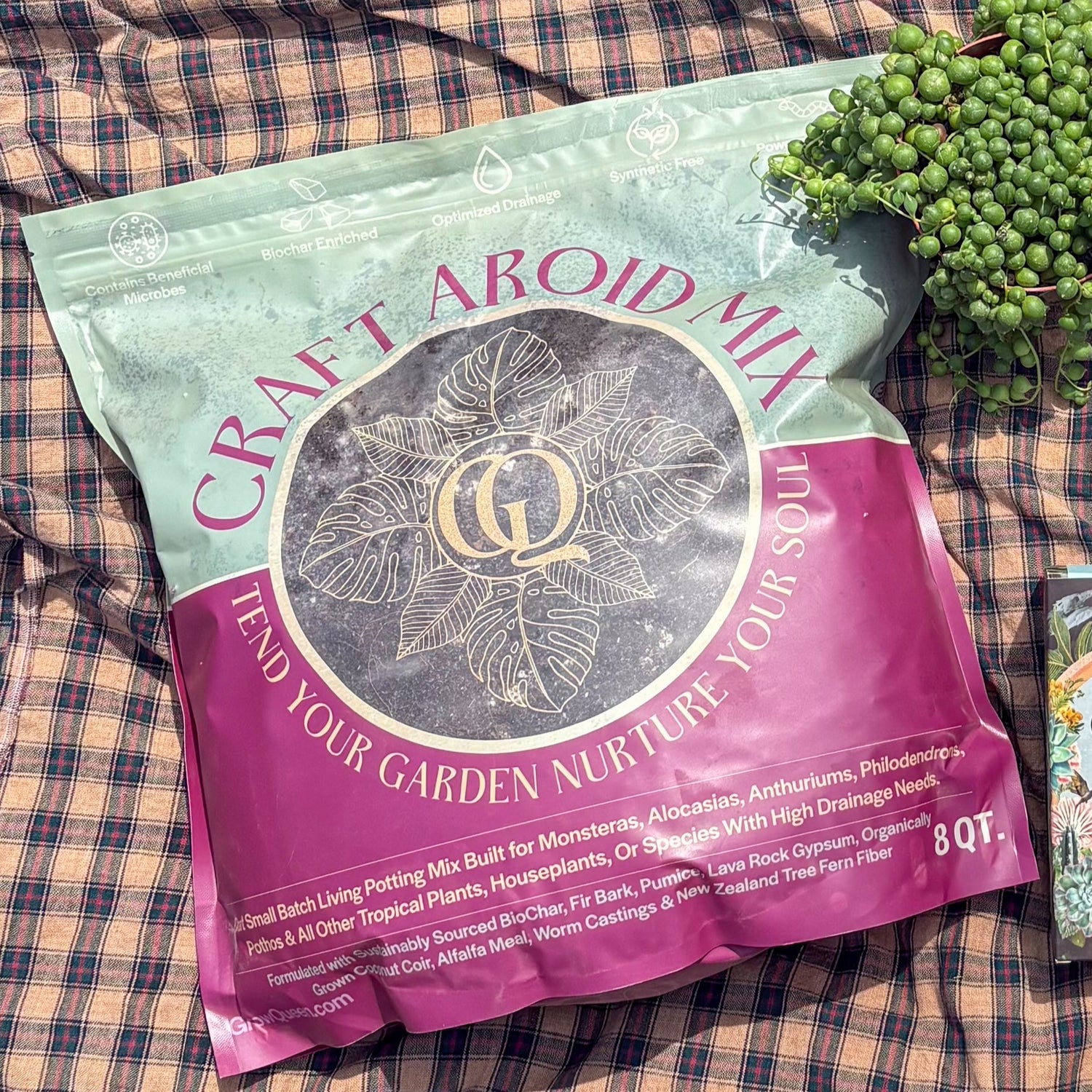
Grow Queen pick: Craft Aroid Potting Mix
Learn more: Pillar 1, Soils & Growth Mediums →
Pillar 2
☀️ Lighting
What they need: bright, indirect light. They thrive in dappled sunlight or a few hours of morning sun followed by shade.
• Avoid: Direct afternoon sun, which can scorch their leaves.
• Indoor placement: Near an east- or north-facing window, or slightly back from a west- or south-facing one with sheer curtains.

Learn more: Pillar 2, Lighting →
Pillar 3
💧 Watering
What they need: allow the top inch of soil to dry out between waterings.
They prefer evenly moist soil but are susceptible to overwatering, so be careful not to overdo it.
Learn more: Pillar 3, Watering →
Pillar 4
🌡️ Environment
What they need: warmth and humidity. Begonias enjoy the warmth but are not heat tolerant.
Ideal conditions:
• 60–75°F (16–24°C)
• 50–60% humidity. They appreciate higher humidity but can adapt to standard household levels if not overly dry.
Avoid:
• Temperatures below 50°F (10°C) or drafts, as they are sensitive to cold.
Tips to boost humidity:
• Use a pebble tray filled with water beneath the plant (without submerging the pot).
• Group with other plants or use a small humidifier.
Learn more: Pillar 4, Environment →
Pillar 5
🪴 Plant Nutrients
What they need: feeding every 4–6 weeks during the growing season (spring and summer).
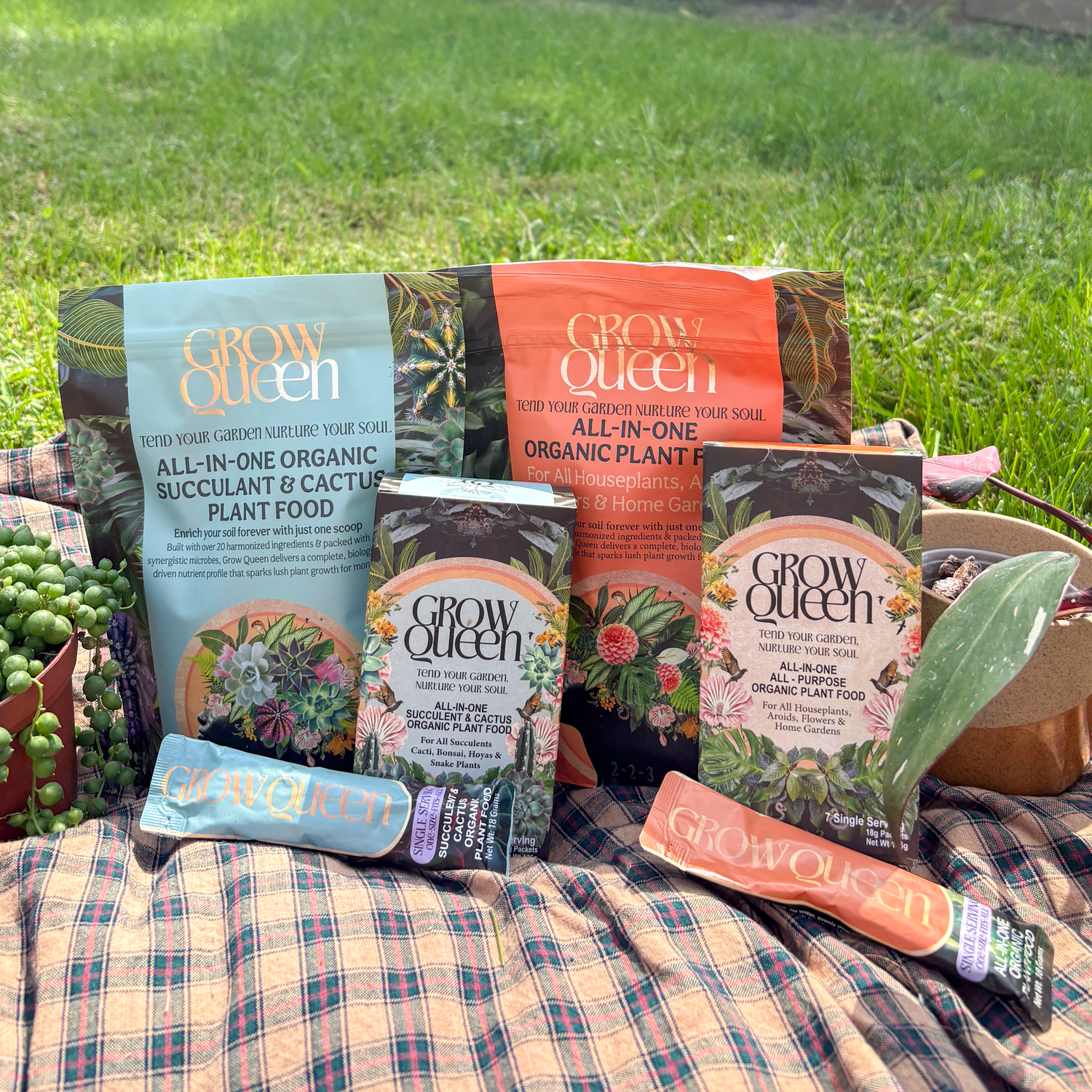
Grow Queen All Purpose Organic Fertilizer is a one stop shop for your begonia. It avoids burning roots and continues to fertilize at each watering with the active microbes.
Grow Queen pick: Organic Time Release Plant Food
Learn more: Pillar 5, Plant Nutrients →
✂️ Maintenance & Growth Tips
Pruning and Grooming
Prune away! This will make your begonia lush and give you propagations.
• Pruning: Regularly trim leggy or dead stems to encourage bushier growth.
• Deadheading: Remove spent blooms to prolong flowering and maintain tidiness.
When to Repot
If the plant looks top heavy, it’s a good sign it’s time.
• Frequency: Every 1–2 years, or when roots become pot-bound.
• Timing: Best done in spring.
• Method: Use a slightly larger pot with fresh soil to encourage growth.
Propagation
Begonias are one of the easiest plants to propagate. Stem cuttings are the easiest way to propagate trailing begonias.
1. Take a 4–6 inch cutting below a node.
2. Remove lower leaves and place the cutting in water or moist soil.
3. Keep in a warm, bright location until roots form (2–4 weeks).
🌿 Bottom Line
With the right care, your trailing begonia will reward you with a stunning display of foliage and flowers, perfect for elevating any indoor or outdoor space.
Grow Queen Picks for Begonias
The soil and food to keep your trailing begonia thriving.





0 comments