
Grow Queen Plant Care Guide
Syngonium (Arrowhead Plant)
Syngonium, also called arrowhead plant or nephthytis, is loved for its arrow-shaped leaves in greens, creams and pinks. It stays bushy when young, then starts to vine, so you can keep it compact or let it trail or climb.

Syngonium is forgiving once you get light and watering right. Here is how to set it up using the 5 Pillars of Plant Care. This guide walks through Syngonium (Arrowhead Plant) care using Grow Queen's 5 Pillars of Plant Care.
🌿 Quick Care Snapshot
🌏 Know Your Plant
Syngonium podophyllum is a climbing member of the aroid family (Araceae). Kew's Plants of the World Online lists its native range as Mexico through Central America and Trinidad to northern South America, Bolivia and Brazil, in a wet tropical climate. In the wild it is a hemiepiphyte that roots in the ground and climbs trees with roots at each node. Indoors that means it wants warmth, steady moisture, decent humidity and bright light filtered the way a forest canopy would filter it. It also explains why older plants start to vine and reach for something to climb.
• Family: Araceae, the same family as Monstera and Philodendron.
• Native from Mexico to Bolivia and Brazil.
• Young plants are bushy. Older plants vine and climb.
• Toxic to cats and dogs per the ASPCA.
✨ Fun Facts
• The arrow-shaped leaves are the juvenile form. Mature, climbing plants grow leaves split into 3 to 11 leaflets, so an old Syngonium can look like a different plant.
• UF/IFAS reports that Syngonium podophyllum is the most commonly produced Syngonium species in the foliage plant industry.
• The Royal Horticultural Society has given Syngonium podophyllum its Award of Garden Merit.
• It roots so easily from cuttings that it has escaped gardens in Florida, where it is rated a Category I invasive species. Never toss cuttings or old plants outdoors.
Pillar 1
🌱 Soil & Growth Medium
What they need: A loose, well-draining mix that stays lightly moist.
Syngonium roots want air as well as water. Commercial growers use blends of peat, pine bark and perlite, and a chunky aroid mix gives you that same open structure at home. Avoid dense, heavy soil that stays soggy, since constantly wet roots invite rot.
• Use a pot with a drainage hole.
• Repot every couple of years, or when roots circle the pot.
• Trimming roots at repotting can keep a large plant manageable.
• Add a moss pole or trellis if you want it to climb.
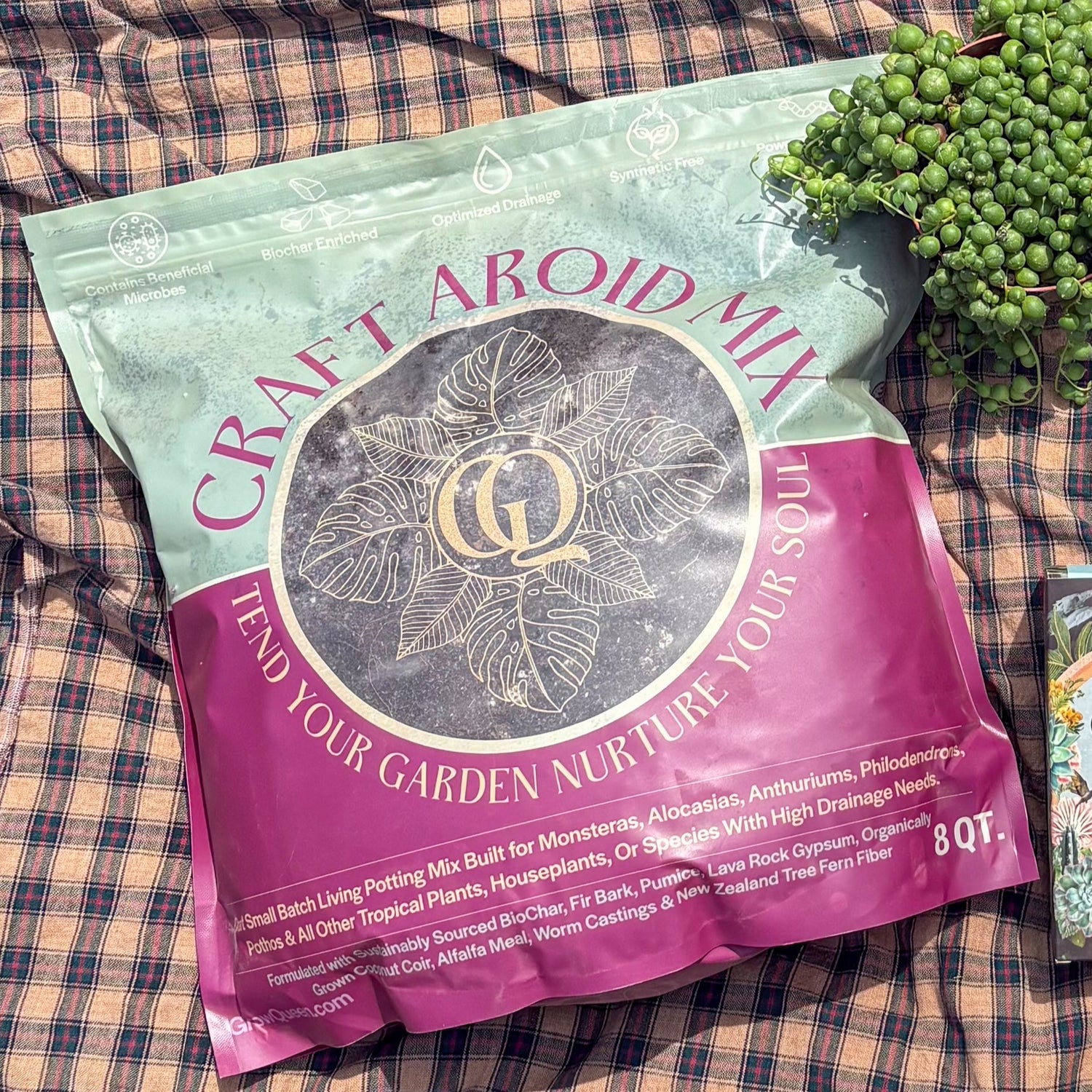
Grow Queen pick: Craft Aroid Potting Mix. Craft Aroid Potting Mix gives this climbing aroid the chunky, airy, well-draining root zone it needs, and you can simply water a little more often to keep it lightly moist.
Learn more: Pillar 1, Soils & Growth Mediums →
Pillar 2
☀️ Lighting
What they need: Bright, indirect light.
Give it a spot near a window but out of direct rays. Green types handle a bit less light, while pink and cream varieties keep their color best in bright, filtered light. Direct sun can burn or bleach the leaves.
Signs of too little light:
• Long, stretched stems with wide gaps between leaves
• Weak, floppy growth
• Variegated leaves fading toward plain green
Signs of too much light:
• Bleached or washed-out patches on leaves
• Brown, crispy scorch marks
• Leaves curling or drooping in afternoon heat
Learn more: Pillar 2, Lighting →
Pillar 3
💧 Watering
What they need: Keep it lightly moist. Let the surface dry slightly between waterings.
Water when the top of the mix feels just dry, then water until it runs from the drainage hole and empty the saucer. In a chunky aroid mix that may be once a week or more in summer. In winter, water less often but don't let the pot dry out completely. Use room-temperature water, since cold water can cause water-soaked spots on the leaves.
Signs of overwatering:
• Yellowing leaves with soggy soil
• Soft, dark stems at the soil line
• Wilting even though the mix is wet
Signs of underwatering:
• Drooping, limp leaves that perk up after watering
• Older leaves turning yellow
• Dry, brown leaf edges
Learn more: Pillar 3, Watering →
Pillar 4
🌡️ Environment
What they need: Warm, steady temperatures and moderate humidity.
UF/IFAS recommends 65 to 80°F indoors to keep leaf color, and 40 to 60% humidity for the best-looking foliage. Temperatures below 55°F can cause chilling injury. Most homes are fine, but a dry winter room may need a humidifier or a spot in a bathroom or kitchen.
Ideal conditions:
• 65 to 80°F
• 40 to 60% relative humidity
• Bright room with filtered light
• Steady conditions away from vents
Avoid:
• Temperatures below 55°F
• Cold drafts from doors or windows in winter
• Hot, dry air from heaters and radiators
Learn more: Pillar 4, Environment →
Pillar 5
🪴 Plant Nutrients
What they need: Light, regular feeding while it is actively growing.
The RHS suggests a balanced liquid fertilizer every three to four weeks while the plant is growing, which for most homes means spring through early fall. Cut back or stop in winter when growth slows. Too much fertilizer can build up salts in the pot, so flush with plain water now and then.
Benefits of the right feeding:
• Supports steady new leaves through the growing season
• Helps prevent pale older leaves from low nitrogen
• Keeps variegated and pink types looking full
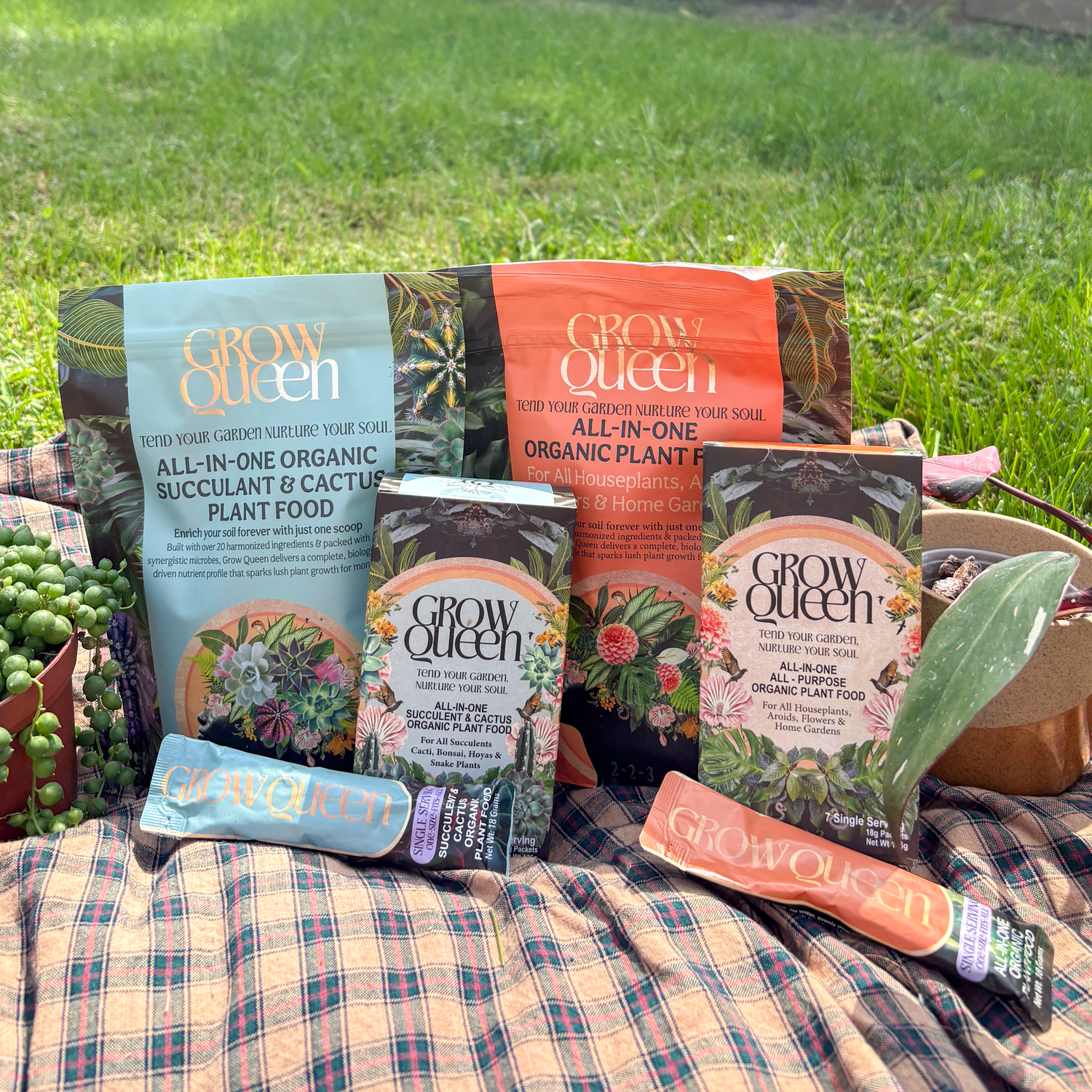
Grow Queen pick: Organic 5-5-5 Liquid Plant Food. Organic 5-5-5 Liquid Plant Food fits the RHS advice of a balanced liquid feed every few weeks and suits plants growing in chunky media.
Learn more: Pillar 5, Plant Nutrients →
🍂 Common Problems
Why is my Syngonium leggy and stretched?
Long stems with big gaps between leaves usually mean low light. Move it closer to a bright window, out of direct sun. Prune back the long stems to keep it bushy, and root the cuttings.
Why are the older leaves turning yellow?
UF/IFAS links yellow older leaves to low nitrogen or to the mix drying out too much. Check that you are not letting the pot go bone dry, and feed lightly during the growing season. If the soil is soggy instead, cut back on watering.
What are these water-soaked spots on the leaves?
Wet-looking patches often come from cold. Cold roots under warm leaves, or watering with cold water in winter, can cause this damage. Use room-temperature water and keep the plant away from cold windows.
What pests bother Syngonium?
Mealybugs, spider mites and aphids are the usual ones, especially in dry air. Check leaf undersides and stems often, isolate any plant with pests, and wipe or rinse the leaves. Your local extension office can help you identify a pest.
✂️ Maintenance & Growth Tips
• Pinch or cut back vining stems in spring to keep the bushy arrowhead look.
• Root stem cuttings with at least one node in water or moist mix.
• Wipe leaves with a damp, lint-free cloth to remove dust.
• Repot every couple of years, and give it a pole if you want it to climb.
• Wear gloves when pruning, since the sap can irritate skin.
⚠️ Pet Safety
The ASPCA lists arrowhead vine (Syngonium podophyllum) as toxic to dogs, cats and horses. It contains insoluble calcium oxalates, which can cause mouth irritation, pain and swelling of the mouth, tongue and lips, drooling, vomiting and trouble swallowing. Keep it out of reach of pets, and call your vet or ASPCA Animal Poison Control at (888) 426-4435 if you think your pet chewed it.
🌿 Bottom Line
Syngonium is an easy, colorful aroid that rewards you with fast growth when it gets bright indirect light, warmth and steady moisture. Keep it out of direct sun and cold drafts, and don't let the pot dry out completely.
Plant it in an airy aroid mix, feed lightly every few weeks in the growing season, and prune to keep it as full or as trailing as you like. Just keep it away from curious pets.
Grow Queen Picks for Syngonium (Arrowhead Plant)
The soil and food to keep your Syngonium (Arrowhead Plant) growing strong.




0 comments