
Grow Queen Plant Care Guide
Hoya (Wax Plant)
Hoyas have thick, waxy leaves and, when they are happy, clusters of star-shaped flowers that are often fragrant at night. They trail from baskets or climb a hoop, and there are hundreds of species to collect.

Hoyas are forgiving about a lot, but not about soggy roots. Get the mix chunky, the light bright and the watering patient, and blooms usually follow. This guide walks through Hoya (Wax Plant) care using Grow Queen's 5 Pillars of Plant Care.
🌿 Quick Care Snapshot
🌏 Know Your Plant
Hoyas are in the dogbane family, Apocynaceae. The genus is native to tropical and subtropical Asia and Australasia, and Clemson Extension notes there are over 500 species. The most common, Hoya carnosa, is native from southern China to Laos and from southern Japan to Taiwan, according to Kew's Plants of the World Online, where it grows as a climbing epiphyte or on rocks. Growing on tree branches and in bark crevices, hoyas have little soil and developed thick, semi-succulent leaves that store water. Indoors that means an airy, fast-draining mix, patient watering, bright light and a support to climb or a basket to trail from.
• Family: Apocynaceae (dogbane family)
• Hoya carnosa: native from southern China to Laos and southern Japan to Taiwan (per Kew POWO)
• Epiphytic climbers with semi-succulent, water-storing leaves
• Popular types include Hoya carnosa, 'Krimson Queen', Hindu rope and sweetheart hoya (H. kerrii)
✨ Fun Facts
• There are over 500 hoya species, plus many more cultivars.
• Hoya flowers are often most fragrant in the evening.
• Do not cut off old flower stalks. New flower clusters often grow from the same spurs.
• The Hindu rope plant, with its twisted, curled leaves, is a naturally occurring mutation of Hoya carnosa.
Pillar 1
🌱 Soil & Growth Medium
What they need: A chunky, sharply draining mix that dries quickly.
Hoyas grow on trees in the wild, so their roots want air. Clemson Extension suggests equal parts potting mix, orchid bark and perlite. A pot that is too large stays wet too long and is a common cause of root rot, so keep hoyas in snug pots.
• Repot in spring, only when roots fill the pot.
• Move up just slightly in pot size.
• Do not feed for five to six weeks after repotting.
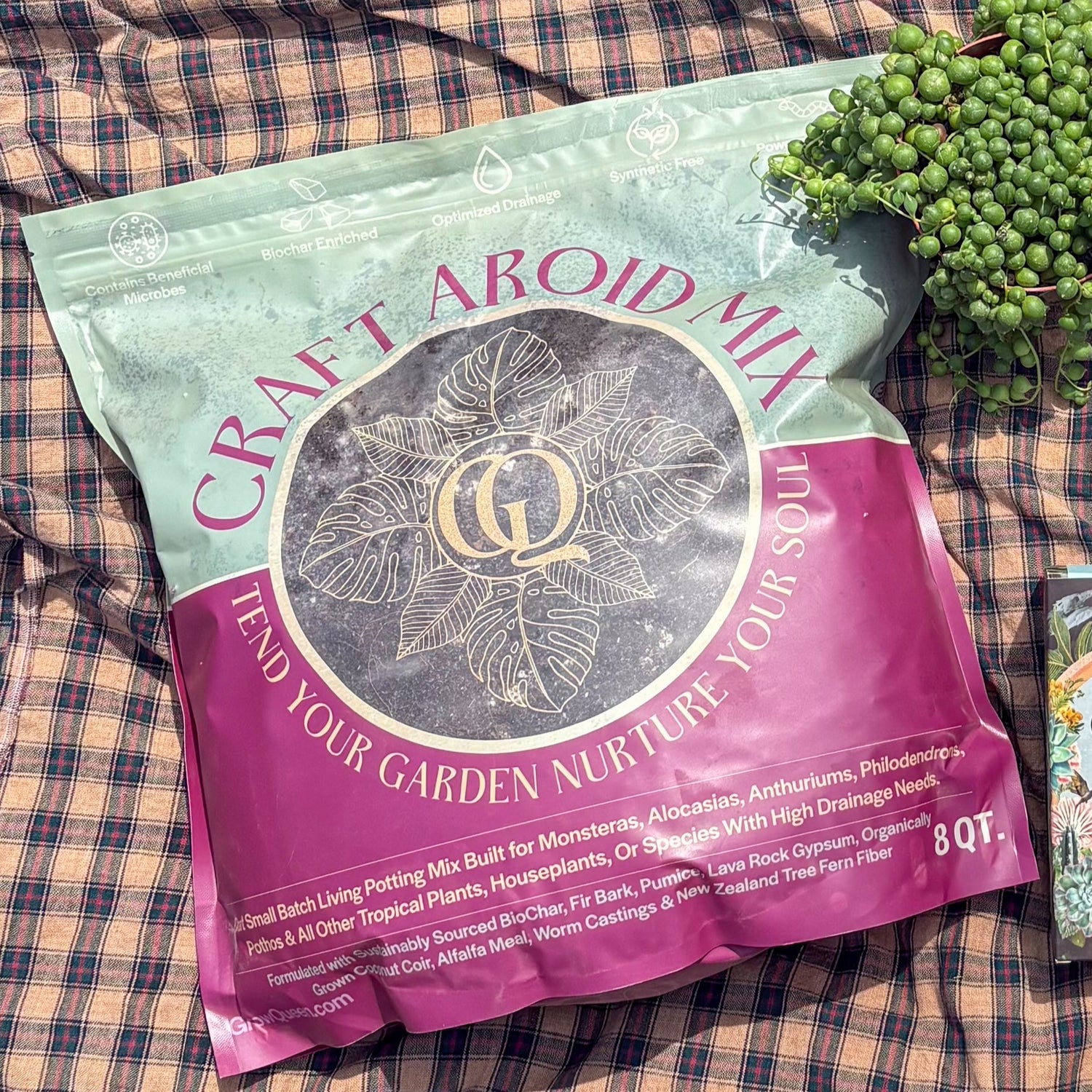
Grow Queen pick: Craft Aroid Potting Mix. Craft Aroid Potting Mix is chunky, soilless and very well-draining with airflow to the roots, which matches the bark-and-perlite style mix hoyas prefer.
Learn more: Pillar 1, Soils & Growth Mediums →
Pillar 2
☀️ Lighting
What they need: Bright light near a window, out of hot midday sun.
Place hoyas close to an east, west or south window. Ease them into direct sun gradually, since strong summer sun can scorch the leaves. Low light lets the plant survive, but it is the most common reason a hoya will not flower, and variegated types may lose color. A grow light helps in darker homes.
Signs of too little light:
• No flowers.
• Long bare stems with few leaves.
• Variegated leaves turning greener.
Signs of too much light:
• Yellow, red or bleached patches on the leaves.
• Scorched, brown spots.
• Leaves feeling thin or wrinkled from drying out too fast.
Learn more: Pillar 2, Lighting →
Pillar 3
💧 Watering
What they need: Water thoroughly, then let the mix dry well.
Water until it drains, then wait until the mix is dry before watering again. Clemson suggests lifting the pot to learn how light it feels when dry. From fall through winter, hoyas are semi-dormant and need less water. Sources differ slightly here: Clemson lets the mix dry out completely, while the RHS says to let it get fairly dry but never bone dry. Either way, damp winter soil is the bigger danger.
Signs of overwatering:
• Leaves yellowing, blackening or dropping.
• Wilting stems and dieback even when the soil is wet.
• Soft, mushy stems or roots.
Signs of underwatering:
• Wrinkled, soft or deflated leaves.
• Flower buds dropping.
• Slow or stalled growth.
Learn more: Pillar 3, Watering →
Pillar 4
🌡️ Environment
What they need: Warm rooms, humid air and stable conditions.
The RHS recommends about 61 to 75°F in spring and summer and a cooler, drier rest in winter, with nights no lower than about 50°F for Hoya carnosa. Hoyas dislike dry air during the growing season, so a pebble tray helps. Keep them away from heaters and cold drafts, and do not move a plant once buds form, since a change in light can make the buds drop.
Ideal conditions:
• 61 to 75°F in spring and summer
• Winter nights no lower than about 50°F for Hoya carnosa
• Moderate to high humidity in the growing season
• A trellis, hoop or hanging basket
Avoid:
• Radiators, heaters and cold drafts
• Moving the plant while it is in bud
• Oversized pots that stay wet
Learn more: Pillar 4, Environment →
Pillar 5
🪴 Plant Nutrients
What they need: Light, regular feeding while growing.
Hoyas need only light feeding. The RHS suggests a balanced feed every couple of weeks in spring and summer, cutting back to about once a month in fall and winter. Because hoyas are watered infrequently, Clemson recommends a liquid fertilizer over a slow-release granular one. Flush the pot with plain water every few months to prevent salt buildup.
Benefits of the right feeding:
• Better chances of flowering
• Steady new vines and leaves
• Healthier color on variegated types
Grow Queen pick: Organic 5-5-5 Liquid Plant Food. Organic 5-5-5 Liquid Plant Food mixes into watering water, which fits the light, liquid feeding Clemson recommends for infrequently watered hoyas.
Learn more: Pillar 5, Plant Nutrients →
🍂 Common Problems
Why won't my hoya flower?
Not enough light is the most common reason. Move it closer to a bright window, feed lightly in spring and summer, and be patient, since some species take years to bloom. Leave old flower stalks in place, because new flowers often form on them.
Why are my hoya's leaves turning yellow or black?
Overwatering, a mix that drains poorly, or cold winter conditions are the usual causes. Let the mix dry more between waterings, make sure the pot is not too big, and keep the plant warm. If roots have rotted, take cuttings from healthy stems.
Why are the leaves wrinkled?
Wrinkled, soft leaves often mean the plant is thirsty. Water thoroughly. If the soil is already wet and leaves are still wrinkling, check the roots for rot, since damaged roots cannot take up water.
Why did my hoya drop its flower buds?
Hoyas drop buds when the mix gets too dry or too wet, or when light changes. Keep watering steady and do not move the plant once buds appear.
✂️ Maintenance & Growth Tips
• Lightly prune weak or crowded stems in late winter. Hoyas do not respond well to hard pruning.
• Wear gloves when pruning. The milky sap can irritate skin.
• Root stem cuttings in water in spring or early summer. Roots usually form in two to three weeks.
• Never deadhead. Leave old flower stalks for future blooms.
• Check leaf joints for mealybugs. Isolate and wipe affected plants.
⚠️ Pet Safety
The ASPCA lists Hoya carnosa (wax plant, also called honey plant) as non-toxic to dogs, cats and horses. Other hoya species are not all listed, and the milky sap can irritate skin, so keep plants out of reach of pets that like to chew.
🌿 Bottom Line
Hoyas want a chunky, fast-draining mix, bright light and patient watering. Most hoya losses come from wet roots, especially in winter.
Give it a snug pot, light liquid feeding in the warm months and a bright spot it can stay in. Leave the flower stalks alone and you may be rewarded with fragrant blooms year after year.
Grow Queen Picks for Hoya (Wax Plant)
The soil and food to keep your Hoya (Wax Plant) growing strong.






0 comments