
Grow Queen Plant Care Guide
Monstera (Monstera deliciosa)
Monstera is the big, bold climber with split and holey leaves that earned it the name Swiss cheese plant. Given light and something to climb, it grows into a living sculpture.

Monstera is forgiving, but its famous leaf holes only show up when its needs are met. Get the soil, light and support right and each new leaf gets bigger and more cut. This guide walks through Monstera (Monstera deliciosa) care using Grow Queen's 5 Pillars of Plant Care.
🌿 Quick Care Snapshot
🌏 Know Your Plant
Monstera deliciosa is in the arum family, Araceae, alongside philodendron and pothos, though it is not a true philodendron. Kew's Plants of the World Online lists its native range as Mexico (Veracruz, Oaxaca and Chiapas) to Guatemala, where it grows as a climbing vine in wet tropical forest. NC State Extension notes it starts life on the ground and becomes epiphytic once it reaches a tree to climb, using aerial roots to hold on. Indoors that means it wants filtered light like a forest canopy, warmth, humidity, a quick-draining chunky mix, and a sturdy pole as it matures.
• Family: Araceae (arum family)
• Native to southern Mexico and Guatemala (per Kew POWO)
• Climbing vine with thick aerial roots
• Swiss cheese vine (M. adansonii) is a smaller, faster cousin with oval holes
✨ Fun Facts
• The holes in mature leaves form through programmed cell death, a process where the plant's own cells break down on purpose as the leaf develops.
• In the wild it can climb to 70 feet. Indoors it usually stays around 6 to 8 feet.
• Its ripe fruit is edible and is said to taste like a cross between banana and pineapple, though indoor plants rarely flower or fruit.
• Only mature leaves develop holes. Young leaves start out small and solid.
Pillar 1
🌱 Soil & Growth Medium
What they need: A quick-draining, chunky mix that never stays soggy.
NYBG calls quick-draining soil essential for monstera. Its thick roots need air, and a dense mix that stays wet invites root rot. Monsteras like to be a little root-bound, so move up only one pot size when roots come out the drainage holes. Once a plant is as big as you want, replace the top layer of mix every other year instead of repotting.
• Always use a pot with drainage holes.
• Add a moss pole or sturdy stake at potting time so you don't damage roots later.
• Repot in spring if needed.
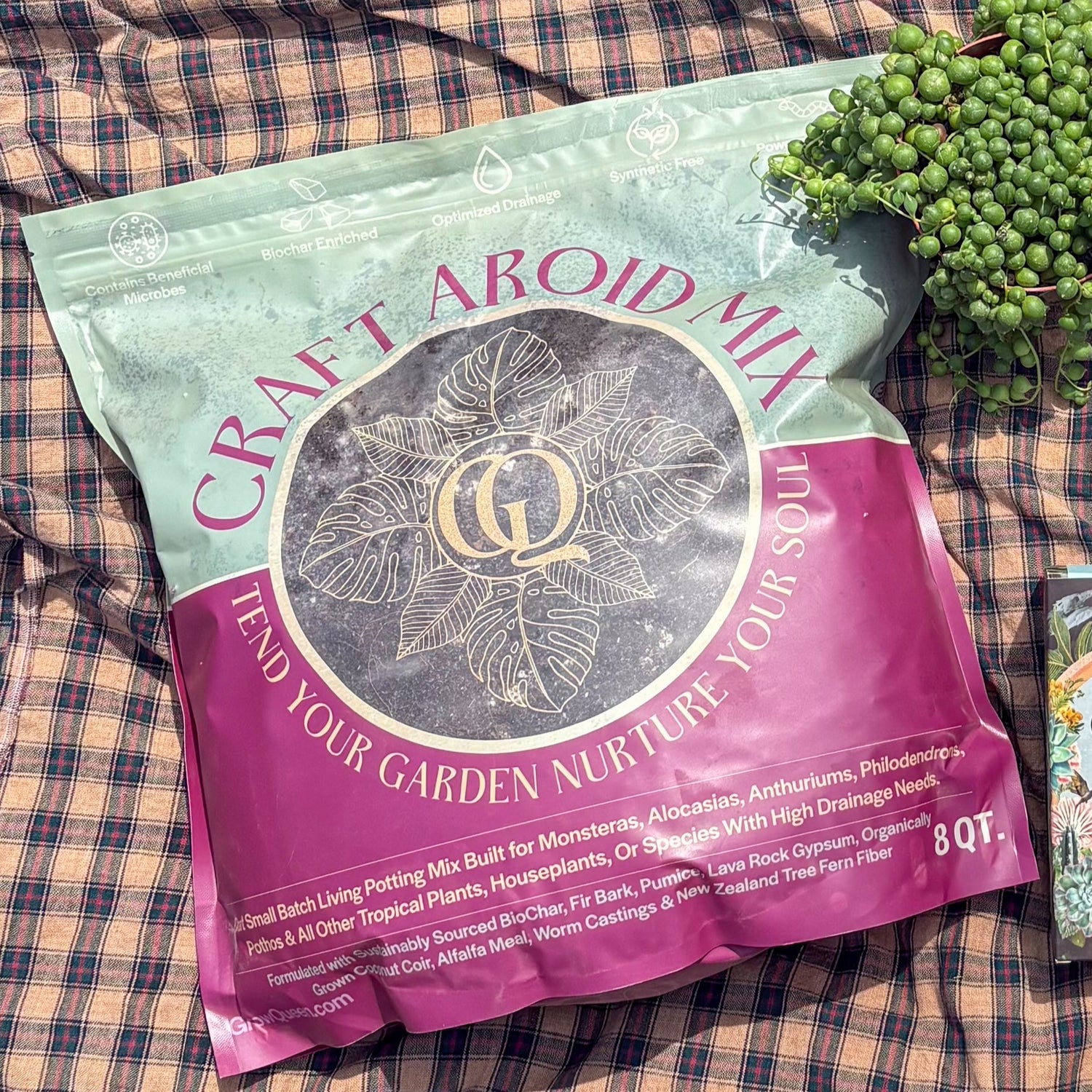
Grow Queen pick: Craft Aroid Potting Mix. Craft Aroid Potting Mix is chunky and very well-draining with airflow to the roots, the kind of quick-draining mix monstera's thick roots want.
Learn more: Pillar 1, Soils & Growth Mediums →
Pillar 2
☀️ Lighting
What they need: Bright, filtered light, like sun through a tree canopy.
From spring through summer, keep monstera out of direct sun with a sheer curtain or a spot a few feet back from a bright window. Clemson Extension notes the leaves will not develop their holes if light is too low. In winter, when light is weaker, move it closer to the window. Variegated types need more light than solid green ones.
Signs of too little light:
• New leaves come in small with no holes or splits.
• Long, stretched leaf stems leaning toward the window.
• Very slow or no new growth.
Signs of too much light:
• Bleached, pale or yellow patches on leaves.
• Brown, scorched spots facing the window.
• Leaves curling or drooping in the afternoon.
Learn more: Pillar 2, Lighting →
Pillar 3
💧 Watering
What they need: Water thoroughly, then let the top part of the mix dry.
NC State Extension recommends watering thoroughly, then letting the top quarter to third of the mix dry before watering again. Empty the saucer after 15 minutes so roots never sit in water. In winter, growth slows and the mix dries more slowly, so water less often. Swiss cheese vine (M. adansonii) likes the same moist but well-drained routine.
Signs of overwatering:
• Yellow leaves, several at a time.
• Brown or black patches spreading from the leaf edges.
• Soggy mix, mushy stems or a sour smell.
Signs of underwatering:
• Drooping, curling leaves.
• Crispy brown edges.
• Mix pulling away from the sides of the pot.
Learn more: Pillar 3, Watering →
Pillar 4
🌡️ Environment
What they need: Warm, humid and steady, with a slightly cooler winter rest.
NC State Extension puts the ideal range at 60 to 85°F with high humidity. NYBG notes monsteras benefit from a cooler winter rest between 55 and 65°F, and won't resume active growth until it is back above 65°F. Swiss cheese vine is less tolerant of chill, so keep it above 50°F.
Ideal conditions:
• 60 to 85°F during the growing season
• A cooler winter spot around 55 to 65°F for M. deliciosa
• High humidity, helped by a humidifier or pebble tray
• Room for the plant to spread and climb
Avoid:
• Cold drafts from open windows in winter
• Blasts from heating or air conditioning vents
• Letting M. adansonii drop below 50°F
Learn more: Pillar 4, Environment →
Pillar 5
🪴 Plant Nutrients
What they need: Regular feeding during active growth, none in winter.
NYBG recommends feeding every two to four weeks at half strength from March through September. Stop in winter while the plant rests. Yellowing of many leaves at once can mean under-feeding, but check that you are not overwatering first.
Benefits of the right feeding:
• Bigger new leaves with more splits
• Strong, healthy aerial roots
• Deep green, glossy color
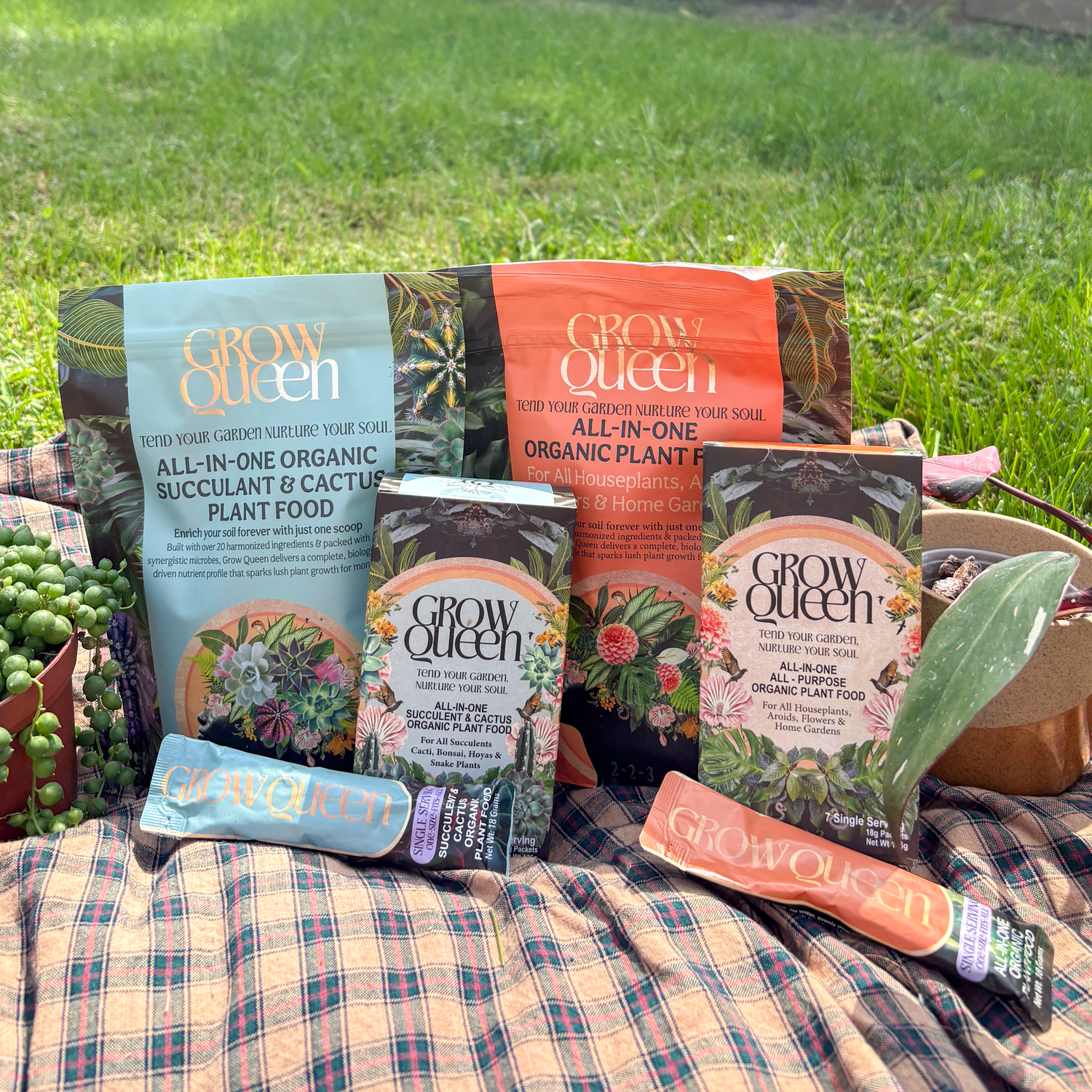
Grow Queen pick: Organic Time Release Plant Food. Organic Time Release Plant Food mixes into or top-dresses the soil and feeds for 1 to 6 months, covering the spring and summer growing season in one step.
Learn more: Pillar 5, Plant Nutrients →
🍂 Common Problems
Why don't my monstera's leaves have holes?
Young plants make solid leaves first, so give it time. If a mature plant keeps putting out small, solid leaves, it most likely needs more light. A moss pole to climb also helps it produce bigger, mature leaves.
Why are the leaves turning yellow?
Losing an old leaf now and then is natural. If several yellow at once, check for overwatering and a pot that drains poorly. If watering is fine, the plant may be under-fed during the growing season.
Why are the leaf edges brown and crispy?
Dry air is a common cause. Raise humidity with a humidifier or pebble tray, and move the plant away from heating vents.
What do I do with the long aerial roots?
Leave them on. They help the plant climb and take in moisture. Guide some into a moss pole and let the rest hang free or tuck them into the pot.
✂️ Maintenance & Growth Tips
• Wipe leaves with a damp cloth to keep them dust-free.
• Tie stems to a moss pole or sturdy stake as the plant grows.
• Prune in spring to control size. Each cutting needs at least one node.
• Propagate from stem cuttings or by air layering.
• Check leaf undersides for scale and other pests. Isolate and wipe any affected plant.
⚠️ Pet Safety
The ASPCA lists Monstera deliciosa (under the name cutleaf philodendron) as toxic to dogs and cats. It contains insoluble calcium oxalates that can cause oral irritation, intense burning of the mouth, tongue and lips, drooling, vomiting and difficulty swallowing. NC State Extension flags M. adansonii as a problem for cats and dogs too, so keep both out of reach and call your vet or ASPCA Animal Poison Control at (888) 426-4435 if a pet chews one.
🌿 Bottom Line
Monstera wants bright, filtered light, a chunky mix that drains fast, a deep drink followed by a partial dry-down, and something to climb. Low light is the main reason leaves stay solid.
Feed it through spring and summer, let it rest a little cooler in winter, and keep it away from pets. Swiss cheese vine follows the same plan, but keep it warmer in winter.
Grow Queen Picks for Monstera (Monstera deliciosa)
The soil and food to keep your Monstera (Monstera deliciosa) growing strong.





0 comments