
Grow Queen Plant Care Guide
Piper Ornatum (Celebes Pepper)
Piper ornatum, the Celebes pepper, is a climbing vine with glossy, heart-shaped leaves traced in pink and silver, with deep red undersides. It is a relative of black pepper and looks lovely trailing from a basket or climbing a small support.

This vine likes warmth, filtered light and careful watering. Here is how to give it what it needs across the 5 Pillars. This guide walks through Piper Ornatum (Celebes Pepper) care using Grow Queen's 5 Pillars of Plant Care.
🌿 Quick Care Snapshot
🌏 Know Your Plant
Kew's Plants of the World Online lists Piper ornatum as native to Sulawesi in Indonesia, where it grows as a climbing vine (liana) in the wet tropics. The Universiti Brunei Darussalam Botanical Research Centre describes it in lowland forest, in fertile, well-drained loamy soil with sun to partial shade. It belongs to the pepper family, Piperaceae, the same genus as the black pepper vine. Indoors, that background means warm rooms, filtered light, steady but not soggy moisture, and something to climb or room to trail. You may see it sold as Piper crocatum, but Kew treats Piper crocatum as a separate species.
• Native range: Sulawesi, Indonesia, per Kew POWO
• Family: Piperaceae, the pepper family
• Habit: climbing or trailing vine with aerial roots
• Growth is slow to moderate and stops when temperatures drop
✨ Fun Facts
• Piper ornatum was named by botanist N.E. Brown in 1884, in the Gardeners' Chronicle, according to Kew's Plants of the World Online.
• Its leaves are peltate: Singapore's National Parks Board notes that the leaf stalk joins the inside of the leaf blade rather than its edge.
• Like many pipers, it forms tiny beads on the backs of leaves and stems that later look like black dots. Logee's notes this is normal and not an insect.
• It shares a genus with Piper nigrum, the vine that produces black peppercorns.
Pillar 1
🌱 Soil & Growth Medium
What they need: A rich, well-drained mix that stays lightly moist.
Singapore's National Parks Board lists this plant for moist, well-drained soils, and in the wild it grows in fertile, loamy forest soil. Pipers are prone to root disease, so the mix has to drain freely even though the plant likes some moisture. Logee's notes that growing in a clay pot helps maintain a healthy root system.
• Use a pot with a drainage hole; clay is a good choice.
• Repot in spring or summer when roots fill the pot.
• Add a small moss pole or trellis if you want it to climb.
• Choose a pot only slightly larger than the root ball.
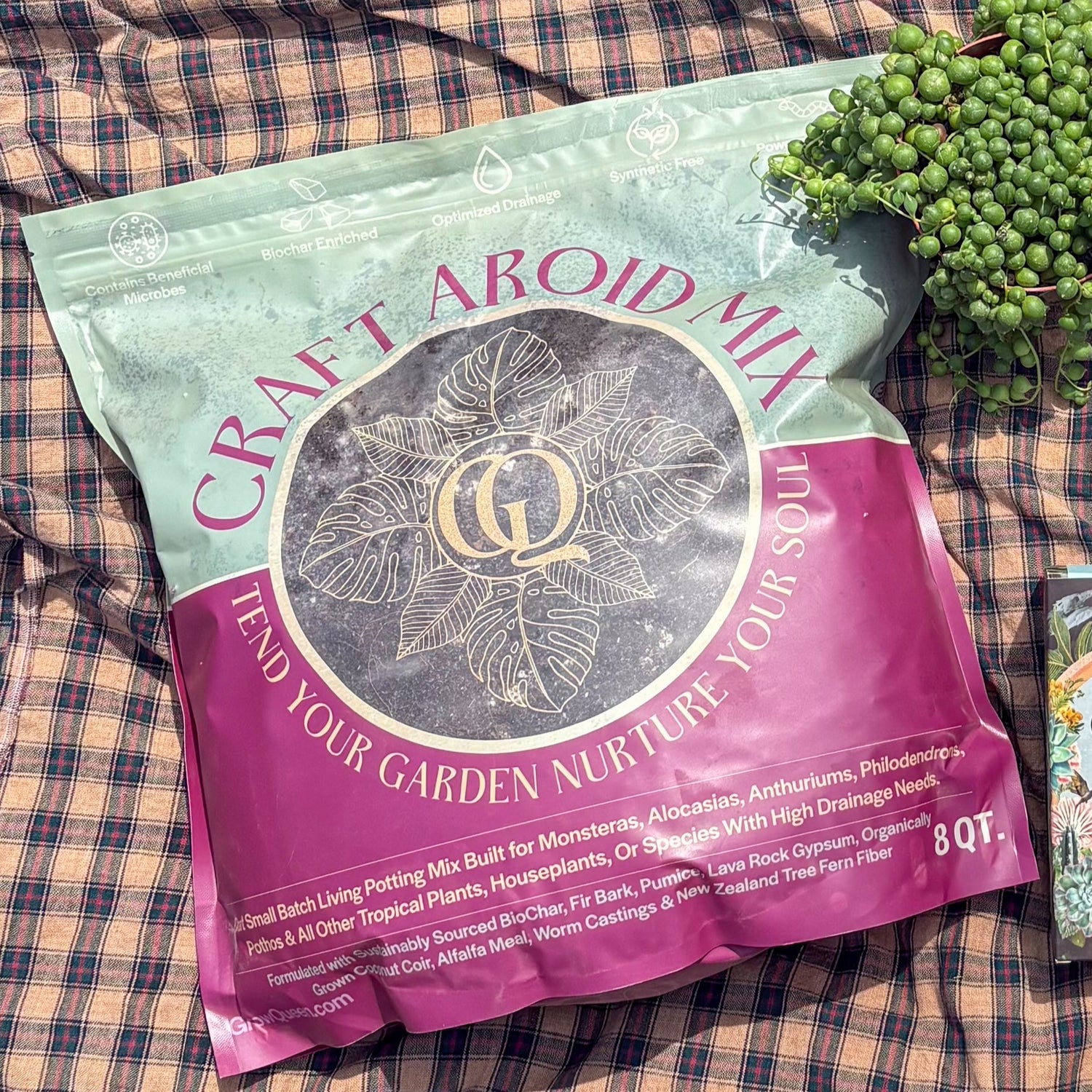
Grow Queen pick: Craft Houseplant Potting Mix. Craft Houseplant Potting Mix holds moisture evenly while staying aerated, which fits a vine that wants moist but well-drained soil.
Learn more: Pillar 1, Soils & Growth Mediums →
Pillar 2
☀️ Lighting
What they need: Bright, filtered light or partial shade, with no harsh midday sun.
Singapore's National Parks Board says this plant needs bright, filtered light, and Logee's recommends partial sun or shade, such as an east or west window. A spot near a bright window with a sheer curtain works well. Strong direct sun can fade or scorch the colored leaves.
Signs of too little light:
• Pink and silver markings fade
• Long, thin stems with small leaves
• Very slow or no new growth
Signs of too much light:
• Bleached or washed-out leaves
• Brown, crispy patches on leaves facing the window
• Leaves curling or drooping in afternoon sun
Learn more: Pillar 2, Lighting →
Pillar 3
💧 Watering
What they need: Let the top of the soil dry, then water deeply.
Logee's advises letting the soil look dry on the surface between waterings, then watering until a little runs out the bottom of the pot. Empty the saucer afterward. Pipers are prone to root disease, so careful watering and warm temperatures go together. In winter, growth slows and the soil dries more slowly, so water less often.
Signs of overwatering:
• Yellowing leaves that drop
• Soft, dark stems at the soil line
• Soil that stays wet for days
Signs of underwatering:
• Limp, drooping vines
• Leaf edges turning brown and crisp
• Soil pulling away from the pot
Learn more: Pillar 3, Watering →
Pillar 4
🌡️ Environment
What they need: Warm rooms and moderate to high humidity.
Logee's recommends keeping indoor temperatures above 65°F, since this warm-growing vine stops growing when it gets cool. Humidity of 50% or higher is preferred, though it can handle somewhat lower levels. Singapore's National Parks Board notes it suits terrariums and hanging baskets, which are both good ways to keep it warm and humid.
Ideal conditions:
• Temperatures above 65°F year-round
• Humidity around 50% or higher
• A spot away from cold windows and doors
• A terrarium, grouping of plants or humidifier in dry winter rooms
Avoid:
• Cold drafts and chilly windowsills in winter
• Heating vents blowing dry air on the leaves
• Long stretches below 65°F, when growth stops
Learn more: Pillar 4, Environment →
Pillar 5
🪴 Plant Nutrients
What they need: Light, dilute feeding while it is actively growing.
Logee's describes pipers as light to moderate feeders and suggests a weak fertilizer solution every week or two during the growing season. Stop feeding in winter, when growth slows. Use a weak solution rather than a full-strength dose.
Benefits of the right feeding:
• Steady new leaves and longer vines
• Fuller growth in a small pot with limited soil
• Healthier roots that recover well from repotting
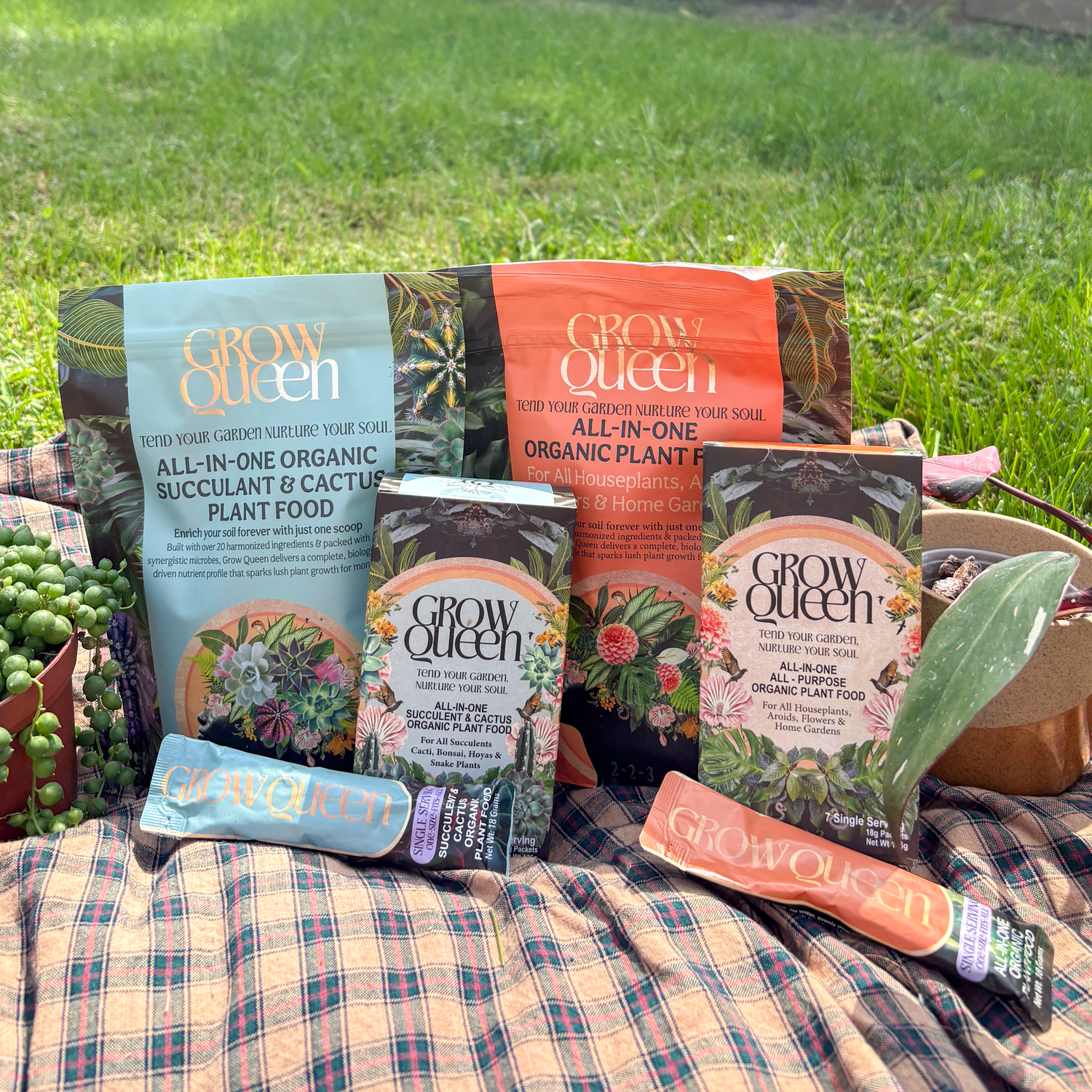
Grow Queen pick: Organic 5-5-5 Liquid Plant Food. Organic 5-5-5 Liquid Plant Food mixes into watering water, so it suits the frequent, dilute feeding that pipers prefer during the growing season.
Learn more: Pillar 5, Plant Nutrients →
🍂 Common Problems
Why is my Piper ornatum dropping leaves?
Cold and overwatering are the usual causes. Logee's notes that pipers are prone to root disease and need warm temperatures and accurate watering. Move the plant somewhere above 65°F and let the top of the soil dry before watering again.
What are the tiny beads or black dots under the leaves?
These are normal. Logee's explains that pipers form small beads on the backs of leaves and stems that later turn into tiny black dots. It is natural plant physiology, not an insect.
Why are the pink markings fading?
Leaf color usually fades when light is too low or too harsh. Aim for bright, filtered light, such as an east or west window or a bright room with a sheer curtain.
Why has my plant stopped growing?
This vine is warm-growing, and Logee's notes growth stops when temperatures are cool. It is also naturally slow-growing, per Singapore's National Parks Board. Keep it warm, feed lightly in spring and summer, and expect a pause in winter.
✂️ Maintenance & Growth Tips
• Prune only to keep its shape and control size.
• Propagate from stem cuttings in spring or summer.
• Give it a small pole or trellis to climb, or let it trail from a basket.
• Wipe leaves gently with a damp cloth to remove dust.
• Check plants regularly for pests; isolate and rinse affected plants, and ask your local extension office if problems continue.
⚠️ Pet Safety
The ASPCA does not list Piper ornatum or Celebes pepper on its toxic and non-toxic plants list, so its safety for dogs and cats is not established. ASPCA notes that eating any plant may cause vomiting and stomach upset in pets. Keep this vine out of reach of pets and call your vet if one eats it.
🌿 Bottom Line
Piper ornatum wants warmth above 65°F, bright filtered light, and a well-drained mix that you let dry slightly on top between waterings. Careful watering protects its roots.
Feed lightly and often in spring and summer, rest it in winter, and give it something to climb or trail from. With steady care, its pink-veined leaves make it a standout vine.
Grow Queen Picks for Piper Ornatum (Celebes Pepper)
The soil and food to keep your Piper Ornatum (Celebes Pepper) growing strong.




0 comments