
Grow Queen Plant Care Guide
Cacti & Succulents
They're built for the desert, and they grow best indoors when you give them desert conditions: gritty soil, lots of light, deep but rare watering, and a dry winter rest. Here's how, pillar by pillar.
 The Boobie Cactus (Myrtillocactus Geometrizans 'Fukurokuryuzinboku')
🌵 Quick Care Snapshot
🌏 Know Your Plant
• All cacti are succulents, but not all succulents are cacti. A succulent is any plant that stores water in its leaves, stems, or roots. Cacti are one family of succulents.
• How to spot a cactus: look for areoles, the small cushion-like bumps that spines, flowers, and new growth come out of. Only cacti have them.
• Where they come from: nearly all cacti are native to the Americas. Succulents like aloe, haworthia, and jade come mostly from Africa and Madagascar, and echeveria comes from Mexico and Central America.
• Why it matters: they grow in rocky, fast-draining ground with strong sun, rare but heavy rain, and long dry spells. Each pillar below is about recreating those conditions.
Pillar 1
🌱 Soil & Growth Medium
What they need: a gritty, mineral-heavy mix that drains in seconds and dries evenly, plus a pot with a drainage hole.
• Mineral grit (pumice, lava rock) keeps the mix open so roots get oxygen.
• A little organic matter is good. Too much holds water and causes rot.
• Terracotta pots help because the clay wicks extra moisture away.
• Repot every 2–3 years, or sooner if roots fill the pot or the soil breaks down and stays wet.
Signs the soil is wrong:
• Soil is still damp more than a week after watering
• Soft, mushy base or roots
• Soil packs down hard or pulls away from the sides of the pot
Grow Queen pick: Craft Desert Mix (coming soon, pre-orders open now). It's our new chunky, peat-free, perlite-free blend for cacti and succulents, made with pumice, lava rock, fir bark, and biochar, and ready to use straight from the bag.

Learn more: Pillar 1, Soils & Growth Mediums →
Pillar 2
☀️ Lighting
What they need: high light. Most cacti and succulents want at least 4–6 hours of direct sun a day.
• Indoors, a south- or west-facing window works best.
• If your windows are dim, add a grow light for 12–14 hours a day.
• Before moving a plant into stronger sun, like outdoors for summer, increase its light gradually over 1–2 weeks so it doesn't burn.
• Rotate the pot every few weeks so it grows evenly.
Signs of too little light:
• Stretching or leaning toward the window (etiolation)
• Pale or faded color
• Rosettes opening up and flattening out
Signs of too much light, too fast:
• White, tan, or brown scorched patches
• Leaves or pads turning red or purple from stress
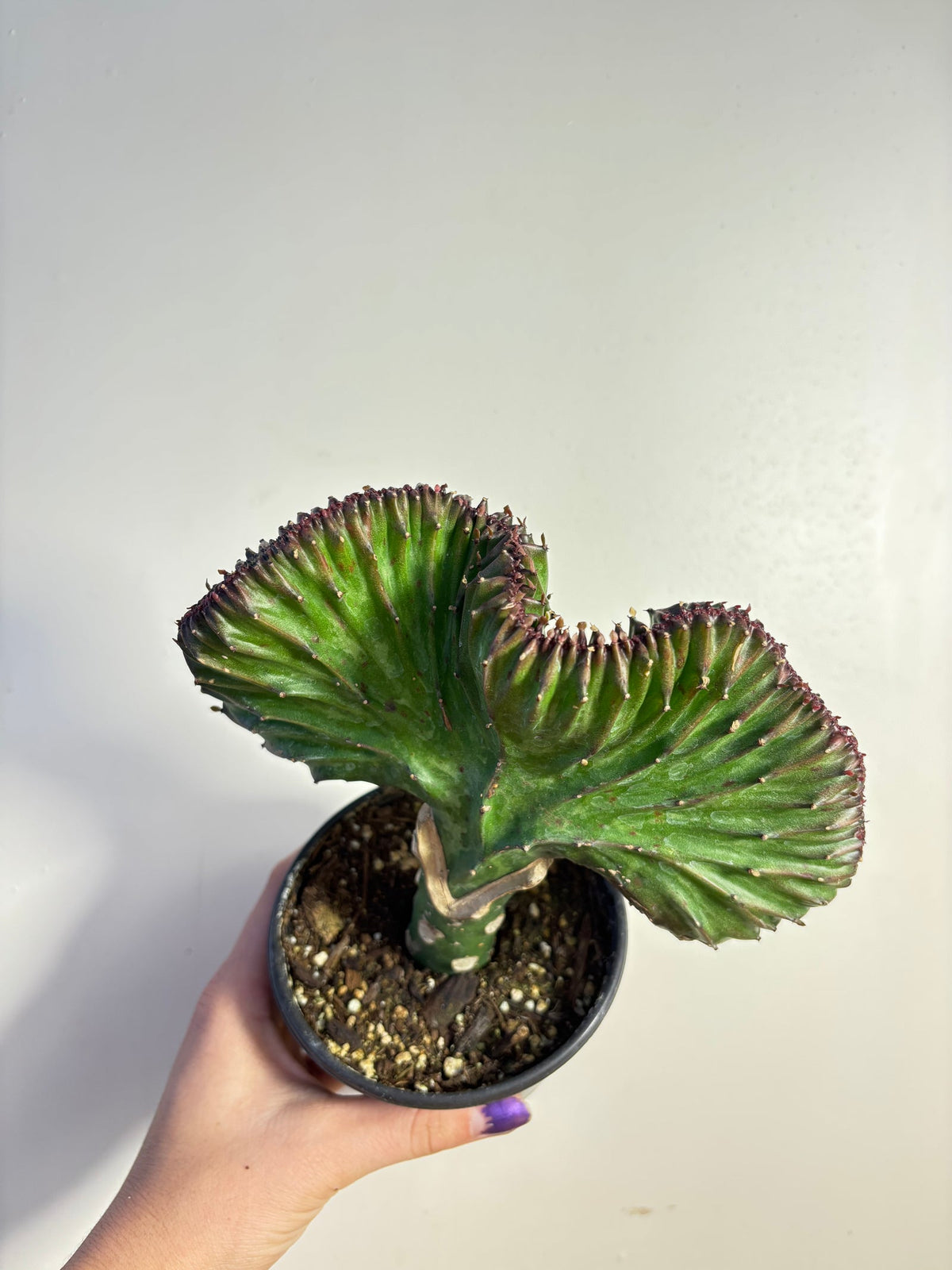
 Grafted Euphorbia lactea Cristata "Mermaids Tail Cactus"
Learn more: Pillar 2, Lighting →
Pillar 3
💧 Watering
What they need: soak and dry. Water deeply, then let the soil dry out completely before watering again.
• Water slowly until it runs out the drainage hole, then empty the saucer.
• Before watering, check that the soil is dry all the way down with a wooden skewer or by the weight of the pot.
• Spring and summer: roughly every 1–3 weeks, depending on light, heat, and pot size.
• Fall and winter: about once a month or less. Many cacti need almost no water while they rest.
• In dry climates like Colorado or Arizona, soil dries faster, so check more often.
Signs of overwatering:
• Soft, mushy, or see-through leaves
• Black or brown base
• Leaves falling off when touched
Signs of underwatering:
• Wrinkled, shriveled, or deflated leaves and stems
• Dry, crispy lower leaves
• Leaves firm back up a day or two after a good soak
 The Golden Barrel Cactus
(Kroenleinia grusonii, formerly Echinocactus grusonii)
Learn more: Pillar 3, Watering →
Pillar 4
🌡️ Environment
What they need: warm days, dry air, good airflow, and a cooler, drier rest in winter.
Ideal conditions:
• 65–85°F in spring and summer
• 50–60°F in winter (a cool rest helps many cacti flower)
• Low humidity; normal household air is fine
• Steady airflow
Avoid:
• Temperatures below 50°F for most species, and frost entirely
• Humid bathrooms and closed terrariums
• Cold and wet at the same time, which is the most common cause of rot
 African Milk Tree (
Learn more: Pillar 4, Environment →
Pillar 5
🪴 Plant Nutrients
What they need: light, slow feeding during the growing season, and nothing during winter rest.
• Feed in spring and summer, when you see new growth.
• Stop feeding in fall and winter.
• Choose a gentle, mineral-rich food. Too much nitrogen makes growth soft and floppy.
• Don't feed a plant that was just repotted or is stressed. Let it settle in first.
Benefits of the right feeding:
• Firmer, more compact growth
• Brighter color
• More flowers
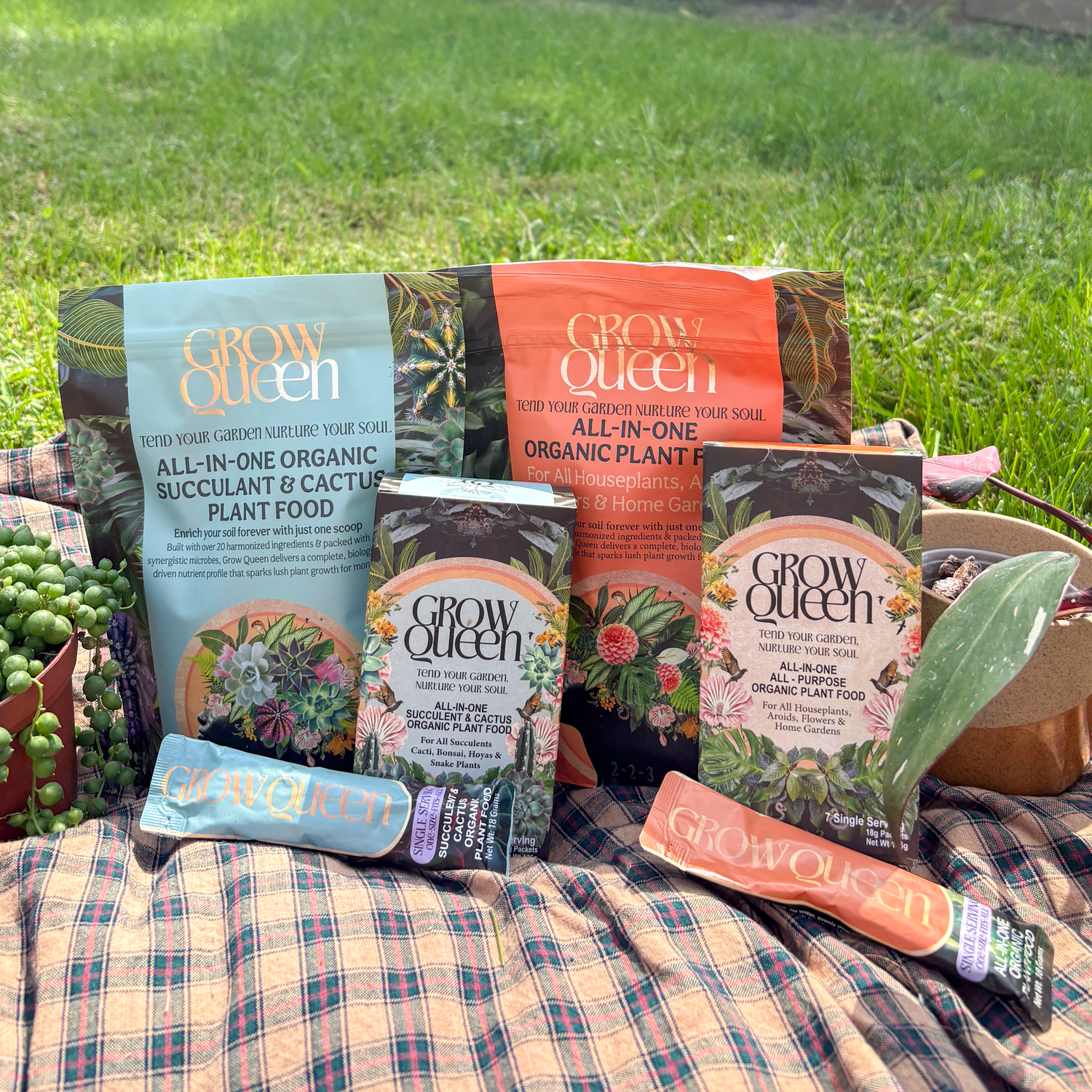
Grow Queen pick: Organic Succulent & Cactus Plant Food. It's a dry formula you apply to the soil and water in slowly, so it feeds over time without keeping the soil wet.
 Thimble Cactus (
Mammillaria Vetula)
Learn more: Pillar 5, Plant Nutrients →
🍂 Common Problems
Why is my cactus or succulent turning mushy?
This is almost always rot, caused by too much water, soil that doesn't drain, or cold, wet conditions. Take it out of the pot, cut away anything soft, and let the healthy part callus before replanting it in dry, gritty soil. Our drooping cactus rescue guide walks you through it.
Why is it stretching or leaning?
It isn't getting enough light. Move it somewhere brighter, gradually. The stretched part won't shrink back, but new growth will come in compact.
Why are the leaves wrinkled?
If the soil is bone dry, the plant is thirsty, so give it a deep soak. If the soil is wet and it's still wrinkled, check the roots for rot.
Why are the bottom leaves drying up?
Losing a few lower leaves is normal as the plant grows. Losing a lot at once usually means it's underwatered or root-bound.
⚠️ Pet Safety
It depends on the plant. Echeveria, haworthia, and most true cacti are generally considered non-toxic, though spines can still hurt a curious pet. Jade (Crassula) and aloe are toxic to cats and dogs, and euphorbias like Crown of Thorns have irritating sap. Look up your specific plant, and keep these out of reach.
🌿 Bottom Line
Cacti and succulents mostly need you not to overdo it. Start with gritty soil, give them as much light as you can, water deeply but rarely, and let them rest in winter.
Coming Soon: Craft Desert Mix
Our new small-batch soil for cacti and succulents. It's chunky, gritty, and peat-free, and it drains fast so it never stays soggy. Pair it with our Succulent & Cactus Plant Food for the complete desert setup.





0 comments