
Grow Queen Plant Care Guide
Grafted Cactus (Moon Cactus)
Grafted cacti, like the neon red, orange, yellow and pink moon cactus, are two plants joined into one. They are small, cheerful and easy to keep, as long as you care for both halves.

A moon cactus is a colorful top grafted onto a green base. The top cannot feed itself, so caring for a grafted cactus really means caring for the rootstock underneath. This guide walks through Grafted Cactus (Moon Cactus) care using Grow Queen's 5 Pillars of Plant Care.
🌿 Quick Care Snapshot
🌏 Know Your Plant
The colorful ball on a moon cactus is a mutant form of Gymnocalycium mihanovichii, a small cactus that Kew's Plants of the World Online lists as native to Paraguay and northern Argentina. The bright top has no chlorophyll, so it cannot make its own food. It survives only when grafted onto a green cactus rootstock, usually Hylocereus undatus, a tropical, climbing cactus that does the photosynthesis for both. Wild Gymnocalycium often grow in the shade of other desert plants, which is why moon cacti want bright light but not harsh direct sun. Another common grafted plant is crested Euphorbia lactea 'Cristata', a fan-shaped succulent from a different family (Euphorbiaceae). Its care is similar, but its milky sap is toxic.
• Family: Cactaceae (cactus family) for moon cactus
• Top: Gymnocalycium mihanovichii, native to Paraguay and northern Argentina (per Kew POWO)
• Rootstock: usually Hylocereus undatus, a green tropical cactus
• Crested Euphorbia lactea is a grafted look-alike in the spurge family
✨ Fun Facts
• The colorful moon cactus tops have no chlorophyll, so they can only live grafted onto a green cactus.
• Japanese nurseryman Eiji Watanabe is credited with developing the first red 'Hibotan' moon cactus, introduced in 1948.
• At least 16 color variants of these grafted cacti have been described.
• By 2011, about 70% of the world's grafted moon cacti were produced in South Korea.
Pillar 1
🌱 Soil & Growth Medium
What they need: A gritty, fast-draining cactus mix.
Use a well-drained cactus or succulent mix in a pot with drainage holes. The rootstock rots if it sits in wet soil, and when the rootstock fails, the colorful top fails with it. Most grafted cacti stay small and are sold in pots 4 inches or smaller.
• Repot in spring only when the plant outgrows its pot.
• Avoid oversized pots that stay wet.
• Handle with folded newspaper or thick gloves to avoid spines.
• Wear gloves with Euphorbia lactea. Its sap irritates skin and eyes.
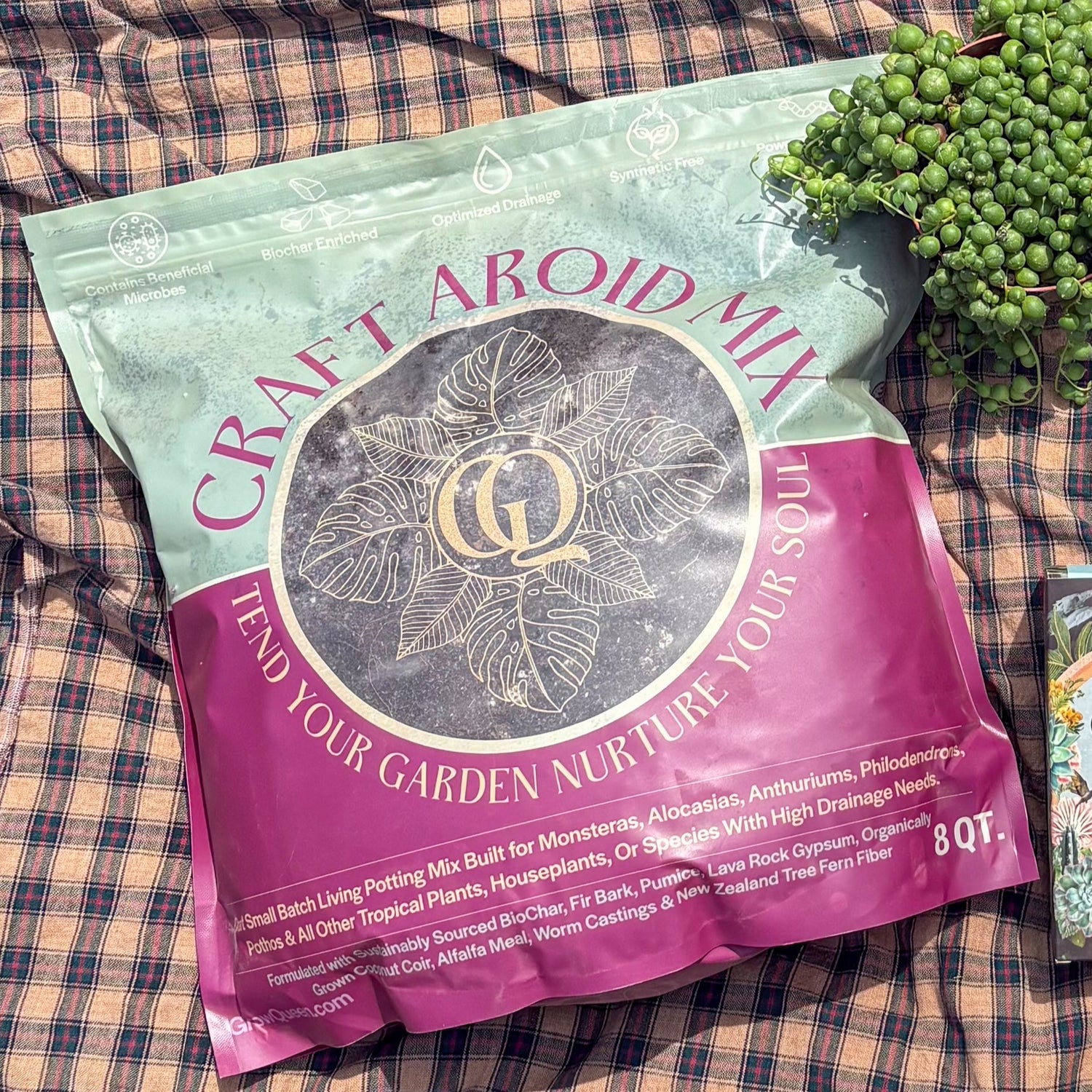
Grow Queen pick: Craft Desert Mix. Craft Desert Mix is chunky, gritty and peat-free, which gives the rootstock the fast drainage a grafted cactus needs.
Learn more: Pillar 1, Soils & Growth Mediums →
Pillar 2
☀️ Lighting
What they need: Bright, indirect light, not full sun.
Grafted cacti grow best in bright, indirect light. Too much direct sun can scorch them, and the colorful top is especially prone to sunburn because it has no chlorophyll to protect it. A spot near an east window, or a bright window with a sheer curtain, works well. The green rootstock still needs good light to feed the whole plant.
Signs of too little light:
• The rootstock stretches and looks thin or pale.
• Slow or no growth.
• The plant leans toward the window.
Signs of too much light:
• Bleached, tan or brown scorched patches on the top.
• Faded color on the grafted ball.
• A yellowing rootstock.
Learn more: Pillar 2, Lighting →
Pillar 3
💧 Watering
What they need: Water sparingly. Let the mix dry out completely.
Water thoroughly, let it drain, then wait until the mix is completely dry before watering again. In winter, the plant rests, so reduce watering even further and give only enough to keep it from shriveling. Never leave the pot sitting in water.
Signs of overwatering:
• Soft, dark or mushy rootstock near the soil line.
• The top wobbles or separates from the base.
• Fungal spots on the stem.
Signs of underwatering:
• Shriveled or wrinkled rootstock.
• The colorful top looks deflated.
• No new growth during spring and summer.
Learn more: Pillar 3, Watering →
Pillar 4
🌡️ Environment
What they need: Warm, dry air and protection from cold.
NC State Extension recommends temperatures between 68 and 86°F and low humidity. Moon cacti are not frost tolerant, so bring any plants that summered outside back indoors before nights fall below 50°F. High humidity and wet soil invite fungal problems.
Ideal conditions:
• 68 to 86°F while growing
• Low humidity, typical of heated homes
• Bright, indirect light
• A cooler, drier winter rest above 50°F
Avoid:
• Temperatures below 50°F and frost
• Humid spots like bathrooms
• Hot, unfiltered afternoon sun
Learn more: Pillar 4, Environment →
Pillar 5
🪴 Plant Nutrients
What they need: Light feeding during the growing season only.
Fertilize only while the plant is actively growing in spring and summer. The RHS suggests feeding cacti about once a month in the growing season with a cactus fertilizer. Do not feed in winter.
Benefits of the right feeding:
• Steady growth of the rootstock that feeds the top
• Healthy offsets on the grafted ball
• Better color and vigor
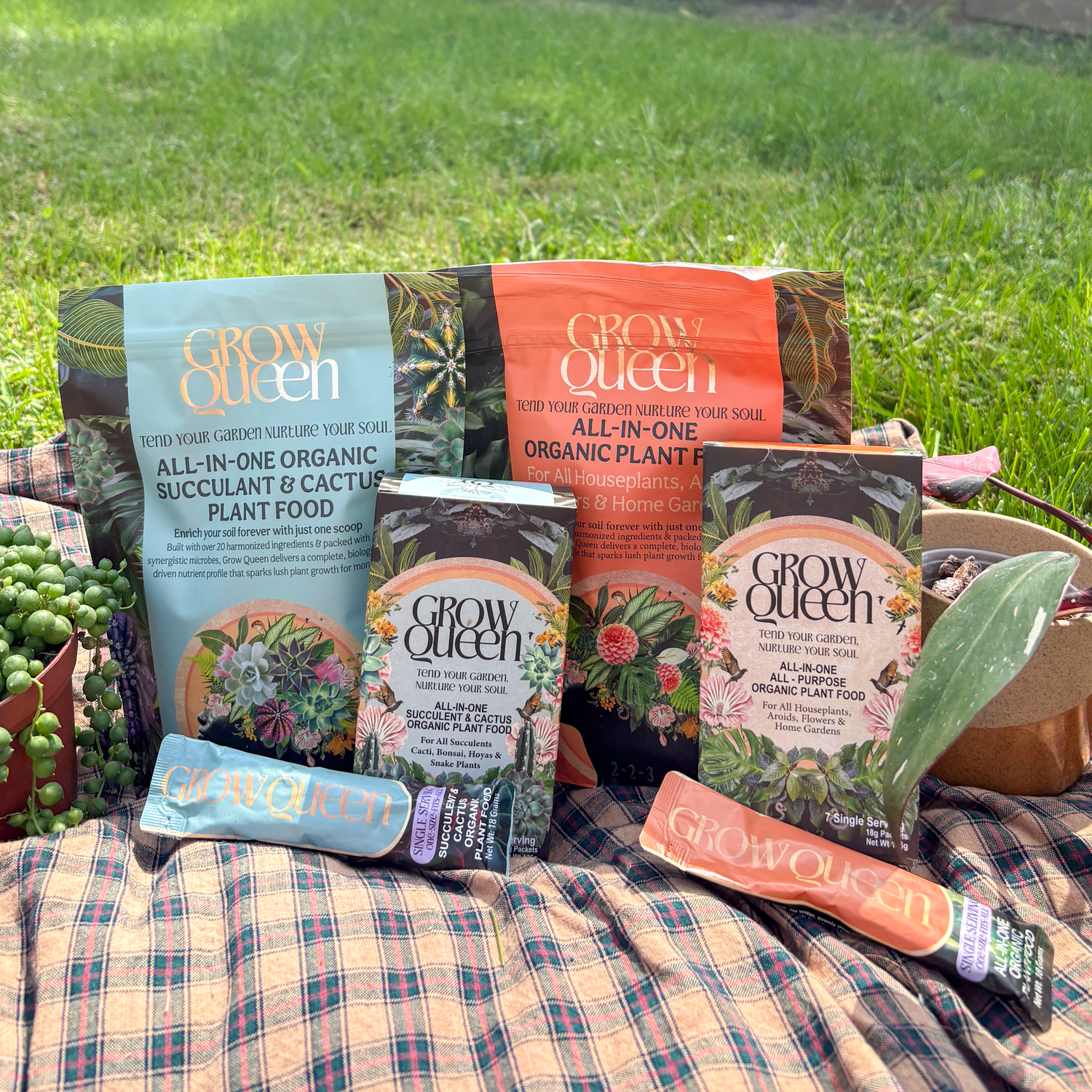
Grow Queen pick: Organic Succulent & Cactus Plant Food. Organic Succulent & Cactus Plant Food is made for cacti and succulents, a fit for the light growing-season feeding grafted cacti want.
Learn more: Pillar 5, Plant Nutrients →
🍂 Common Problems
Why is my moon cactus rotting at the base?
Rot almost always comes from too much water or a mix that stays wet. Let the soil dry completely between waterings and use a gritty cactus mix. If the rootstock has gone soft, the plant may not recover unless the top is regrafted onto a new rootstock.
Why is the colorful top dying while the base looks fine?
Over time the top and rootstock can grow at different rates, and the graft can weaken. University of Arkansas Extension notes that most moon cacti last only a couple of years unless they are regrafted onto a new rootstock. Strong sun can also scorch the top.
Why does my moon cactus have brown or tan patches?
Usually sunburn. The colorful top has no chlorophyll and scorches easily. Move the plant to bright, indirect light and out of direct afternoon sun.
Can I grow the colorful top on its own?
No. Because it has no chlorophyll, the colorful top cannot feed itself. Its offsets lack chlorophyll too, so they also need a green rootstock to survive.
✂️ Maintenance & Growth Tips
• Turn the pot now and then so the rootstock grows evenly.
• Repot only when crowded, using fresh gritty mix.
• Brush dust off with a soft brush.
• Check for mealybugs, spider mites and aphids. Isolate affected plants and remove pests by hand.
• Wear gloves when handling crested Euphorbia, since its milky sap is toxic.
⚠️ Pet Safety
We could not find moon cactus (Gymnocalycium mihanovichii) or crested Euphorbia lactea on the ASPCA's plant list, so use caution and keep them out of reach. NC State Extension lists Euphorbia lactea as a problem for dogs and cats, with toxic milky sap that can irritate skin, eyes and mouth. The ASPCA does list a related plant, pencil cactus (Euphorbia tirucalli), as toxic to dogs and cats. Spines are also a hazard for curious pets.
🌿 Bottom Line
A grafted cactus is two plants in one. Keep the green rootstock healthy with a gritty mix, bright indirect light and sparse watering, and the colorful top will stay healthy too.
Expect grafts to have a limited life unless they are regrafted, and protect the top from harsh sun. For crested Euphorbia, the care is similar, but always handle it with gloves.
Grow Queen Picks for Grafted Cactus (Moon Cactus)
The soil and food to keep your Grafted Cactus (Moon Cactus) growing strong.





0 comments