
Grow Queen Plant Care Guide
Money Tree (Pachira aquatica)
The money tree is a small indoor tree with glossy, hand-shaped leaves, often sold with several trunks braided together. It is easygoing once it settles into the right spot.

Money trees are low-maintenance but dislike change. Find a bright spot, set a steady watering routine, and then leave it alone to grow. This guide walks through Money Tree (Pachira aquatica) care using Grow Queen's 5 Pillars of Plant Care.
🌿 Quick Care Snapshot
🌏 Know Your Plant
Pachira aquatica is in the mallow family, Malvaceae. Kew's Plants of the World Online lists its native range as Mexico to southern tropical America, where it grows as a tree in the wet tropics. NC State Extension notes it is found in freshwater swamps, estuaries, along riverbanks and in rainforests, and can reach 60 feet tall in the wild. NYBG points out that the plant in your home is a juvenile that would be shaded by taller trees in nature, and that it is used to heavy rain followed by drier spells. Indoors that means bright filtered light, a deep watering followed by a partial dry-down, decent humidity and a mix that drains well.
• Family: Malvaceae (mallow family)
• Native from Mexico to southern tropical America (per Kew POWO)
• Wetland tree with a swollen base that stores water
• Usually grows 3 to 8 feet tall indoors
✨ Fun Facts
• The braided trunks are possible because young stems are flexible. NC State Extension says braiding began in Taiwan, where the plant became popular in the 1980s.
• Its night-fragrant flowers last just one day and have 200 to 250 long, red-tipped stamens, though indoor plants rarely bloom.
• It also goes by Malabar chestnut, Guiana chestnut and Mexican fortune tree.
• The species name aquatica is Latin for aquatic, a nod to its wetland home.
Pillar 1
🌱 Soil & Growth Medium
What they need: A rich, moisture-holding mix that still drains fast.
NYBG recommends a good quality houseplant mix that holds moisture and drains quickly, in a pot with a drain hole. NC State Extension warns that standing water is not tolerated and causes root rot. Repot every two or three years in spring, moving up just one pot size.
• Always use a pot with a drainage hole.
• Disturb the roots as little as possible when repotting. Money trees often drop leaves after root disturbance.
• Repot in spring when the plant is growing strongly.
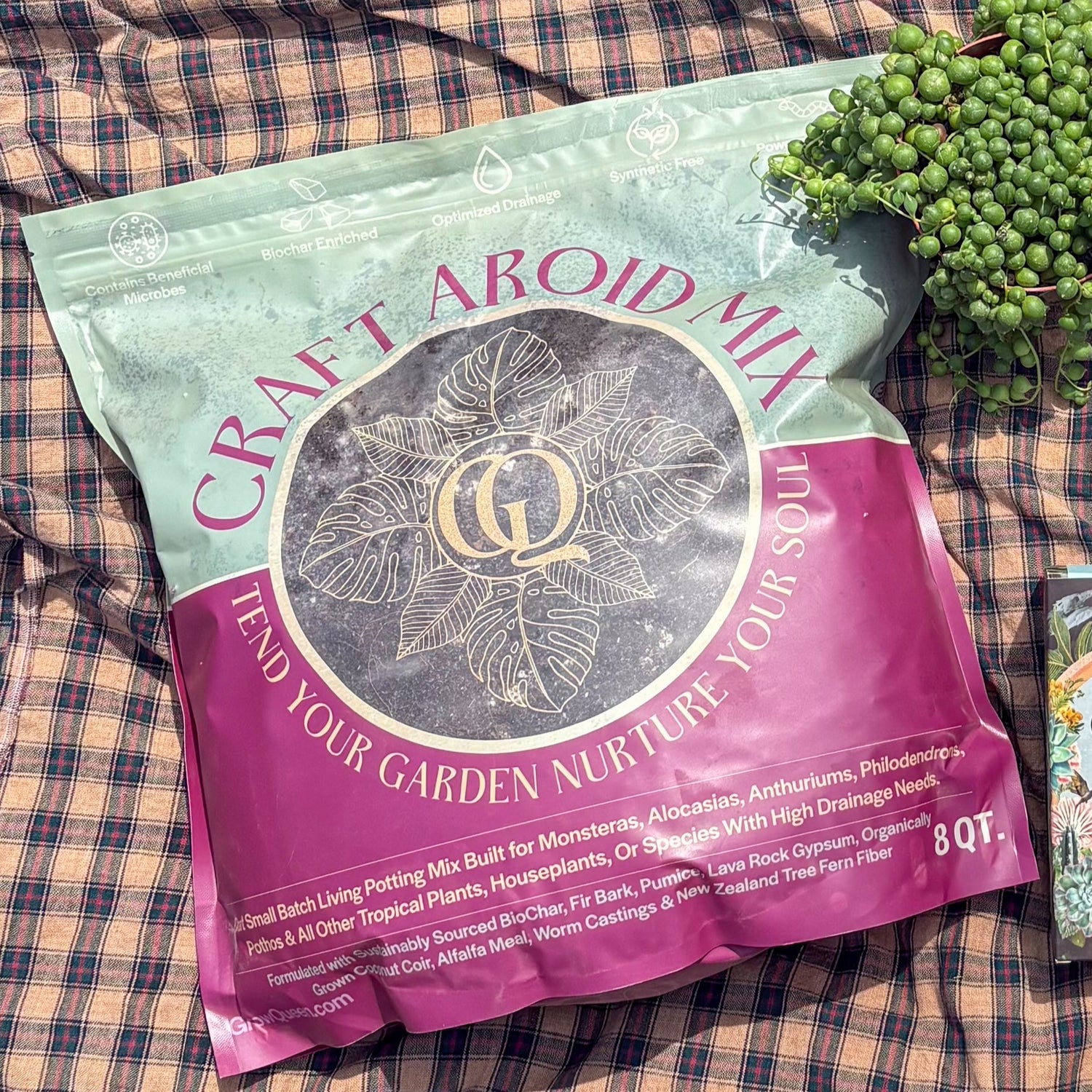
Grow Queen pick: Craft Houseplant Potting Mix. Craft Houseplant Potting Mix holds moisture evenly while staying aerated, which fits a wetland tree that likes a good drink but can't sit in soggy soil.
Learn more: Pillar 1, Soils & Growth Mediums →
Pillar 2
☀️ Lighting
What they need: Bright, filtered light for most of the day.
NYBG suggests a room that gets sun most of the day, with the plant set back from the window rather than right in it. Strong direct sun can cause leaf scorch. It will survive in lower light, but it slowly declines and loses its full look. Turn the pot each time you water so it grows evenly.
Signs of too little light:
• Leaves yellowing and dropping, especially in fall.
• Sparse, leggy growth.
• Plant leaning toward the window.
Signs of too much light:
• Scorched, brown patches on leaves.
• Pale or bleached leaves.
• Crispy leaf edges.
Learn more: Pillar 2, Lighting →
Pillar 3
💧 Watering
What they need: Water deeply, then let the mix nearly dry.
Water until the mix is moist through, then empty the saucer after about 15 minutes. Let the soil nearly dry before watering again, but don't let the roots go bone dry. In winter the mix may dry faster or slower depending on your heat and light, so check it rather than watering on a schedule.
Signs of overwatering:
• Yellow leaves.
• Soft, rotting stems or a mushy trunk base.
• Soil that stays wet for days.
Signs of underwatering:
• Leaves dropping.
• Crispy, curling leaves.
• Very dry mix pulling away from the pot.
Learn more: Pillar 3, Watering →
Pillar 4
🌡️ Environment
What they need: Warm, steady conditions with some humidity.
NYBG recommends a warm home between 65 and 85°F and humidity around 50%. Money trees dislike change, so drafts, vents and being moved around often lead to leaf drop. NC State Extension advises bringing plants inside before temperatures fall to 45°F.
Ideal conditions:
• 65 to 85°F
• Humidity around 50%, helped by a pebble tray in winter
• Bright, filtered light in a spot where it can stay put
• Gentle air circulation
Avoid:
• Cold drafts and air conditioning vents
• Drying heat from heating vents
• Moving the plant from spot to spot
Learn more: Pillar 4, Environment →
Pillar 5
🪴 Plant Nutrients
What they need: Regular feeding during the growing season only.
NYBG recommends a balanced organic fertilizer at half strength every two weeks from March to September, and none the rest of the year. NC State Extension notes yellow leaves can come from low humidity or a lack of nutrients in the soil.
Benefits of the right feeding:
• Full, glossy leaves
• Steady new growth after pruning
• Better color through the growing season
Grow Queen pick: Organic Time Release Plant Food. Organic Time Release Plant Food is mixed into or top-dressed on the soil and feeds for 1 to 6 months, an easy way to cover the spring and summer growing season.
Learn more: Pillar 5, Plant Nutrients →
🍂 Common Problems
Why is my money tree dropping leaves?
Money trees drop leaves when something changes: a move to a new spot, a draft, root disturbance or dry soil. Fix the cause and be patient. NYBG says the leaves usually return with the next flush of growth.
Why are the leaves turning yellow?
Yellow leaves with rotting stems point to overwatering or soil that holds too much water. Some yellowing in fall can come from shorter days and lower light. Low humidity or low nutrients can also yellow leaves.
Why are the leaves crispy and curling?
This usually means dry air, especially in winter, or an uneven watering routine. A pebble tray and a steadier watering rhythm help.
Can I cut back my money tree?
Yes. Prune in spring when it is growing strongly. Cut just above a node or leaf and remove no more than half a stem. Don't cut into the braided part of the trunk.
✂️ Maintenance & Growth Tips
• Rotate the pot each time you water for even growth.
• Prune in spring to shape and size, cutting just above a node.
• Remove dead leaves and branches with clean, sharp shears any time.
• Check stems and leaf joints for scale, mealybugs and aphids. Isolate and wipe any affected plant.
• Propagate from softwood cuttings.
⚠️ Pet Safety
The ASPCA lists the money tree (Pachira aquatica) as non-toxic to dogs, cats and horses. Its listing still notes nausea, vomiting and loose stool as possible signs if a pet eats it. Call your vet if your pet eats a large amount or seems unwell.
🌿 Bottom Line
Money trees want bright, filtered light, a mix that drains well, a deep drink followed by a near dry-down, and a warm, steady spot. Most problems come from too much water or too much change.
Feed it from March to September, prune in spring, and resist moving it around. Once it settles in, it is one of the easiest small trees you can grow indoors.
Grow Queen Picks for Money Tree (Pachira aquatica)
The soil and food to keep your Money Tree (Pachira aquatica) growing strong.





0 comments