Pillar 5: Plant Nutrients
← Back to the 5 Pillars of Plant Care · Find your plant's care guide
Plants need nutrients to grow, flower, and resist stress. Those nutrients fall into two groups: macronutrients, needed in larger amounts, and micronutrients, needed in tiny amounts. Each one has a specific job. Good feeding makes sure your plant has all of them.
Grow Queen Plant Food
Organic food for every kind of plant and every kind of plant parent.

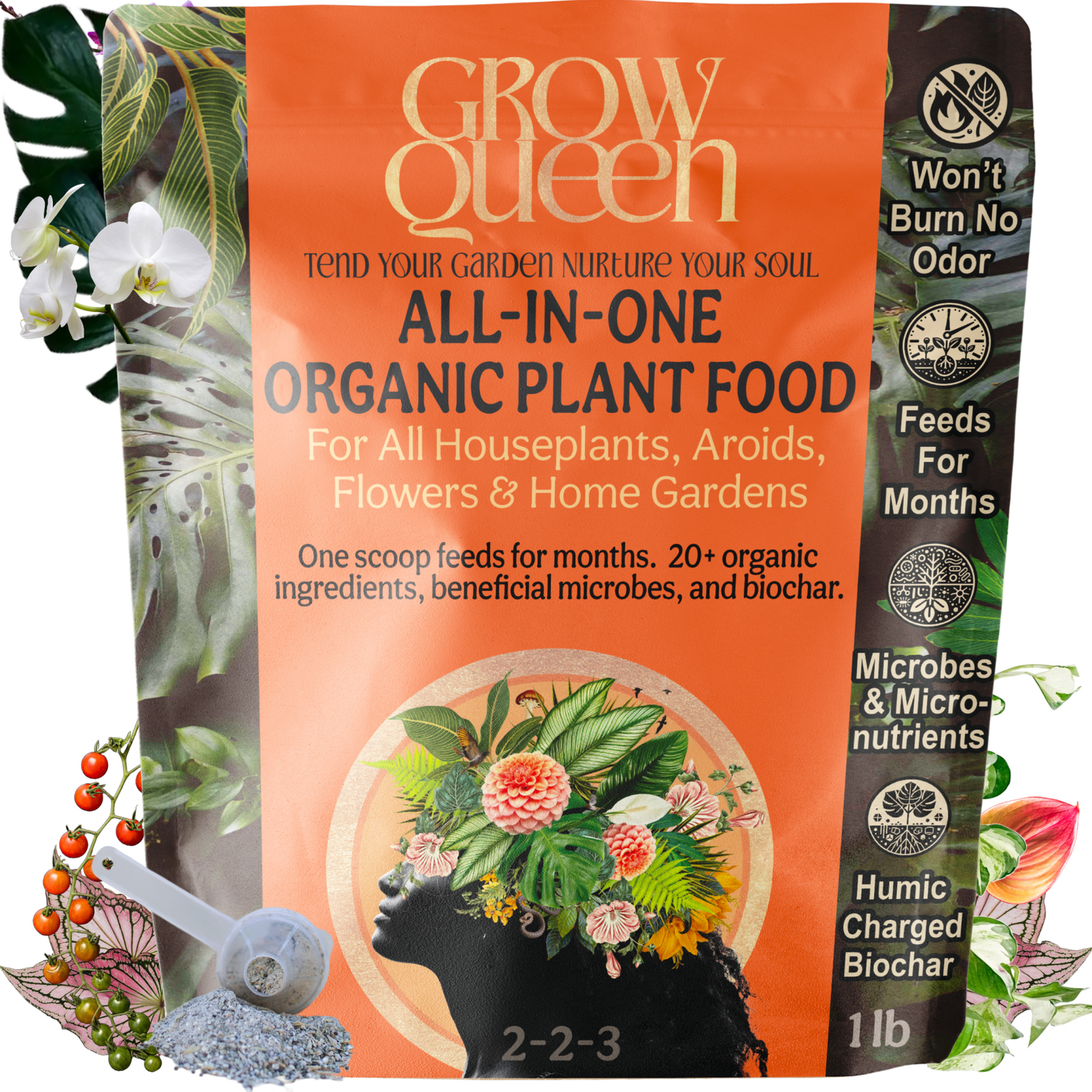
Organic Time Release Plant Food
Set it and forget it. One scoop feeds for up to six months, with beneficial microbes.
Shop Now →
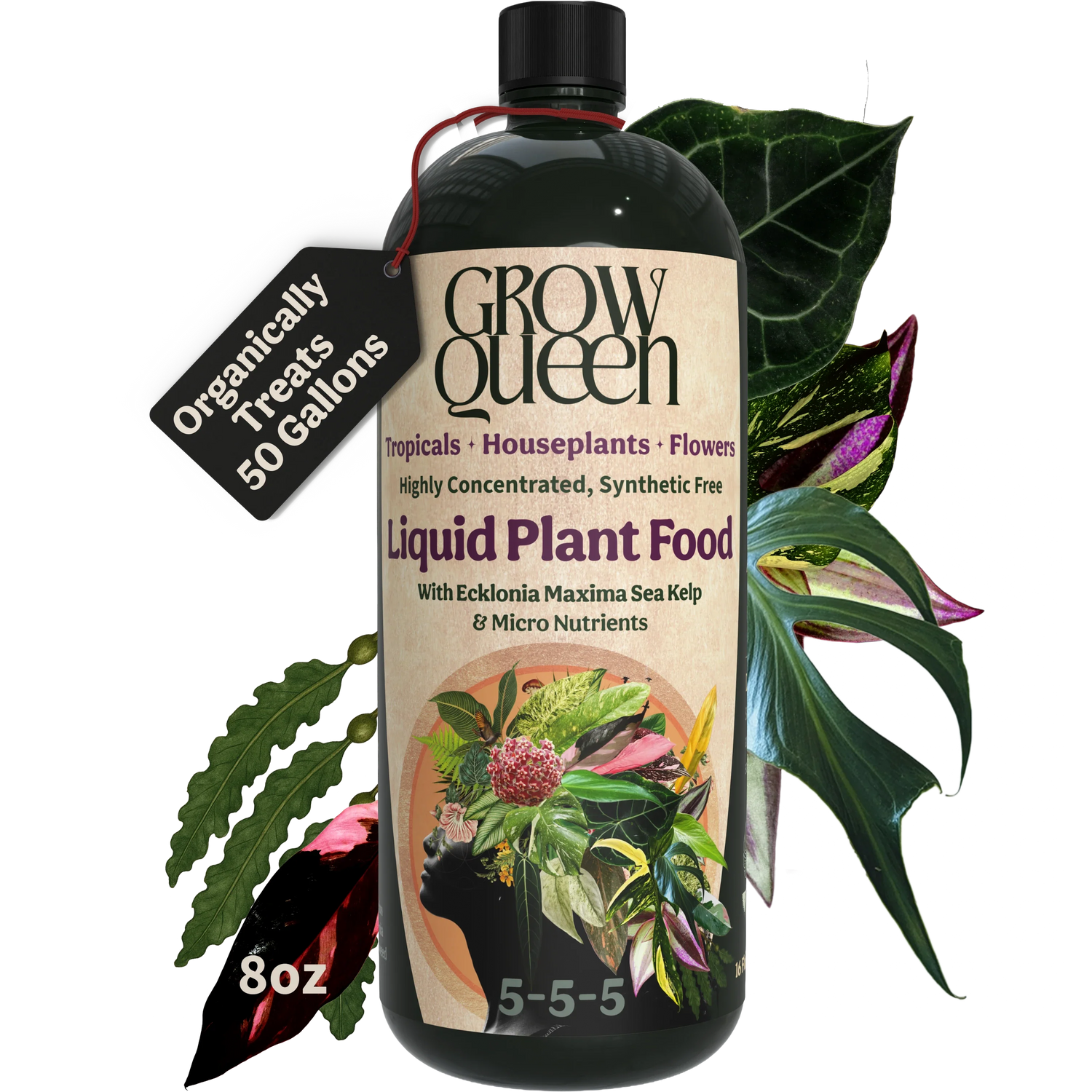
Organic 5-5-5 Liquid Plant Food
A gentle liquid feed that goes into your watering can during active growth.
Shop Now →
Organic Succulent & Cactus Plant Food
Made for cacti and succulents, which want lighter, leaner feeding.
Shop Now →
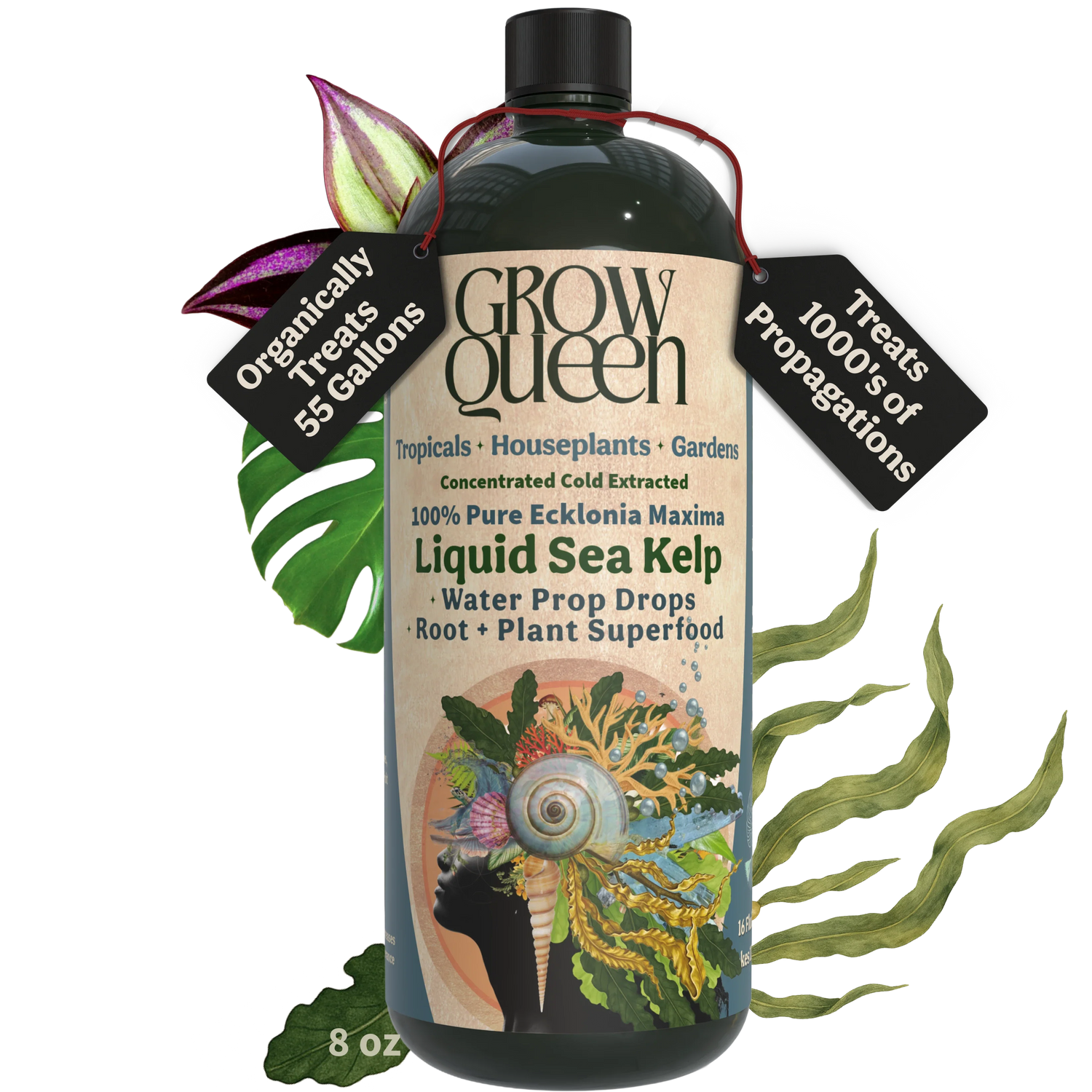
Ecklonia Maxima Kelp Extract
Root and soil support for repotting, pruning, and seasonal stress.
Shop Now →Which Food Is Right for You?
- You want the simplest routine: Organic Time Release Plant Food. Mix it into the soil or top-dress, and it feeds for 1 to 6 months.
- You like feeding when you water, or your plant is in a chunky mix: Organic 5-5-5 Liquid Plant Food.
- You grow cacti, succulents, haworthia, or agave: Organic Succulent & Cactus Plant Food.
- You just repotted, pruned, or moved a plant: add Ecklonia Maxima Kelp Extract.
- You want all three jobs covered: the Complete Fertilizer System bundles the time-release base, the liquid boost, and the kelp.
Macronutrients
-
Nitrogen (N)
Role: builds amino acids, proteins, and chlorophyll. Drives leafy growth.
Optimal range: 1.5 to 2.5% in plant tissue
Deficiency signs: yellowing of older leaves (chlorosis), stunted growth. -
Phosphorus (P)
Role: energy transfer (ATP), root development, and flowering.
Optimal range: 0.3 to 0.5% in plant tissue
Deficiency signs: dark green or purplish leaves, poor root growth, delayed maturity. -
Potassium (K)
Role: regulates water uptake, enzyme activation, and photosynthesis. Improves disease resistance.
Optimal range: 1.5 to 2.5% in plant tissue
Deficiency signs: yellowing or browning at leaf edges, weak stems, lower yield. -
Calcium (Ca)
Role: cell wall structure, root development, and nutrient uptake.
Optimal range: 0.5 to 1.5% in plant tissue
Deficiency signs: distorted or irregular new leaves, blossom end rot in fruit. -
Magnesium (Mg)
Role: the center of the chlorophyll molecule. Supports enzymes and photosynthesis.
Optimal range: 0.2 to 0.4% in plant tissue
Deficiency signs: yellowing between the veins of older leaves, poor growth. -
Sulfur (S)
Role: part of amino acids, proteins, and vitamins. Supports enzyme function.
Optimal range: 0.1 to 0.3% in plant tissue
Deficiency signs: yellowing of new leaves, stunted growth.
Micronutrients
-
Iron (Fe)
Role: chlorophyll production and enzyme function.
Optimal range: 50 to 150 ppm in plant tissue
Deficiency signs: yellowing between the veins of young leaves. -
Manganese (Mn)
Role: photosynthesis, nitrogen metabolism, and enzyme activation.
Optimal range: 20 to 100 ppm in plant tissue
Deficiency signs: yellowing between the veins, brown spots on leaves. -
Copper (Cu)
Role: photosynthesis, respiration, and lignin production.
Optimal range: 5 to 20 ppm in plant tissue
Deficiency signs: stunted growth, shoot dieback, yellowing leaves. -
Zinc (Zn)
Role: enzyme function, protein production, and growth regulation.
Optimal range: 20 to 50 ppm in plant tissue
Deficiency signs: short spaces between leaves, malformed leaves. -
Boron (B)
Role: cell wall formation, membrane integrity, and reproduction.
Optimal range: 20 to 60 ppm in plant tissue
Deficiency signs: brittle leaves, poor fruit and seed development. -
Molybdenum (Mo)
Role: nitrogen fixation and nitrate reduction.
Optimal range: 0.1 to 1 ppm in plant tissue
Deficiency signs: yellowing between the veins, poor growth in legumes.
The Role of Microbes
In the wild
- Decomposition: bacteria and fungi break down organic matter and release nutrients into the soil.
- Nitrogen fixation: certain bacteria, like Rhizobium, turn nitrogen from the air into a form plants can use.
- Mycorrhizal partnerships: mycorrhizal fungi team up with roots to help them take up water and nutrients.
- Disease suppression: healthy soil microbes can crowd out harmful pathogens.
In your pots and garden
- Composting: adding compost boosts microbial life and improves soil structure.
- Biofertilizers: fertilizers that carry beneficial microbes help make nutrients more available.
- Crop rotation: rotating crops, especially with legumes, rebuilds soil nitrogen naturally.
- Cover cropping: cover crops prevent erosion, improve fertility, and feed soil life.
Synthetic vs. Organic Fertilizers
Synthetic fertilizers
- What they are: chemically manufactured and highly concentrated in specific nutrients.
- Pros: immediately available to plants, precise ratios, low cost.
- Cons: can cause nutrient imbalances and runoff pollution, and may harm beneficial soil life.
Organic fertilizers
- What they are: made from natural sources such as compost, plant meals, and bone meal.
- Pros: improve soil structure, feed beneficial microbes, release nutrients slowly.
- Cons: lower nutrient concentration and more variable content.
Nutrition by Region and Climate
Plants adapted to different places have different appetites:
- Tropical plants: evolved where heavy rain washes nutrients away, so they're efficient feeders. Steady, gentle feeding suits them.
- Desert plants: grow in lean, often alkaline soil and want light feeding with enough calcium and magnesium.
- Temperate plants: do well with balanced, regular feeding to replace what each season uses up.
The Bottom Line
Know what each nutrient does, feed in a way that keeps soil life healthy, and match your feeding to your plant and season. Feed during active growth, ease off in winter, and your plants will show it in color, growth, and resilience.
Start over: Pillar 1: Soil & Growth Mediums →