
Grow Queen Plant Care Guide
Spider Plant (Chlorophytum comosum)
Spider plants are fountains of arching, striped leaves that send out long stems tipped with baby plants. They are easy, adaptable and a classic choice for hanging baskets.

Spider plants forgive a lot, but a few details, like water quality and light, decide whether you get crisp tips or a full plant covered in babies. Here is how to cover each of the 5 Pillars. This guide walks through Spider Plant (Chlorophytum comosum) care using Grow Queen's 5 Pillars of Plant Care.
🌿 Quick Care Snapshot
🌏 Know Your Plant
Spider plant, Chlorophytum comosum, is an herbaceous perennial in the asparagus family, Asparagaceae. Kew's Plants of the World Online gives its native range as west tropical Africa to Cameroon and Ethiopia to South Africa, where it grows mainly in seasonally dry tropical habitat. That background explains its thick, water-storing roots and its tolerance for an occasional dry spell. It prefers medium light and moist soil but adapts to a wide range of indoor conditions.
• Family: Asparagaceae.
• Native to tropical and southern Africa.
• Thick roots store water, so it handles short dry spells.
• Spreads by long stems (stolons) that carry flowers and plantlets.
✨ Fun Facts
• Spider plants make their plantlets in response to short days. Less than 12 hours of light a day for at least three weeks triggers them.
• Heavy fertilizing can actually reduce the number of plantlets a spider plant makes.
• Solid green spider plants are the least common kind. Most sold have a white or yellow stripe, and 'Vittatum' is the most common.
• UF/IFAS no longer recommends spider plant for Florida landscapes because it is predicted to become invasive there.
Pillar 1
🌱 Soil & Growth Medium
What they need: A moist but well-drained potting mix.
Spider plants grow best in moist, well-drained soil with a roughly neutral pH. A standard houseplant mix in a pot with drainage holes works well. Their thick roots fill pots quickly, so plan on repotting young plants yearly.
• Repot about once a year while young, then every other year.
• Choose a pot with drainage holes, or a hanging basket.
• Divide large clumps when repotting to make new plants.
• Pot up plantlets in small pots of moist mix.
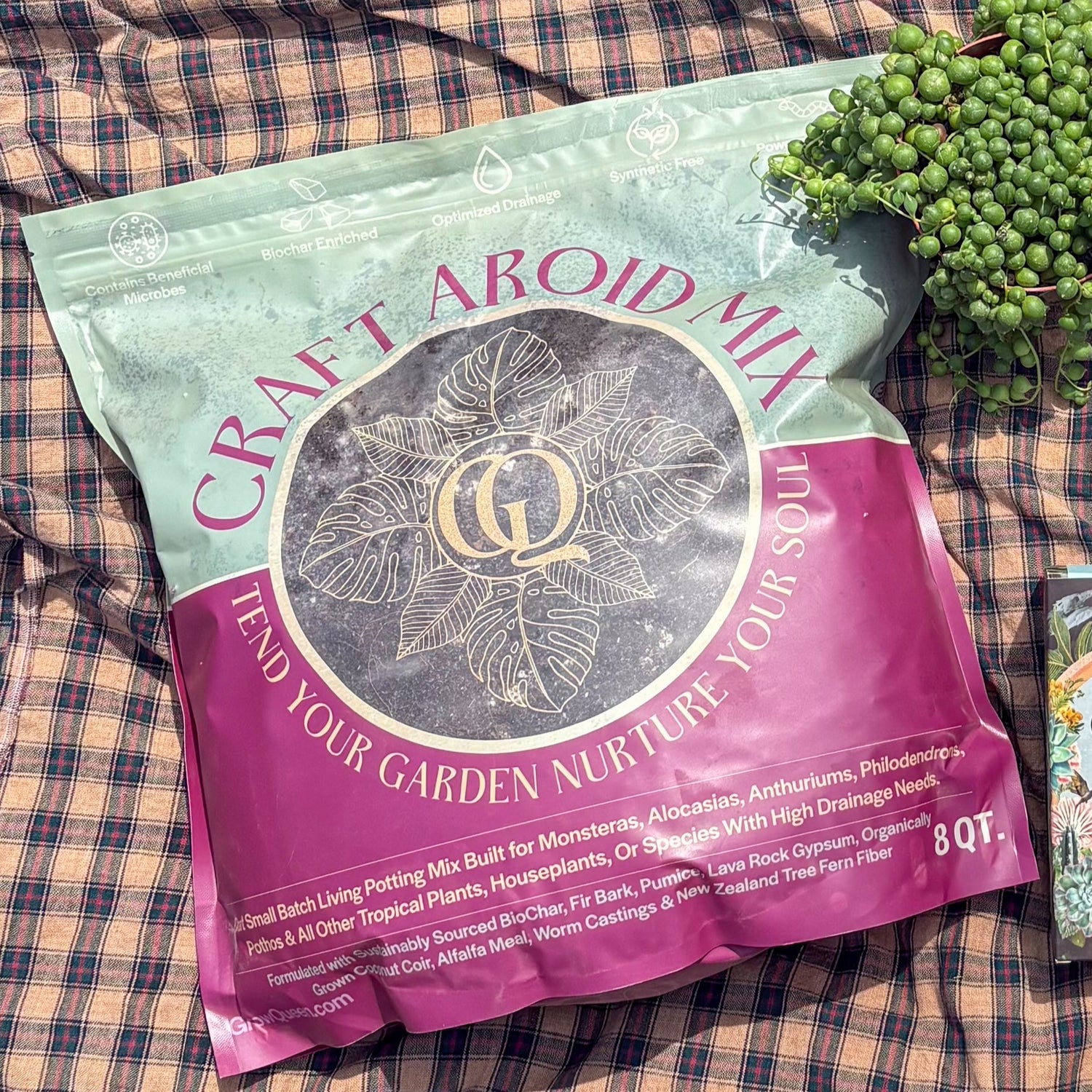
Grow Queen pick: Craft Houseplant Potting Mix. Craft Houseplant Potting Mix holds moisture evenly while staying aerated, a good match for a spider plant that likes moist, well-drained soil.
Learn more: Pillar 1, Soils & Growth Mediums →
Pillar 2
☀️ Lighting
What they need: Bright to moderate indirect light.
Spider plants prefer bright to moderate indirect light year-round and will tolerate shade. They do not like direct sun, which can scorch leaves. Striped forms keep their color best in brighter, indirect light.
Signs of too little light:
• Pale, washed-out stripes.
• Slow growth and few plantlets.
• Leaves becoming limp or floppy.
Signs of too much light:
• Scorched or bleached patches on leaves.
• Brown, crispy leaf tips.
• Leaves looking faded and yellowish.
Learn more: Pillar 2, Lighting →
Pillar 3
💧 Watering
What they need: Even moisture, with a short dry-down between drinks.
Let the top inch of mix dry briefly, then water thoroughly. Spider plants are sensitive to fluoride and chlorine, which can cause brown leaf tips, so rainwater or distilled water is best if your tap water is treated. Reduce watering in winter when growth slows.
Signs of overwatering:
• Yellowing leaves and a soft base.
• Mushy, brown roots.
• Mix that stays wet for days.
Signs of underwatering:
• Leaves fold, droop or look pale.
• Brown, dry tips spreading down the leaves.
• Mix pulls away from the pot edges.
Learn more: Pillar 3, Watering →
Pillar 4
🌡️ Environment
What they need: Average home temperatures and medium humidity.
UF/IFAS says temperatures below 55°F are too cool for spider plants and above 80°F too warm, and NC State advises keeping them above 45°F at the very least. They prefer medium humidity. A pebble tray or humidifier helps if the air is very dry.
Ideal conditions:
• Temperature: about 55 to 80°F.
• Humidity: medium. Add a pebble tray in dry winter air.
• A hanging basket or high shelf where leaves can cascade.
• Bright room with no direct sun on the leaves.
Avoid:
• Temperatures below 45°F.
• Fluoridated or chlorinated water if tips keep browning.
• Hot, dry air from heat vents.
Learn more: Pillar 4, Environment →
Pillar 5
🪴 Plant Nutrients
What they need: Light feeding during the growing season.
Feed lightly in spring and summer and skip winter. Do not over-fertilize, since too much food reduces plantlet formation and can add to tip burn. A little goes a long way with this plant.
Benefits of the right feeding:
• Steady new leaves.
• Good leaf color and stripes.
• Healthy plantlets for sharing.
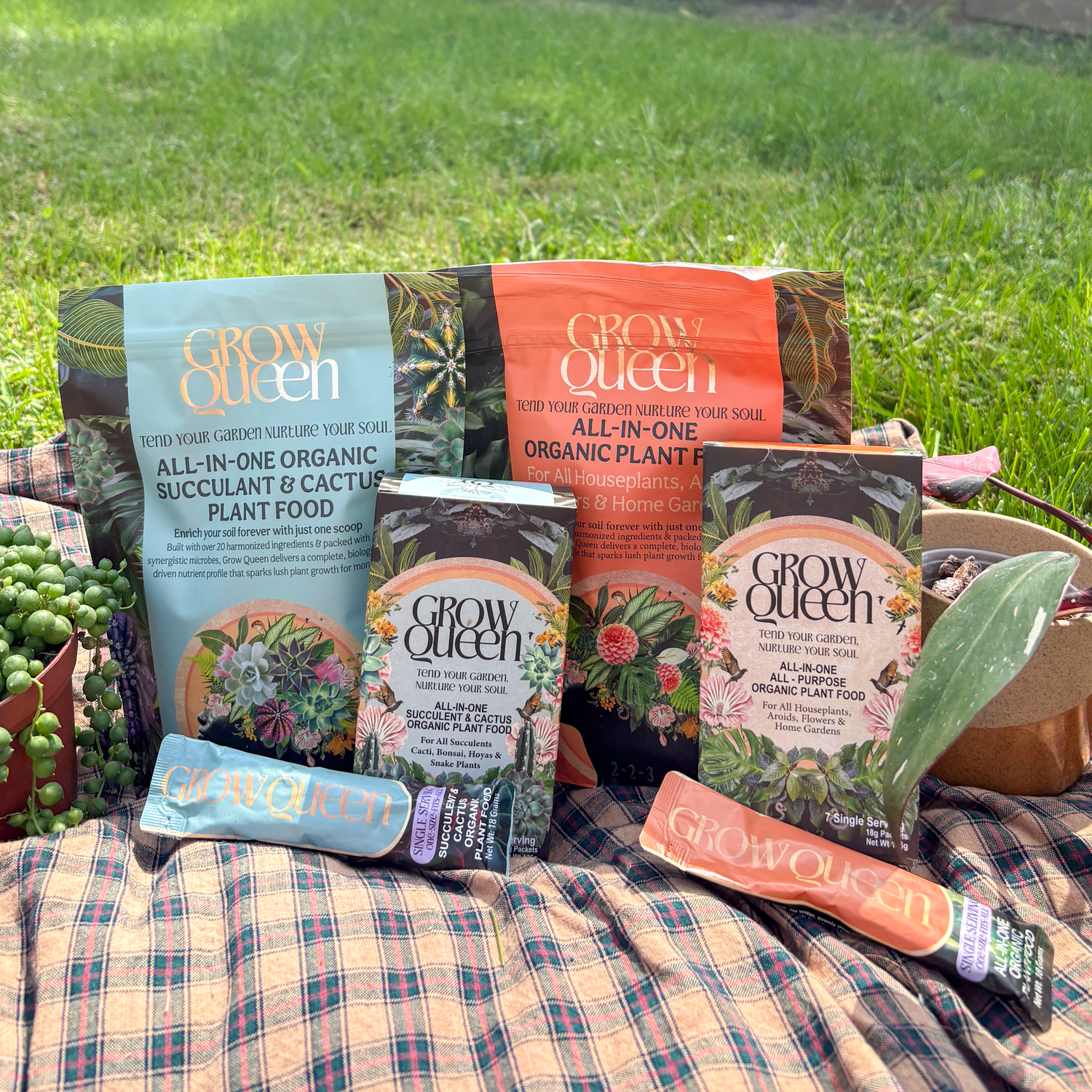
Grow Queen pick: Organic Time Release Plant Food. Organic Time Release Plant Food feeds gently over months, which suits a plant that should be fed lightly rather than heavily.
Learn more: Pillar 5, Plant Nutrients →
🍂 Common Problems
Why are my spider plant's leaf tips brown?
The most common cause is fluoride or chlorine in tap water. Dry air, uneven watering and too much fertilizer can also cause it. Switch to rainwater or distilled water, keep watering steady, and trim brown tips if you like.
Why isn't my spider plant making babies?
Plantlets form when the plant gets short days, under 12 hours of light, for a few weeks. Avoid heavy fertilizing, which reduces plantlet formation, and give the plant good indirect light.
Why is my spider plant pale or losing its stripes?
It likely needs more light. Move it to a bright spot with indirect light, out of direct sun.
Why are the leaves yellow and the base soft?
This usually points to overwatering. Let the top inch of mix dry before watering and make sure the pot drains freely.
✂️ Maintenance & Growth Tips
• Trim brown tips with clean scissors, following the leaf's natural shape.
• Root plantlets in small pots of moist mix, or cut them off once they have roots.
• Divide crowded clumps when repotting.
• Remove old, yellow leaves at the base.
• Wipe or rinse dusty leaves.
⚠️ Pet Safety
The ASPCA lists spider plant (Chlorophytum comosum) as non-toxic to dogs and cats. Eating any plant can still cause mild stomach upset, so hang it out of reach if your pet likes to nibble. If you are worried, call your vet or the ASPCA Animal Poison Control Center.
🌿 Bottom Line
Spider plants are easy if you give them bright, indirect light, a well-drained mix, and water when the top inch dries. Use rainwater or distilled water if you see brown tips.
Keep them warm, feed lightly, and repot as roots fill the pot. You will soon have plantlets to share.
Grow Queen Picks for Spider Plant (Chlorophytum comosum)
The soil and food to keep your Spider Plant (Chlorophytum comosum) growing strong.





0 comments