
Grow Queen Plant Care Guide
Pilea (Chinese Money Plant)
Pilea peperomioides, the Chinese money plant, wins people over with its round, coin-shaped leaves held out on long stalks. It grows fast, stays compact, and makes baby plants you can pot up and pass along to friends.

Pilea care is mostly about balance: bright light without hot sun, and water only when the top of the soil dries. Here is how to cover each of the 5 Pillars. This guide walks through Pilea (Chinese Money Plant) care using Grow Queen's 5 Pillars of Plant Care.
🌿 Quick Care Snapshot
🌏 Know Your Plant
Pilea peperomioides is native only to south-central China, where Kew's Plants of the World Online records it in southwest Sichuan and west Yunnan. Penn State Extension describes its home as the cool, shady mountains of Yunnan. It belongs to the nettle family (Urticaceae), but unlike stinging nettle it has no stinging hairs. A plant from shady, cool mountain slopes does best indoors in bright but indirect light, moderate room temperatures, and soil that drains well between waterings. Other pileas sold as houseplants, like the aluminum plant (Pilea cadierei) and friendship plant (Pilea involucrata), follow much the same care, though the thinner-leaved types like a little more humidity.
• Native range: south-central China (Sichuan and Yunnan), per Kew POWO
• Family: Urticaceae, the nettle family
• Habit: compact and upright, about 8 to 12 inches tall and wide indoors
• Easy to propagate from offsets (pups), stem cuttings or single leaves
✨ Fun Facts
• The species was formally named by the botanist Diels in 1912, according to Kew's Plants of the World Online.
• Pilea is the largest genus in the nettle family, with roughly 600 to 715 species, according to Penn State Extension.
• The Chinese money plant holds the Royal Horticultural Society's Award of Garden Merit, and the RHS also lists it under the name missionary plant.
• Even a single leaf can root. The RHS notes that individual Pilea peperomioides leaves will root in water or in moist compost.
Pillar 1
🌱 Soil & Growth Medium
What they need: A free-draining, peat-free potting mix that never stays soggy.
The RHS recommends peat-free multipurpose compost, and Penn State Extension suggests a well-drained houseplant potting mix. Pileas hate wet feet, so drainage matters more than anything else in the pot. Choose a pot only slightly larger than the root ball, because a pot that is too big keeps the soil wet for too long and can lead to root rot.
• Always use a pot with a drainage hole.
• Check the roots each spring and repot when they get crowded, usually every couple of years.
• Move up only about 1 to 2 inches in pot size.
• Repot in spring or summer, when the plant is actively growing.
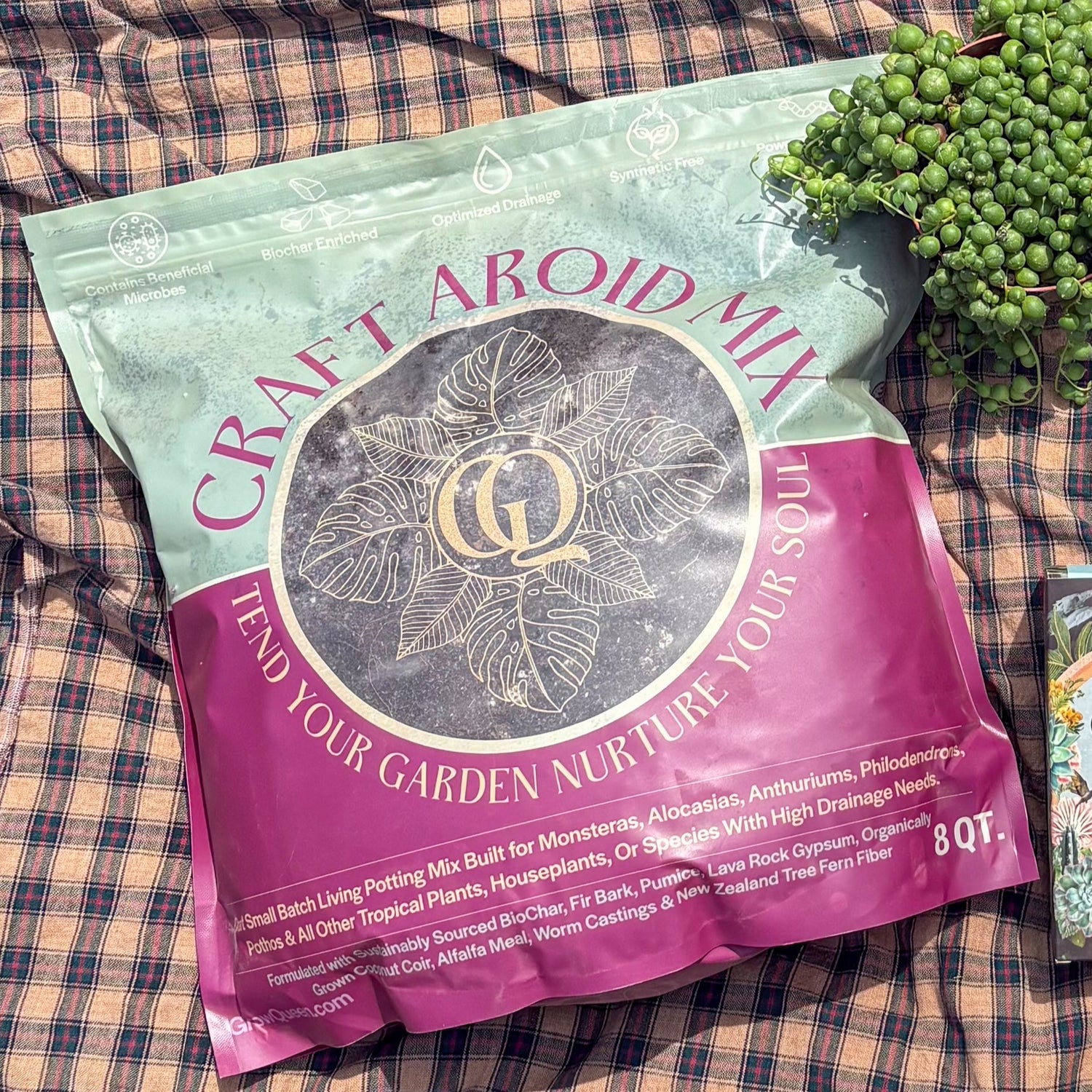
Grow Queen pick: Craft Houseplant Potting Mix. Craft Houseplant Potting Mix is peat-free and holds moisture evenly while staying aerated, which matches the free-draining, peat-free compost the RHS recommends for pileas.
Learn more: Pillar 1, Soils & Growth Mediums →
Pillar 2
☀️ Lighting
What they need: Bright, indirect light, with no hot direct sun.
Place your pilea near a north, east or west window, or set it back from a south window so summer sun does not hit the leaves. Penn State Extension notes that a sheer curtain or blinds work well to filter strong light. Give the pot a quarter turn each time you water so the plant grows evenly instead of leaning toward the window.
Signs of too little light:
• Long, stretched stems with leaves spaced far apart
• The whole plant leans hard toward the window
• Slow growth and smaller new leaves
Signs of too much light:
• Leaves flushed red-brown
• Scorched or faded patches on the leaves
• Leaves curling or puckering in strong summer sun
Learn more: Pillar 2, Lighting →
Pillar 3
💧 Watering
What they need: Water when the top inch of soil is dry, then let the extra drain away.
Check with your finger or by lifting the pot. When the top inch feels dry, water thoroughly and empty the saucer so the pot never stands in water. Overwatering is the most common way to lose a pilea, because soggy soil rots the roots. In winter, growth slows and the plant needs less water, so check more often before you water.
Signs of overwatering:
• Yellowing lower leaves and drooping despite wet soil
• Soft, dark stem base or a sour smell from the soil
• Soil that stays wet for many days after watering
Signs of underwatering:
• Leaves droop and feel thin or limp
• Leaves curl inward at the edges
• Soil pulls away from the sides of the pot
Learn more: Pillar 3, Watering →
Pillar 4
🌡️ Environment
What they need: Normal room warmth, no cold drafts, and average home humidity.
Penn State Extension recommends daytime temperatures of 65 to 75°F with nights above 55°F, and the RHS says to keep pileas above 50°F at all times. Most pileas are comfortable in the relatively dry air of a typical home. Keep plants away from cold windows, heating vents and air conditioners.
Ideal conditions:
• Daytime 65 to 75°F, nights above 55°F
• Average indoor humidity for Pilea peperomioides
• A pebble tray or terrarium for thin-leaved types like friendship plant
• Steady conditions away from vents and drafty doors
Avoid:
• Temperatures below 50°F
• Cold drafts from windows in winter
• Very humid, stagnant spots, which can lead to grey mould and leaf spot
Learn more: Pillar 4, Environment →
Pillar 5
🪴 Plant Nutrients
What they need: Light, occasional feeding during the growing season.
The RHS suggests feeding pileas every month or two from spring through early fall, and warns that overfeeding does more harm than good. Skip feeding in late fall and winter when growth slows. Yellowing between the leaf veins is often a sign the plant is short on nutrients.
Benefits of the right feeding:
• Steady new growth through spring and summer
• Even green color in the leaves
• Energy to push out new pups around the base
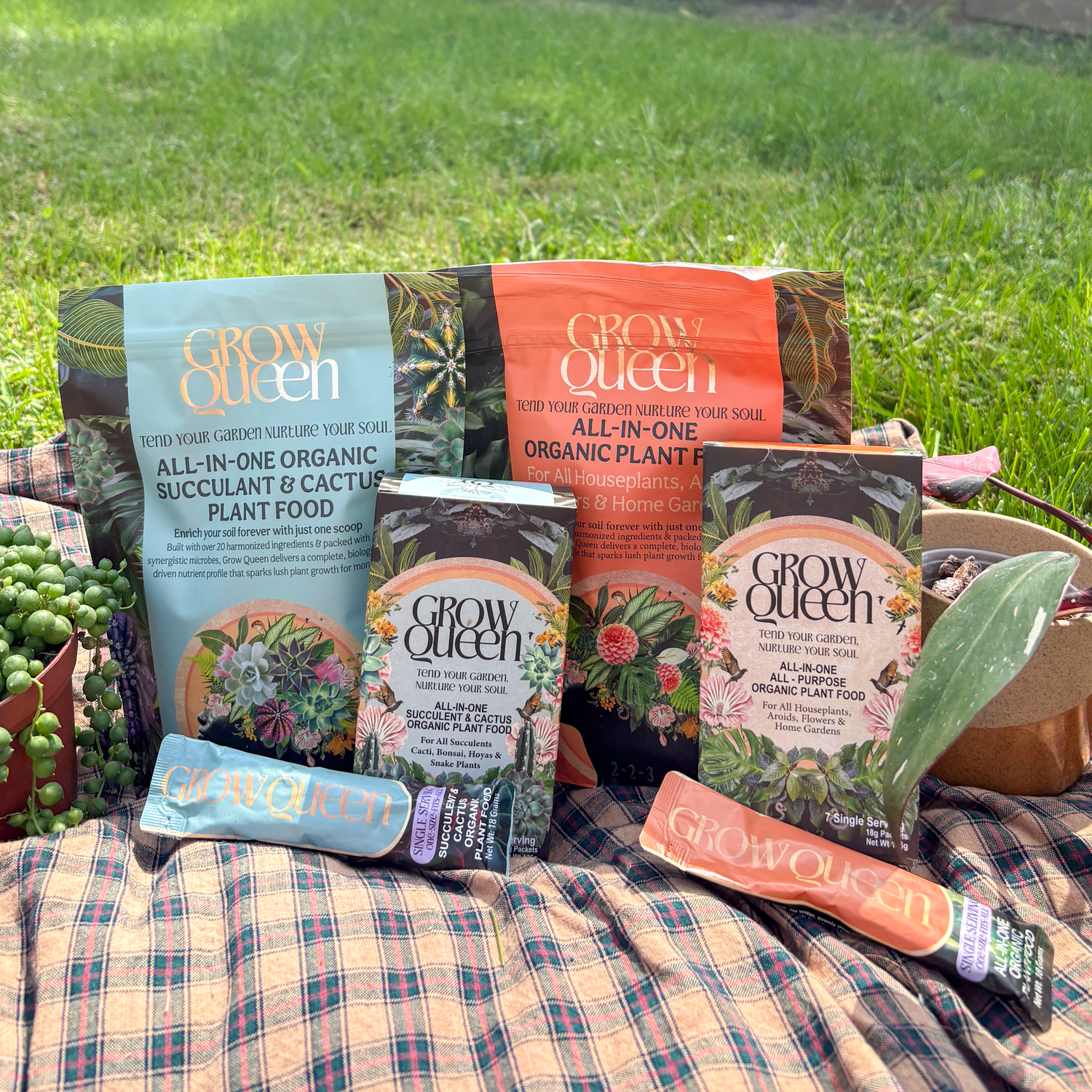
Grow Queen pick: Organic Time Release Plant Food. Organic Time Release Plant Food feeds slowly over 1 to 6 months, which suits a pilea that only wants light, occasional feeding during the growing season.
Learn more: Pillar 5, Plant Nutrients →
🍂 Common Problems
Why are my pilea's leaves curling or puckering?
The RHS links curling or puckered leaves to growing conditions: too much water, too little water, or not enough light. Check the soil before you do anything else. Then make sure the plant gets bright, indirect light and is not sitting in direct summer sun.
Why is my pilea leggy and leaning?
Long stems with widely spaced leaves usually mean the plant needs more light, as Penn State Extension notes. Move it closer to a bright window and turn the pot a quarter turn each time you water so it grows evenly.
What are the white spots on the underside of the leaves?
According to the RHS, white deposits under pilea leaves are often harmless mineral deposits or sap leaking from the leaf, which can happen when temperatures swing. If the spots wipe off and the plant looks healthy, there is no need to worry.
Why are the leaves turning yellow?
Yellow lower leaves with wet soil usually point to overwatering, so let the top inch dry before watering again and check that the pot drains. Yellowing between the leaf veins is more often a nutrient shortage, which the RHS says a balanced houseplant feed can correct.
✂️ Maintenance & Growth Tips
• Turn the pot a quarter turn at each watering to keep the plant upright and even.
• Pot up pups once they are a few inches tall; cut them free and plant them in their own small pot.
• If the plant gets tall, woody or tired, take cuttings to start fresh plants in spring or summer.
• Wipe dust off the leaves with a soft, damp cloth so they can use light well.
• Check under leaves and along stems for mealybugs, spider mites, scale and thrips; isolate and rinse affected plants, and ask your local extension office if pests persist.
⚠️ Pet Safety
The ASPCA does not specifically list Pilea peperomioides on its toxic and non-toxic plants list. It does list related pileas, including the aluminum plant (Pilea cadierei) and friendship plant (Pilea involucrata), as non-toxic to dogs and cats. ASPCA also notes that eating any plant may cause vomiting and stomach upset in pets, so keep your pilea out of reach and call your vet if a pet eats a lot of it.
🌿 Bottom Line
Give your pilea bright, indirect light, a peat-free mix that drains well, and water only when the top inch of soil is dry. Turn it often so it grows straight, and keep it away from cold drafts.
Feed lightly in spring and summer, repot every couple of years, and pot up the pups as they appear. Before long you will have extra plants to share.
Grow Queen Picks for Pilea (Chinese Money Plant)
The soil and food to keep your Pilea (Chinese Money Plant) growing strong.





0 comments