
Grow Queen Plant Care Guide
Schefflera (Umbrella Tree)
Schefflera, the umbrella tree, carries glossy leaflets fanned out like the spokes of an umbrella. It is an undemanding houseplant that can grow into a real indoor tree, and the dwarf type stays compact enough for a tabletop.

This guide covers both common types, the dwarf umbrella tree and the larger Australian umbrella tree, and what each needs indoors. This guide walks through Schefflera (Umbrella Tree) care using Grow Queen's 5 Pillars of Plant Care.
🌿 Quick Care Snapshot
🌏 Know Your Plant
Two species are sold as Schefflera. Plants of the World Online (Kew) now accepts both under the genus Heptapleurum. The dwarf umbrella tree, long sold as Schefflera arboricola, is accepted as Heptapleurum arboricola Hayata, a scrambling shrub native to Hainan and Taiwan. The larger umbrella or octopus tree, long sold as Schefflera actinophylla, is accepted as Heptapleurum actinophyllum (Endl.) Lowry & G.M.Plunkett, a scrambling tree native to southern New Guinea and northern Australia. POWO treats the Schefflera names as synonyms and notes that some older floras still use them. Both are in the ivy family, Araliaceae, and both come from the wet tropics, so they want warmth, bright light without harsh sun, and soil that drains well.
• Family: Araliaceae (ivy family)
• Dwarf type: Heptapleurum arboricola, native to Hainan and Taiwan (POWO)
• Large type: Heptapleurum actinophyllum, native to S. New Guinea and N. Australia (POWO)
• Toxic to dogs and cats per ASPCA
✨ Fun Facts
• The species name actinophylla comes from Greek words meaning rayed leaf, a nod to the spoke-like leaflets.
• Young Australian umbrella trees can grow as epiphytes, clinging to other trees before becoming free-standing.
• The name Heptapleurum actinophyllum was only published in 2020, which is why most plant tags still say Schefflera.
• UF/IFAS rates the Australian umbrella tree as invasive in Central and South Florida natural areas.
Pillar 1
🌱 Soil & Growth Medium
What they need: A standard houseplant mix that drains well.
The RHS recommends growing the dwarf umbrella tree in standard houseplant compost. NC State Extension describes both types as wanting a well-drained medium rich in organic matter. You do not need a chunky aroid mix here, just one that holds moisture evenly without staying soggy.
• Always use a pot with drainage holes.
• Repot in spring when roots fill the pot, moving up one size.
• A heavier pot helps keep a tall plant from tipping.
Grow Queen pick: Craft Houseplant Potting Mix. Craft Houseplant Potting Mix holds moisture evenly while staying aerated, which fits the RHS advice to grow umbrella trees in standard houseplant compost.
Learn more: Pillar 1, Soils & Growth Mediums →
Pillar 2
☀️ Lighting
What they need: Bright, filtered light with no hot direct sun.
NC State Extension suggests a south, west or east exposure with filtered light, such as through a sheer curtain, for 3 to 4 hours a day for the dwarf type. Indoors, bright direct light can burn the leaves. The larger Australian umbrella tree likes a bright spot too, protected from hot afternoon sun.
Signs of too little light:
• Stems stretch and lean toward the window
• Fewer, smaller leaves with long gaps between them
• Lower leaves yellow and drop
Signs of too much light:
• Brown or bleached scorch patches on leaflets
• Leaves look faded or yellow-green
• Leaf edges dry and crisp
Learn more: Pillar 2, Lighting →
Pillar 3
💧 Watering
What they need: Let the mix dry somewhat, then water deeply.
NC State Extension advises letting the soil dry out and then soaking it thoroughly. The RHS says to water moderately while the plant is growing and sparingly in winter. Leaf drop is the classic sign that something is off, and NC State notes it can come from soil that is too wet or too dry.
Signs of overwatering:
• Leaves yellow, then drop
• Mix stays wet and smells sour
• Dark, soft spots on leaves or stems
Signs of underwatering:
• Leaves droop, then fall
• Mix is dry and pulling from the pot edge
• Leaflets feel thin and limp
Learn more: Pillar 3, Watering →
Pillar 4
🌡️ Environment
What they need: Warm rooms, steady temperatures, higher humidity.
NC State Extension gives a preferred range of 65 to 90°F for the Australian umbrella tree and says to keep it above 60°F. Both types like higher humidity; a tray of wet pebbles under the pot helps, as long as the pot sits above the water line. Avoid cold drafts and heating vents, which stress the plant.
Ideal conditions:
• Temperature 65 to 90°F, never below 60°F
• Higher humidity, such as a pebble tray
• Bright, filtered light
• A sheltered spot outdoors in summer if nights stay above 60°F
Avoid:
• Cold drafts from doors and windows
• Heating and AC vents
• Hot, direct sun through glass
Learn more: Pillar 4, Environment →
Pillar 5
🪴 Plant Nutrients
What they need: Regular feeding during the growing season only.
The RHS recommends feeding the dwarf umbrella tree monthly while it is in growth. University of Maryland Extension advises feeding houseplants from March through September and skipping winter. Too much fertilizer builds up salts and causes leggy growth, so go light.
Benefits of the right feeding:
• Keeps foliage glossy and deep green
• Supports new growth after pruning
• Helps a large plant fill out evenly
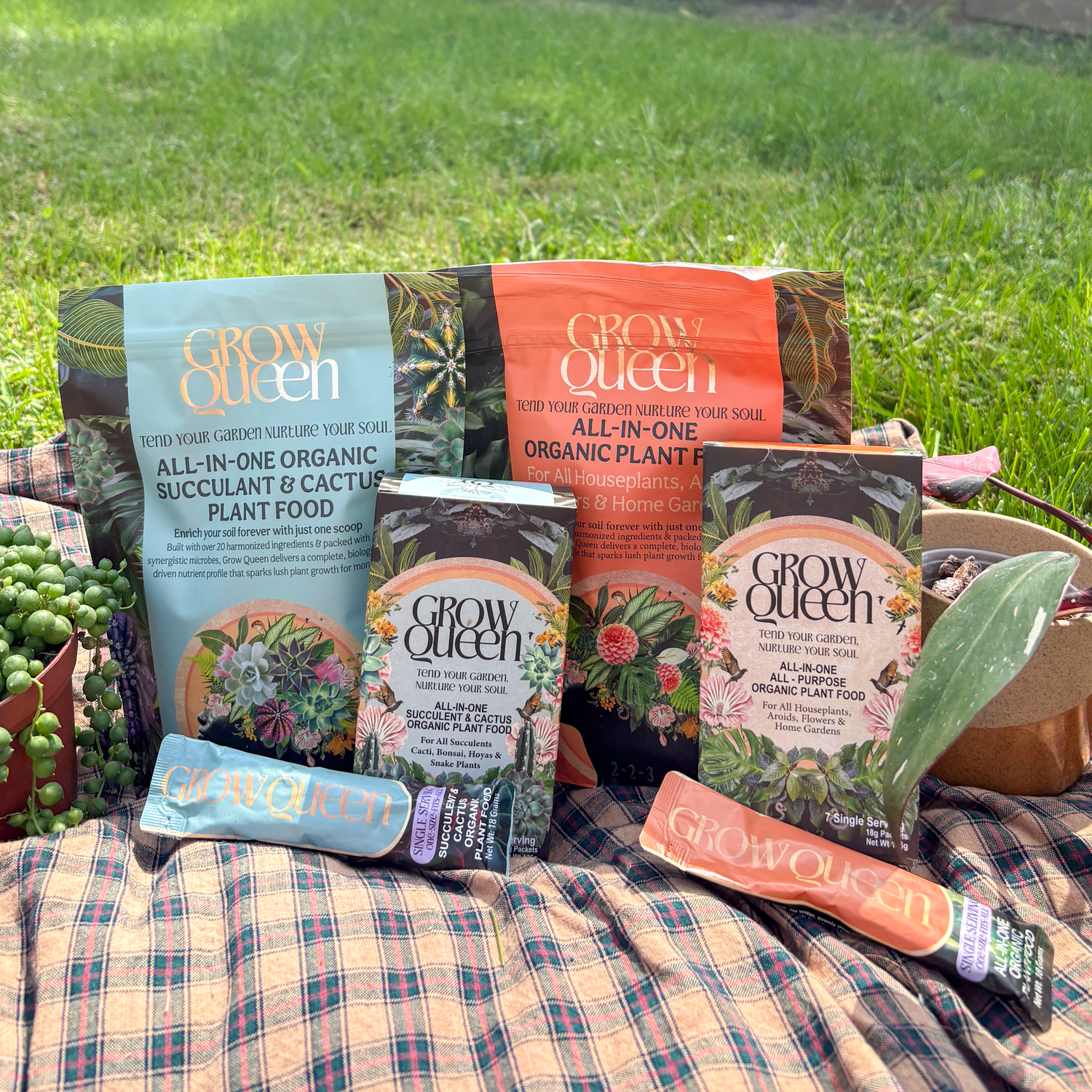
Grow Queen pick: Organic Time Release Plant Food. Organic Time Release Plant Food is mixed into or top-dressed on the soil and feeds for months, an easy fit for a steady, long-lived foliage plant.
Learn more: Pillar 5, Plant Nutrients →
🍂 Common Problems
Why is my umbrella tree dropping leaves?
NC State Extension notes that both soil that is too wet and soil that is too dry can make leaves drop. Check the mix before you water, and let it dry somewhat between soakings. Cold drafts and sudden moves can also cause a leaf drop.
Why is my plant leggy and leaning?
Stretched stems and leaning mean the plant wants more light. Move it closer to a bright window with filtered light and rotate the pot every week or two. You can prune leggy stems back to encourage bushier growth.
Why do the leaves have sticky residue or fine webbing?
NC State Extension lists spider mites, mealybugs and scale as common on umbrella trees. Inspect leaf undersides and stems, isolate the plant, and wipe or rinse the leaves. For a stubborn problem, ask your local extension office.
Why are there brown, scorched patches on the leaves?
Indoors, bright direct sun can burn the leaves. Move the plant back from the glass or filter the light with a sheer curtain.
✂️ Maintenance & Growth Tips
• Prune to control size and shape; NC State notes the large type can be cut back in winter.
• Rotate the pot often so the plant grows evenly.
• Wipe dust from leaves with a damp cloth to keep them glossy.
• Propagate from cuttings or by air layering, per RHS and NC State.
• Wear gloves when pruning; the sap can irritate sensitive skin.
⚠️ Pet Safety
The ASPCA lists Schefflera and Umbrella Tree (also called Australian Ivy Palm, Octopus Tree and Starleaf) as toxic to dogs and cats. Its Schefflera page names calcium oxalate crystals, with signs including oral irritation, intense burning of the mouth, lips and tongue, drooling, vomiting and trouble swallowing. Its Umbrella Tree page (Brassaia actinophylla) names terpenoids, saponins and insoluble oxalates and says the most common effects are mild vomiting and diarrhea, so keep both types out of reach and call your vet or ASPCA Animal Poison Control at (888) 426-4435 if a pet chews one.
🌿 Bottom Line
Schefflera is a forgiving, long-lived houseplant that can grow from tabletop size into an indoor tree. Give it bright, filtered light, a well-drained houseplant mix, and warm, steady conditions.
Let the mix dry somewhat between deep waterings, feed only in the growing season, and watch for leaf drop as your early warning that water or temperature needs a tweak.
Grow Queen Picks for Schefflera (Umbrella Tree)
The soil and food to keep your Schefflera (Umbrella Tree) growing strong.





0 comments