
Grow Queen Plant Care Guide
Peperomia (Peperomia spp.)
Peperomias are compact houseplants with thick, often succulent-like leaves in rippled, striped, marbled and glossy forms. They stay small, fit on a desk or shelf, and come in bushy and trailing types.

Most peperomias need the same simple care, and the biggest risk is too much water. Get the mix and watering right and they are among the easiest plants to keep. This guide walks through Peperomia (Peperomia spp.) care using Grow Queen's 5 Pillars of Plant Care.
🌿 Quick Care Snapshot
🌏 Know Your Plant
Peperomia is a large genus in the pepper family, Piperaceae, the same family as black pepper. Kew's Plants of the World Online lists the genus across the tropics and subtropics worldwide, with more than 1,400 accepted species. Clemson Extension notes the popular houseplant types come from Central and South America, where they grow in the forest understory and many live as epiphytes on other plants. Many have thick, succulent-like leaves, so indoors they want bright but filtered light, a light mix that drains well, and soil that dries between drinks.
• Family: Piperaceae (pepper family)
• More than 1,400 species across the tropics (per Kew POWO)
• Many are epiphytes with thick, succulent-like leaves
• Popular types: baby rubber plant, watermelon, ripple, string of turtles
✨ Fun Facts
• Peperomia is in the same plant family as black pepper.
• Its thin flower spikes are often compared to a rat's tail. Clemson Extension notes you can snip them off so the plant puts its energy into leaves.
• Many peperomias can grow a whole new plant from a single leaf with a bit of stem attached.
• The raindrop peperomia (P. polybotrya) is often mistaken for the Chinese money plant (Pilea peperomioides).
Pillar 1
🌱 Soil & Growth Medium
What they need: A light, well-drained mix that dries out between waterings.
Clemson Extension recommends a well-drained houseplant or cactus potting mix. Root rot from overwatering is the most common disease of peperomia, so drainage matters more than anything. Peperomias don't need repotting every year and can stay in the same pot for several years. When you do repot, go only slightly larger.
• Use a pot with drainage holes.
• Add extra perlite or grit if your mix stays wet for long.
• Repot only when roots fill the pot.
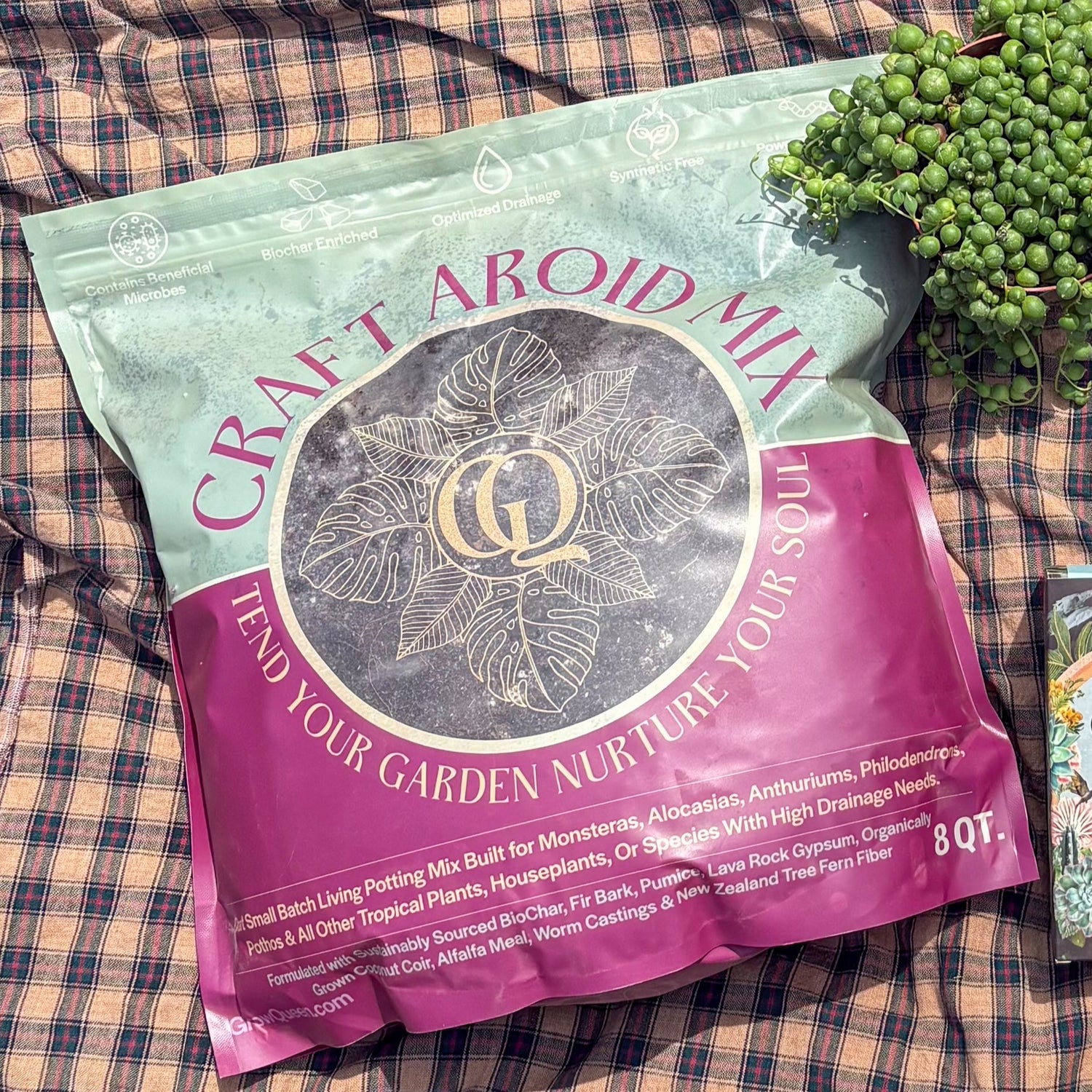
Grow Queen pick: Craft Houseplant Potting Mix. Craft Houseplant Potting Mix holds moisture evenly while staying aerated, a good match for a small plant that wants to dry between drinks without sitting wet.
Learn more: Pillar 1, Soils & Growth Mediums →
Pillar 2
☀️ Lighting
What they need: Bright, indirect light.
Clemson Extension suggests indirect light from an east or south window. Peperomia can tolerate somewhat low light near a large north window, but direct sun may scorch the leaves.
Signs of too little light:
• Stretched, leggy stems.
• Small new leaves.
• Faded variegation or color.
Signs of too much light:
• Scorched or bleached patches on leaves.
• Leaves curling or puckering.
• Dry, brown edges.
Learn more: Pillar 2, Lighting →
Pillar 3
💧 Watering
What they need: Let the mix dry between waterings.
Peperomia prefers to dry out between waterings, and Clemson Extension notes it will drop its leaves if overwatered. Water, let it drain fully, then return it to the saucer. UF/IFAS advises erring on the dry side. In winter the mix dries more slowly, so water less often.
Signs of overwatering:
• Leaves dropping suddenly.
• Soft, mushy stems at the soil line.
• Yellowing leaves with wet soil.
Signs of underwatering:
• Wrinkled or soft, thin-feeling leaves.
• Drooping stems that perk up after watering.
• Leaf edges turning brown and crispy.
Learn more: Pillar 3, Watering →
Pillar 4
🌡️ Environment
What they need: Normal room temperatures, steady humidity, no cold drafts.
Peperomia is comfortable at average home temperatures. Clemson Extension advises waiting until nights stay at 60°F or above before moving plants outside for summer, which is a good guide indoors too. They like humidity and benefit from a humidifier in dry winter air.
Ideal conditions:
• Average room temperatures
• Nights at or above about 60°F
• Moderate humidity, with a humidifier in winter
• Bright, indirect light
Avoid:
• Cold drafts and chilly windowsills
• Direct afternoon sun
• Letting the pot sit in a saucer of water
Learn more: Pillar 4, Environment →
Pillar 5
🪴 Plant Nutrients
What they need: Light feeding during active growth only.
Clemson Extension recommends feeding only in spring and summer when the plant is actively growing. Use a low-strength liquid fertilizer now and then, or a slow-release granular fertilizer once a year. Peperomias are light feeders, so less is more.
Benefits of the right feeding:
• Steady, compact growth
• Better leaf color and markings
• Quicker recovery after pruning or propagating
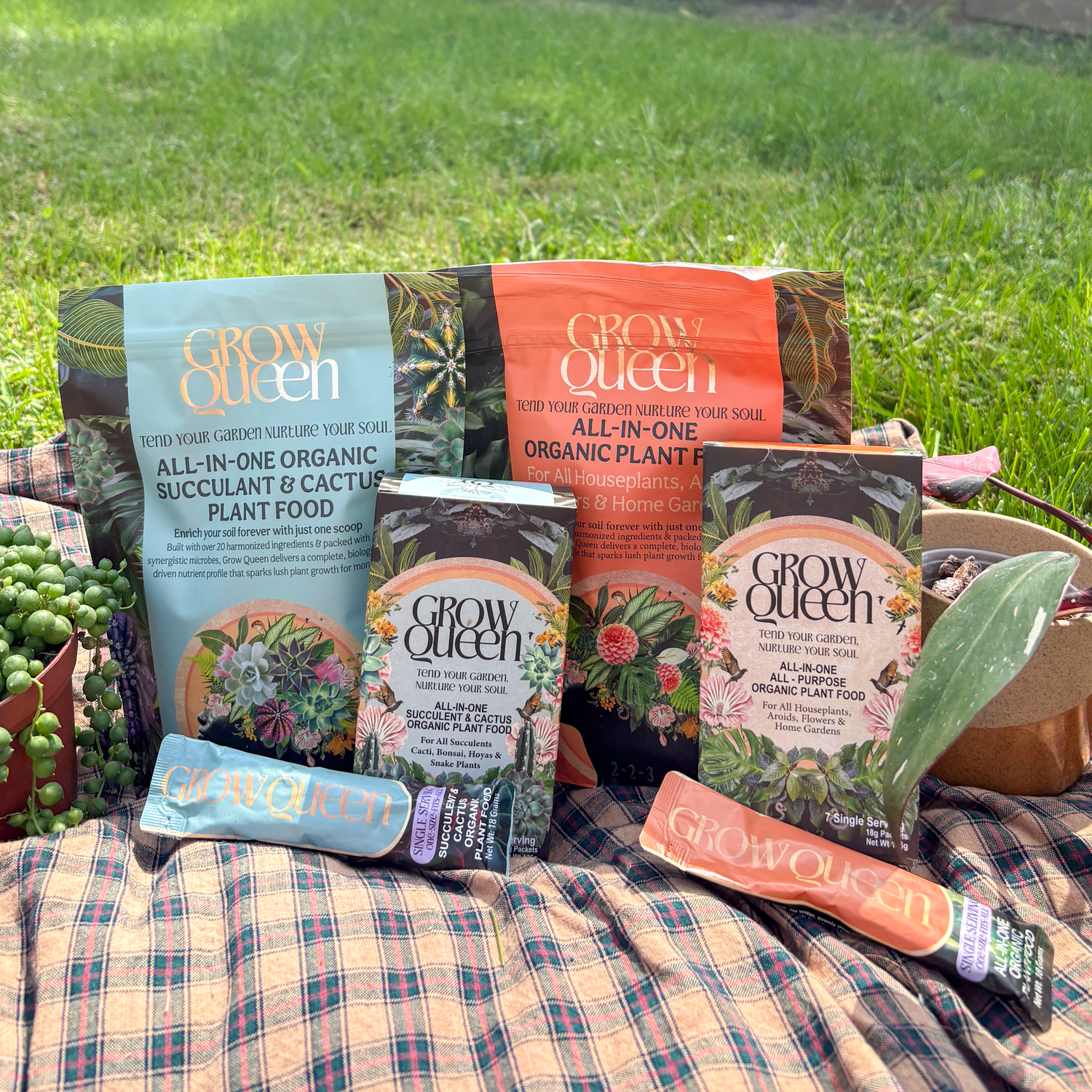
Grow Queen pick: Organic Time Release Plant Food. Organic Time Release Plant Food is a dry granular food that feeds for 1 to 6 months, which fits Clemson's suggestion of a slow-release feeding once a year.
Learn more: Pillar 5, Plant Nutrients →
🍂 Common Problems
Why is my peperomia dropping leaves?
Overwatering is the most common cause. Let the mix dry out between waterings, make sure the pot drains, and empty the saucer after watering.
Why are the stems mushy at the base?
This usually means root or stem rot from wet soil. Cut off healthy stems to root as cuttings, and repot the rest in fresh, well-draining mix if any roots are still firm.
Why is my peperomia getting leggy?
It likely needs more light. Move it closer to an east or south window, out of direct sun. Prune stems just above a leaf node to make the plant branch and fill in.
What are the thin spikes growing above the leaves?
Those are flower spikes. They are normal and appear in spring and summer. You can leave them or snip them off.
✂️ Maintenance & Growth Tips
• Trim stems above a leaf node to keep plants bushy.
• Root stem cuttings in mix or water, or root single leaves with a bit of stem attached.
• Wipe dust off the leaves with a soft damp cloth.
• Check for mealybugs, mites, scale and fungus gnats. Isolate and rinse any affected plant.
• Repot every few years, not every year.
⚠️ Pet Safety
The ASPCA lists the baby rubber plant (Peperomia obtusifolia) as non-toxic to dogs and cats. Clemson Extension says most peperomias are considered safe for pets, but the ASPCA does not list every species, so check your specific plant and use caution. Call your vet if your pet eats a lot of any plant or seems unwell.
🌿 Bottom Line
Peperomias want bright, indirect light, a well-drained mix, and soil that dries out between waterings. Too much water is the cause of most problems.
Feed lightly in spring and summer, repot only when needed, and pinch stems to keep them full. They are small, forgiving and easy to share from cuttings.
Grow Queen Picks for Peperomia (Peperomia spp.)
The soil and food to keep your Peperomia (Peperomia spp.) growing strong.





0 comments