
Grow Queen Plant Care Guide
Purple Passion Plant (Gynura aurantiaca)
Purple passion plant is covered in soft, vivid purple hairs that make its leaves and stems look like velvet. It trails nicely from a hanging basket and grows quickly when it is happy.

The keys to a good-looking Gynura are bright light for color, steady moisture without soggy roots, and regular pinching to keep it full. This guide walks through Purple Passion Plant (Gynura aurantiaca) care using Grow Queen's 5 Pillars of Plant Care.
🌿 Quick Care Snapshot
🌏 Know Your Plant
Purple passion plant (Gynura aurantiaca) is in the daisy family, Asteraceae. Kew's Plants of the World Online lists its native range as Sumatra, Java and Sulawesi in Indonesia, where it grows as a climbing shrub in the wet tropics. The purple color comes from dense, short hairs on green leaves and stems. Indoors that tropical background means warmth, bright but filtered light, and even moisture. Its roots are fine and delicate, so they need moist soil that never stays saturated.
• Family: Asteraceae (daisy family)
• Native to Sumatra, Java and Sulawesi (per Kew POWO)
• Trailing, sprawling vine, best in a hanging basket
• Cultivars include 'Purple Passion' and a variegated form
✨ Fun Facts
• The leaves are actually green. The purple comes from a dense coat of short purple hairs.
• Its small orange-yellow flowers have a smell so unpleasant that many growers pinch them off.
• The genus Gynura includes about 50 species from the humid tropics of Africa and Asia.
• Without enough light, the leaves look green instead of purple.
Pillar 1
🌱 Soil & Growth Medium
What they need: A light, well-draining mix that holds even moisture.
Gynura roots are fibrous and delicate. They need a mix that stays evenly moist but never saturated, since soggy soil leads to root rot. A standard peat-free houseplant mix in a pot with drainage holes works well.
• Use a pot or hanging basket with drainage holes.
• Repot in spring if roots fill the pot.
• Root new plants from stem cuttings with one or two nodes.
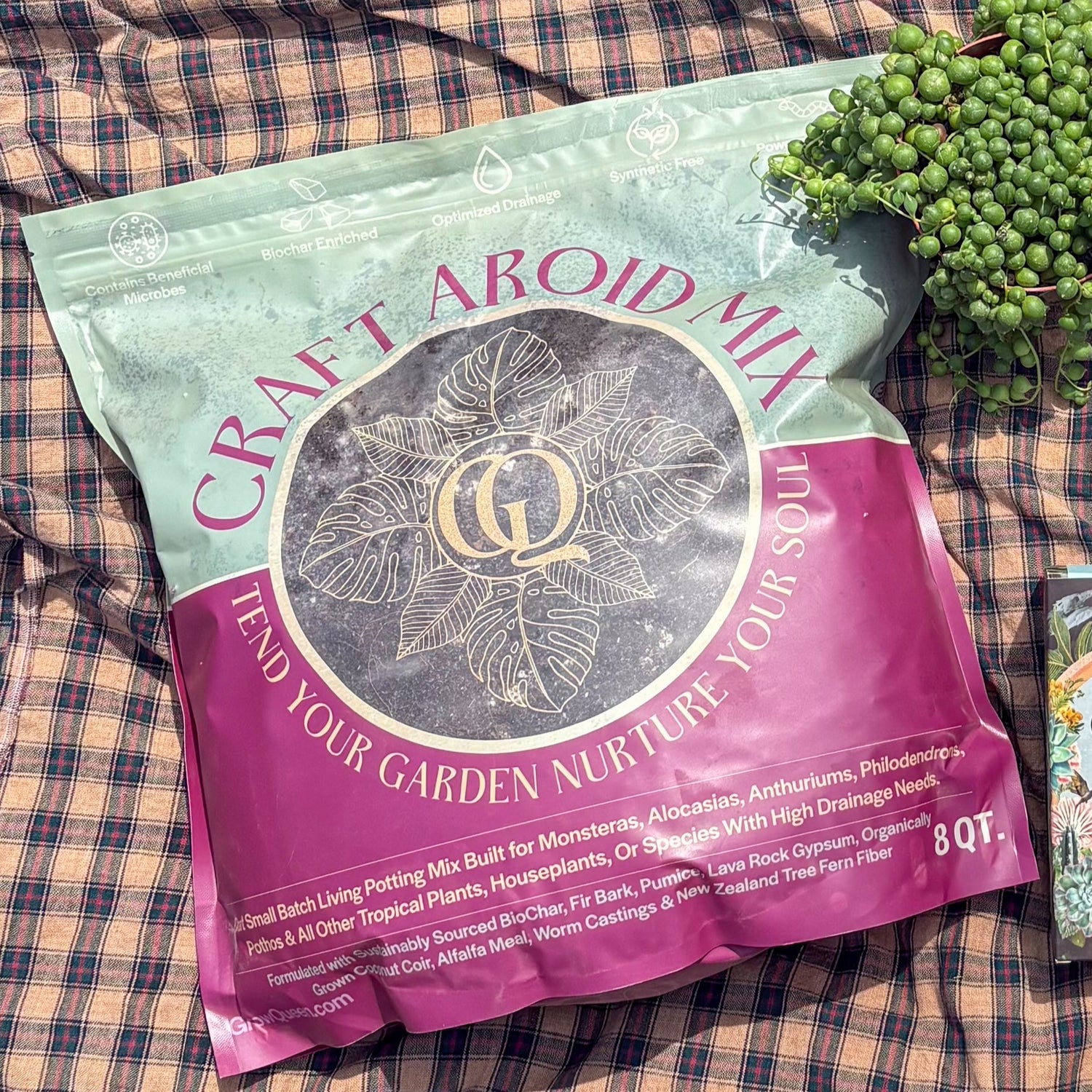
Grow Queen pick: Craft Houseplant Potting Mix. Craft Houseplant Potting Mix holds moisture evenly while staying aerated, which suits Gynura's fine, delicate roots.
Learn more: Pillar 1, Soils & Growth Mediums →
Pillar 2
☀️ Lighting
What they need: Bright, indirect light for the best purple color.
Bright, indirect light with protection from afternoon sun gives the richest color. In low light the plant grows, but the leaves look green rather than purple and stems get leggy. A spot near an east window or a few feet back from a bright south or west window works well.
Signs of too little light:
• Leaves look green instead of purple.
• Long, stretched stems with gaps between leaves.
• No flowering.
Signs of too much light:
• Scorched or bleached patches on the leaves.
• Leaves curling or drooping in the afternoon.
• Faded color.
Learn more: Pillar 2, Lighting →
Pillar 3
💧 Watering
What they need: Evenly moist, never soggy.
Let the surface of the mix dry slightly, then water thoroughly and empty the saucer. Water less often in winter, when growth slows and overwatering is more likely to cause rot.
Signs of overwatering:
• Wilting stems even though the soil is wet.
• Yellowing lower leaves.
• Soft, dark stems at the soil line.
Signs of underwatering:
• Limp, drooping stems.
• Crispy leaf edges.
• Lower leaves dropping.
Learn more: Pillar 3, Watering →
Pillar 4
🌡️ Environment
What they need: Warm rooms with moderate humidity.
UF/IFAS recommends keeping purple passion between 65 and 80°F indoors, with relative humidity of 40 to 60%. Temperatures below 55°F can cause chilling injury. Very warm conditions speed up growth and make the plant leggy faster, so pinch more often in summer.
Ideal conditions:
• 65 to 80°F indoors
• Relative humidity of 40 to 60%
• Bright, filtered light
• Room to trail from a basket or shelf
Avoid:
• Temperatures below 55°F
• Cold drafts near doors and windows
• Soggy soil or saucers of standing water
Learn more: Pillar 4, Environment →
Pillar 5
🪴 Plant Nutrients
What they need: Steady feeding during active growth.
Feed in spring and summer while the plant is growing, and reduce feeding in winter. UF/IFAS notes that purple passion uses a lot of potassium, so a balanced fertilizer is a better choice than a high-nitrogen one. Avoid heavy feeding, which pushes fast, leggy growth.
Benefits of the right feeding:
• Rich color on new growth
• Fuller plants after pinching
• Steady growth through the warm months
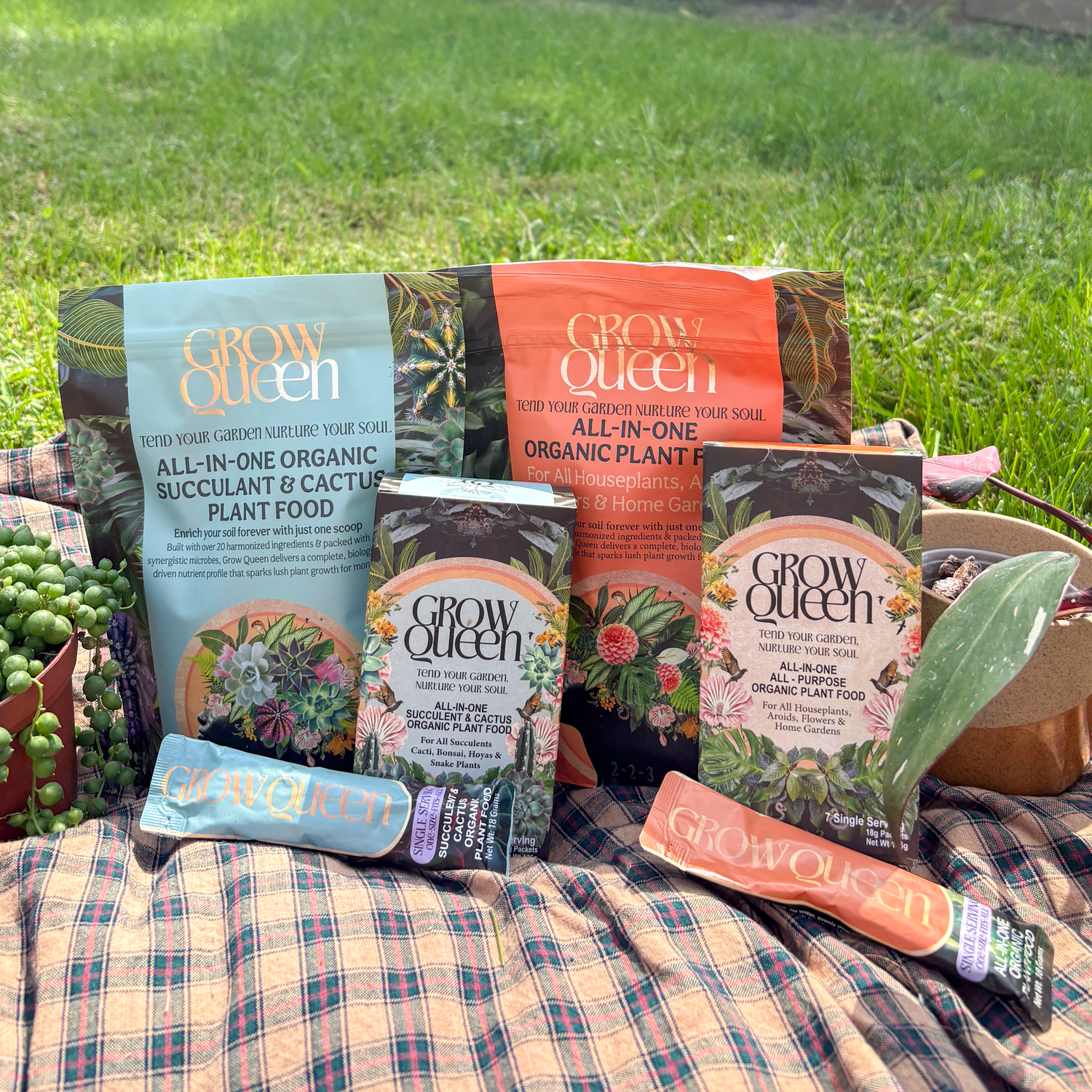
Grow Queen pick: Organic Time Release Plant Food. Organic Time Release Plant Food is top-dressed on the soil and feeds for 1 to 6 months, an easy way to give this fast grower steady nutrition.
Learn more: Pillar 5, Plant Nutrients →
🍂 Common Problems
Why are my purple passion plant's leaves turning green?
Low light is the cause. The purple hairs show best in bright, indirect light. Move the plant to a brighter spot, out of hot afternoon sun.
Why is my plant leggy and sprawling?
Gynura has weak stems and grows fast, especially when warm, so it gets leggy over time. Pinch off stem tips regularly to make it bushier. Root the pieces you remove and add them back to the pot.
Why does my plant smell bad?
The small orange-yellow flowers have an unpleasant smell. Pinch off flower buds as soon as you see them. This also keeps the plant focused on leaves.
Why are the stems rotting?
Root and stem rot come from overwatering or a mix that stays saturated. Let the surface dry slightly between waterings and make sure the pot drains. Water less in winter.
✂️ Maintenance & Growth Tips
• Pinch stem tips often to keep the plant compact and full.
• Remove flower buds to avoid the smell.
• Root stem cuttings in moist mix kept warm. They root year round with enough warmth and humidity.
• Check for aphids, whiteflies, mealybugs and spider mites. Isolate and rinse affected plants.
• Gently brush dust from the fuzzy leaves instead of wiping them.
⚠️ Pet Safety
The ASPCA lists velvet plant (Gynura aurantiaca, also called purple passion vine) as non-toxic to dogs and cats. Eating any plant can still cause mild stomach upset, so discourage pets from chewing it.
🌿 Bottom Line
Purple passion plant needs bright, filtered light to stay purple, a mix that stays lightly moist without getting soggy, and warm rooms above 65°F.
Pinch it often, remove the smelly flowers, and refresh it from cuttings now and then. Do that and you will have a full, velvety basket year round.
Grow Queen Picks for Purple Passion Plant (Gynura aurantiaca)
The soil and food to keep your Purple Passion Plant (Gynura aurantiaca) growing strong.





0 comments