
Grow Queen Plant Care Guide
Parlor Palm (Chamaedorea elegans)
The parlor palm brings soft, feathery fronds to rooms that get only modest light. It is the classic palm of Victorian parlors, and it is still one of the easiest palms to keep indoors.

Parlor palms grow slowly and forgive a lot, as long as their roots never sit wet and they stay warm. Here is how to cover each of the 5 Pillars. This guide walks through Parlor Palm (Chamaedorea elegans) care using Grow Queen's 5 Pillars of Plant Care.
🌿 Quick Care Snapshot
🌏 Know Your Plant
Parlor palm, Chamaedorea elegans, is a small understory palm in the palm family, Arecaceae. Kew's Plants of the World Online lists it as native from Mexico to Honduras, including Belize and Guatemala, where it grows as a shrub beneath taller trees. Living in the shade of a forest canopy is why it handles the lower light of a home better than most palms. Each plant has a single thin stem, so nurseries usually pot several together for a fuller look.
• Family: Arecaceae, the palm family.
• Native from Mexico to Honduras.
• An understory palm, so it copes with lower light.
• Slow growing, up to about 5 feet indoors.
✨ Fun Facts
• The genus name Chamaedorea comes from Greek words meaning on the ground and gift, a nod to its small size and beauty.
• Each stem is a separate plant. Growers often put three or more in one pot, and over time some are crowded out.
• Parlor palms have male and female flowers on separate plants, so indoor plants rarely make fruit.
• This is the classic palm that decorated Victorian parlors, which is how it got its common name.
Pillar 1
🌱 Soil & Growth Medium
What they need: A porous mix with plenty of organic matter.
Palm mixes need to be porous with plenty of organic matter so they hold moisture but drain quickly. NC State recommends a humus-rich houseplant or container mix. Heavy, slow-draining soil is the main cause of root rot.
• Use a pot with drainage holes.
• Repot only when roots fill the pot, about every two to three years.
• Repot in spring or early summer and handle the fragile roots gently.
• Palms like slightly snug pots, so go up only one size.
Grow Queen pick: Craft Houseplant Potting Mix. Craft Houseplant Potting Mix holds moisture evenly while staying aerated, which fits a palm that wants a moist, porous, well-drained mix.
Learn more: Pillar 1, Soils & Growth Mediums →
Pillar 2
☀️ Lighting
What they need: Bright, indirect light. It also tolerates low light.
A spot near a north or east window works well, and filtered light from a south or west window is fine too. Parlor palms tolerate lower light than most palms, but they grow fuller with bright, indirect light. Keep them out of direct sun, even when outdoors for the summer.
Signs of too little light:
• Very slow growth and few new fronds.
• Thin, stretched stems.
• Fronds lose their rich green color.
Signs of too much light:
• Yellowed or bleached fronds.
• Scorched, brown patches on leaflets.
• Crispy leaflet tips.
Learn more: Pillar 2, Lighting →
Pillar 3
💧 Watering
What they need: Even moisture with good drainage.
Water thoroughly when the surface of the mix dries, then empty the saucer after the pot drains. Do not let the mix dry out completely, and never let the pot stand in water. Parlor palms can handle short dry spells but grow more lushly when kept lightly moist. In winter, when growth slows, the mix will take longer to dry, so check before you water.
Signs of overwatering:
• Yellowing lower fronds.
• Soft, dark stems at the soil line.
• Sour smell or mix that stays soggy.
Signs of underwatering:
• Brown leaflet tips.
• Fronds turning dull and drooping.
• Mix pulling away from the pot edge.
Learn more: Pillar 3, Watering →
Pillar 4
🌡️ Environment
What they need: Warmth, no drafts, and moderate humidity.
Most indoor palms like about 60°F at night and 70 to 80°F during the day, and Clemson Extension notes parlor palms need at least 60°F in winter. Cold can cause reddish-brown dead patches on the leaves. Parlor palms adapt to average home humidity, but if it drops below 50 percent, a pebble tray or humidifier helps prevent brown tips.
Ideal conditions:
• Temperature: 70 to 80°F by day, about 60°F at night.
• Humidity: moderate. Add a pebble tray if your air is below 50 percent.
• Bright room away from doors and air conditioners.
• Summer outdoors in full shade, if you like.
Avoid:
• Cold drafts from windows, doors and vents.
• Temperatures below 45°F, which cause chilling damage.
• Leaf shine products, which can injure palm fronds.
Learn more: Pillar 4, Environment →
Pillar 5
🪴 Plant Nutrients
What they need: Light feeding only during active growth.
Feed during the growing season and skip winter. Clemson Extension recommends a slow-release fertilizer only two or three times a year in spring and summer. Too much fertilizer can brown the tips of lower leaves, so err on the light side.
Benefits of the right feeding:
• Steady new fronds through the growing season.
• Healthy, deep green color.
• Stronger stems.
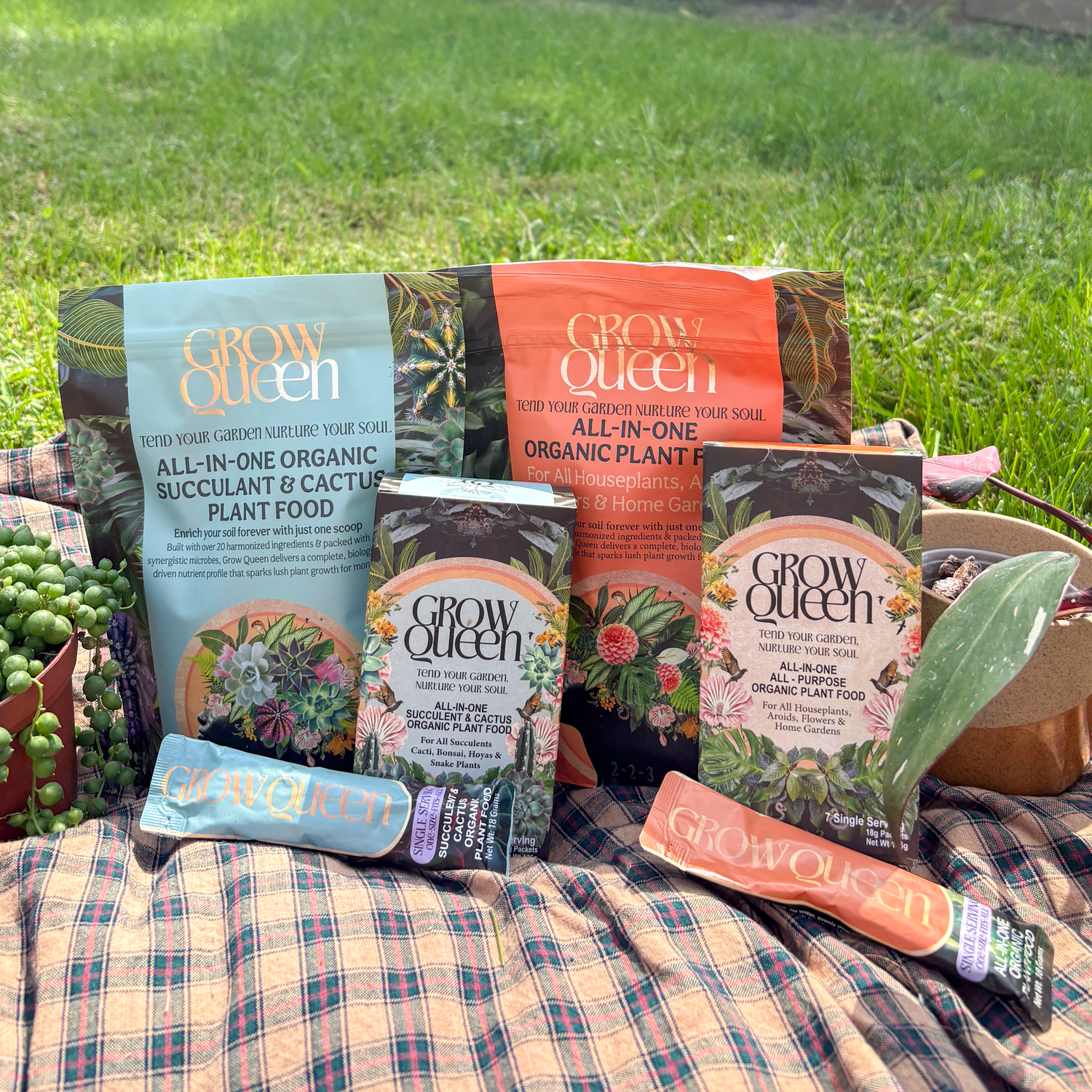
Grow Queen pick: Organic Time Release Plant Food. Organic Time Release Plant Food is mixed into or top-dressed on the soil and feeds for months, which matches the light, slow-release feeding parlor palms prefer.
Learn more: Pillar 5, Plant Nutrients →
🍂 Common Problems
Why are the tips of my parlor palm brown?
Brown tips usually come from dry air, a dry root ball, or too much fertilizer. Water when the surface dries, raise humidity with a pebble tray, and feed lightly.
Why are the fronds yellowing?
Yellowing lower fronds often mean the mix stayed too wet. Let the surface dry before watering, empty the saucer, and check that the pot drains.
Why are there reddish-brown dead patches on the leaves?
This is usually cold injury. Keep the palm above 60°F in winter and away from cold windows and drafts.
What is the fine webbing or speckling on the fronds?
Spider mites thrive in warm, dry indoor air, and mealybugs and scale are also common on palms. Isolate the plant, wipe the fronds with a damp cloth, and ask your local extension office about ongoing problems.
✂️ Maintenance & Growth Tips
• Cut off fully brown fronds at the base. You cannot prune a palm to make it shorter.
• Wipe fronds with a damp cloth to remove dust and help deter mites.
• Repot every two to three years, gently, in spring or early summer.
• Turn the pot now and then for even growth.
• If fruit forms, handle it carefully. The pulp can irritate sensitive skin.
⚠️ Pet Safety
The ASPCA lists parlor palm (Chamaedorea elegans) as non-toxic to dogs and cats. Eating any plant can still cause mild stomach upset, so discourage chewing. If you are worried, call your vet or the ASPCA Animal Poison Control Center.
🌿 Bottom Line
Parlor palm is a great first palm. Give it bright, indirect light, a porous mix, and water when the surface dries, never leaving it soggy.
Keep it warm and away from drafts, feed lightly in spring and summer, and repot only every few years. It will grow slowly into a graceful indoor palm.
Grow Queen Picks for Parlor Palm (Chamaedorea elegans)
The soil and food to keep your Parlor Palm (Chamaedorea elegans) growing strong.





0 comments