
Grow Queen Plant Care Guide
Bird of Paradise (Strelitzia reginae)
Bird of paradise gives you big, paddle-shaped, gray-green leaves and, with enough light, orange and blue flowers shaped like a bird's head. It's a bold, sculptural plant that rewards a bright window and a little patience.

Here's how to care for Strelitzia reginae indoors, one pillar at a time. This guide walks through Bird of Paradise (Strelitzia reginae) care using Grow Queen's 5 Pillars of Plant Care.
🌿 Quick Care Snapshot
🌏 Know Your Plant
Strelitzia reginae is in the family Strelitziaceae. According to Kew's Plants of the World Online, it is native to South Africa's Cape Provinces and KwaZulu-Natal, and it grows mainly in the subtropical biome. It's a clumping evergreen that grows from underground rhizomes. Indoors that means bright light, warm growing-season conditions with cooler nights, generous water while it grows, and a drier rest in winter. A note on names: the much larger white bird of paradise (Strelitzia nicolai) is also called bird of paradise. It has white flowers with a blue tongue and can reach 20 to 30 feet outdoors. This guide covers S. reginae, the orange-flowered species.
• Family: Strelitziaceae.
• Native range: Cape Provinces to KwaZulu-Natal, South Africa.
• Indoor size: about 3 to 5 feet tall.
• Hardy outdoors only in USDA zones 10 to 12.
✨ Fun Facts
• Each flower has 3 orange sepals and 3 blue petals. Two blue petals join to form an arrow-like nectary.
• When a bird perches to drink nectar, the petals open and dust its feet with pollen.
• The flowers emerge one after another from a beak-like spathe, so one stalk keeps blooming for a while.
• Strelitzia reginae holds the Royal Horticultural Society's Award of Garden Merit.
Pillar 1
🌱 Soil & Growth Medium
What they need: A fertile, well-draining, loam-based mix.
The RHS recommends a peat-free, loam-based compost in a large container, and NC State suggests fertile, loamy, well-drained soil. Root rot can follow overwatering or poorly drained soil, so drainage matters most. Choose a heavy pot with a drainage hole to keep this top-heavy plant from tipping.
• Plants often flower better when slightly pot-bound.
• Top-dress with fresh mix each year.
• Repot about every second year, in spring.
• Divide rooted suckers in spring to make new plants.
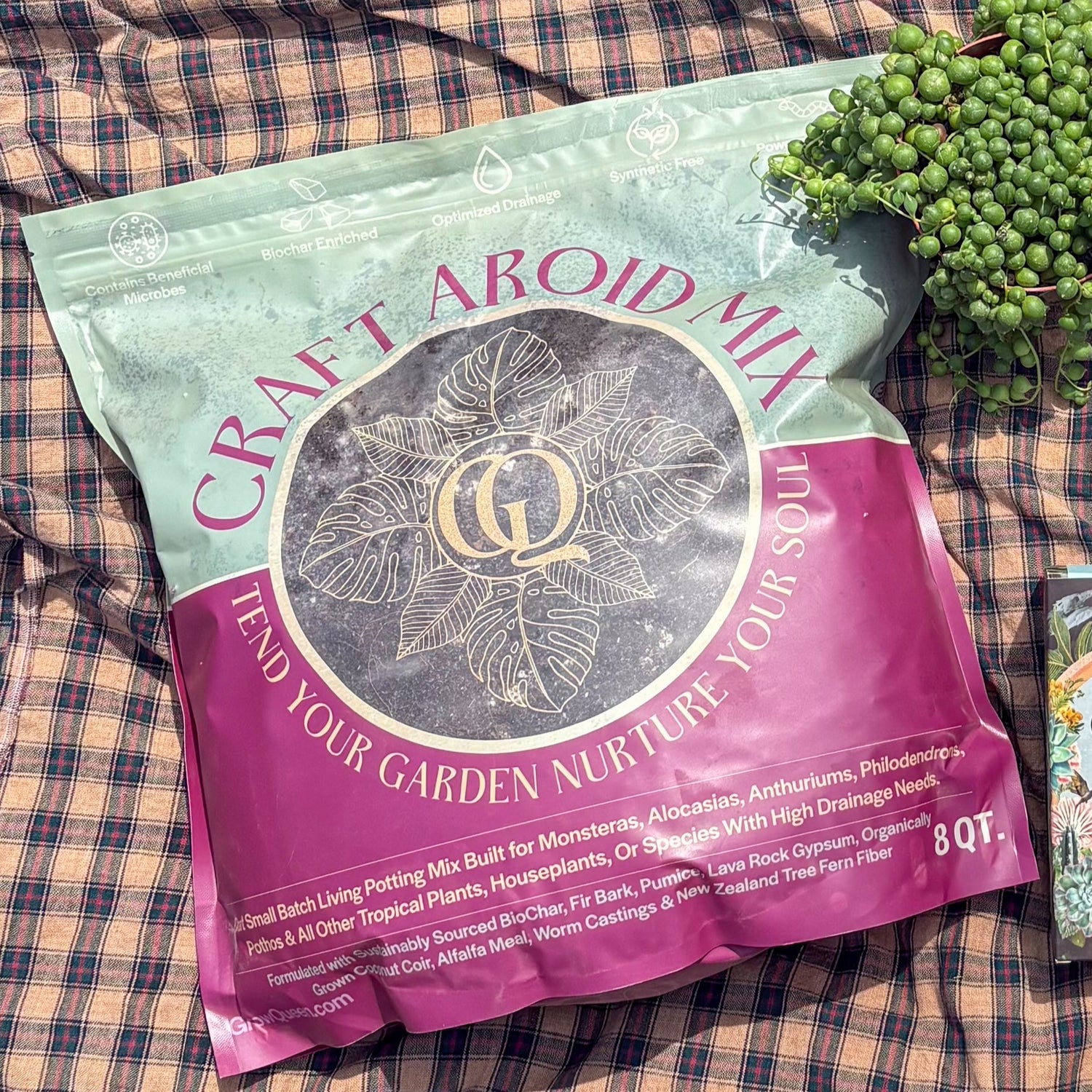
Grow Queen pick: Craft Houseplant Potting Mix. Craft Houseplant Potting Mix holds moisture evenly while staying aerated, which suits a plant that wants generous water in summer but can't sit in soggy soil.
Learn more: Pillar 1, Soils & Growth Mediums →
Pillar 2
☀️ Lighting
What they need: Bright light with some direct sun.
NC State recommends a well-lit, sunny spot indoors, and the RHS advises full light with shade from the hottest sun. Light is the main thing that decides whether your plant blooms. A south- or west-facing window is usually the best indoor spot.
Signs of too little light:
• No flowers, even on a mature plant
• Slow growth with weak, leaning leaf stalks
• Leaves that stay small
Signs of too much light:
• Pale, bleached patches on leaves
• Brown, crispy scorch marks after sudden strong sun
• Soil drying out much faster than usual
Learn more: Pillar 2, Lighting →
Pillar 3
💧 Watering
What they need: Generous water in the growing season, sparing water in winter.
Both NC State and the RHS say to water freely in spring and summer, then keep the plant drier in winter. Let water drain out the bottom and never let the pot sit in a saucer of water. In winter, water only when the soil has dried a good way down.
Signs of overwatering:
• Yellowing leaves
• Soil that stays wet for days
• Soft, dark roots or a mushy base (root rot)
Signs of underwatering:
• Leaves curling inward lengthwise
• Brown, dry leaf edges
• Slow or stalled new growth in summer
Learn more: Pillar 3, Watering →
Pillar 4
🌡️ Environment
What they need: Warm, bright conditions with moderate night temperatures.
NC State says bird of paradise needs moderate night temperatures of 55 to 65°F. It is frost tender, so keep it well away from freezing. If you summer it outdoors, wait until temperatures stay above 70°F, then give it sun to part shade and good air circulation.
Ideal conditions:
• Night temperatures of about 55 to 65°F
• Warm daytime room temperatures
• Good air circulation
• A bright window, or outdoors in summer once it stays above 70°F
Avoid:
• Frost or freezing temperatures
• Soggy, poorly drained soil
• Dim corners far from a window
Learn more: Pillar 4, Environment →
Pillar 5
🪴 Plant Nutrients
What they need: Regular feeding in spring and summer, little to none in winter.
NC State says to fertilize regularly in spring and summer. The RHS uses a balanced liquid feed monthly during growth, and UF/IFAS feeds outdoor plants about every three months with organic, granular or controlled-release fertilizer. The RHS notes plants bloom only with enough light and feed.
Benefits of the right feeding:
• Supports flowering on mature plants
• Fuels the big new leaves each season
• Keeps foliage a healthy gray-green
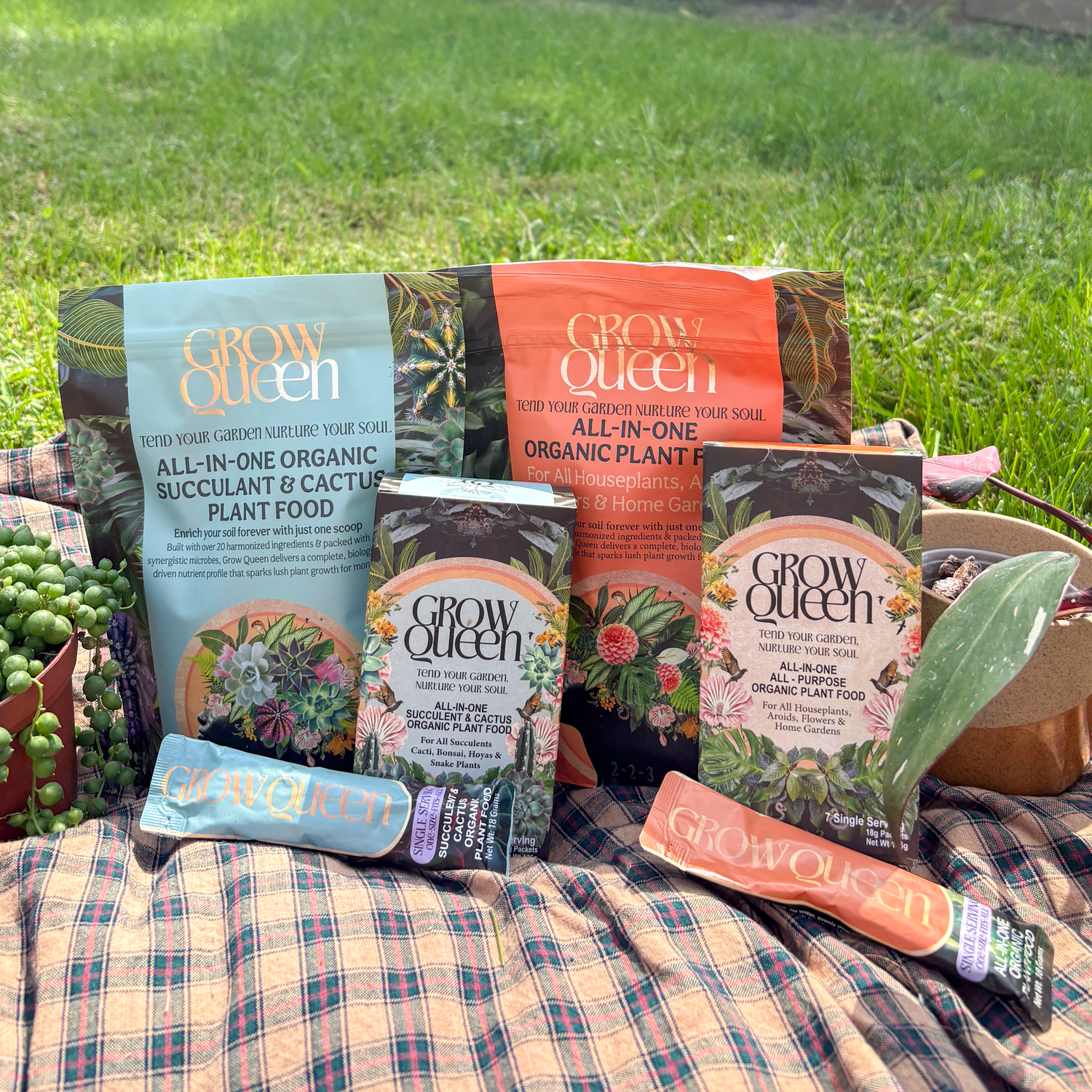
Grow Queen pick: Organic Time Release Plant Food. Organic Time Release Plant Food feeds for 1 to 6 months from one application, which fits the steady growing-season feeding this heavy feeder needs to bloom.
Learn more: Pillar 5, Plant Nutrients →
🍂 Common Problems
Why won't my bird of paradise bloom?
The RHS says plants can take a few years to bloom and will only flower with enough light and feed. They also flower better when slightly pot-bound. Give it your brightest window, feed through spring and summer, and don't move it into a much bigger pot.
Why are there yellow or brown spots on the leaves?
NC State notes that leaf spot disease can cause yellow or brown spots. Remove badly spotted leaves, avoid wetting the foliage, and keep air moving around the plant. Clear away dead leaves and spent flower stalks too.
Why are the leaves turning yellow and the base going soft?
This often points to root rot from overwatering or poorly drained soil. Let the soil dry more between waterings, especially in winter, and check that the pot drains freely. If the roots are mushy, trim them and repot in fresh mix.
What are these sticky or cottony spots on my plant?
Scale, mealybugs and spider mites can all show up on bird of paradise. Inspect leaf undersides and stems, isolate the plant, and wipe pests off with a damp cloth. Your local extension office can help confirm what you're seeing.
✂️ Maintenance & Growth Tips
• Remove dead leaves and spent flower stalks to keep the plant neat and help prevent fungal problems.
• Wipe the large leaves with a damp cloth to remove dust.
• Top-dress with fresh potting mix each year and repot about every second year.
• Propagate by dividing rooted suckers in spring.
• Rotate the pot now and then so growth stays even.
⚠️ Pet Safety
The ASPCA lists bird of paradise flower (Strelitzia reginae) as toxic to dogs, cats and horses. The toxic principle is listed as GI irritants, and signs include mild nausea, vomiting and drowsiness, caused mainly by the fruit and seeds. The ASPCA notes it should not be confused with Caesalpinia gilliesii, a different plant also called bird of paradise, which is more toxic. Keep the plant out of reach and call your vet or the ASPCA Poison Control line at (888) 426-4435 if your pet eats any of it.
🌿 Bottom Line
Bird of paradise is a sun-loving South African plant, and light is the key to keeping it happy indoors. Give it your brightest spot, water generously while it grows, and let it rest drier in winter.
Use a fertile, well-draining mix, feed through spring and summer, and keep it a little snug in its pot. Be patient. A well-fed plant in strong light can reward you with its bird-shaped blooms.
Grow Queen Picks for Bird of Paradise (Strelitzia reginae)
The soil and food to keep your Bird of Paradise (Strelitzia reginae) growing strong.





0 comments