
Grow Queen Plant Care Guide
Nerve Plant (Fittonia albivenis)
Nerve plant is small, low and covered in leaves etched with white, pink or red veins. It fits on a desk, a shelf or inside a terrarium, and it adds color without needing much room.

Fittonia is not hard to grow once you know its two big needs: steady moisture and humid air. Here is how to give it both. This guide walks through Nerve Plant (Fittonia albivenis) care using Grow Queen's 5 Pillars of Plant Care.
🌿 Quick Care Snapshot
🌏 Know Your Plant
Nerve plant (Fittonia albivenis) belongs to the acanthus family, Acanthaceae. Kew's Plants of the World Online lists its native range as southern tropical America, including Bolivia, northern Brazil, Colombia, Ecuador, Peru and Venezuela. In the wild it creeps along the floor of tropical rainforests, shaded by the canopy and surrounded by humid air. That explains its needs indoors: bright light without direct sun, soil that never dries out for long, and more humidity than most rooms offer. Its shallow roots and slow, spreading habit make it easy to keep in a small pot or terrarium.
• Family: Acanthaceae (acanthus family)
• Native to tropical South America (per Kew POWO)
• Low, creeping groundcover, usually under 8 inches tall
• Older names include Fittonia verschaffeltii and Fittonia argyroneura
✨ Fun Facts
• The genus is named for two sisters, Elizabeth and Sarah Mary Fitton, who wrote a book on botany in 1817.
• The species name albivenis means 'with white veins,' a nod to its patterned leaves.
• Nerve plant is known for wilting flat when it gets dry, then standing back up soon after a good drink.
• Its small size and love of humidity make it a classic terrarium and bottle garden plant.
Pillar 1
🌱 Soil & Growth Medium
What they need: A moisture-retentive mix that drains freely.
Fittonia likes soil that stays evenly moist, but it does not like waterlogged roots, which can rot. Use a moisture-retentive, well-drained houseplant mix. Its roots are shallow, so it is happy in a small pot and only needs repotting every few years.
• Repot every few years once roots fill the pot.
• Go up only slightly in pot size to avoid soggy soil.
• Terrarium plants need less frequent watering because the air stays humid.
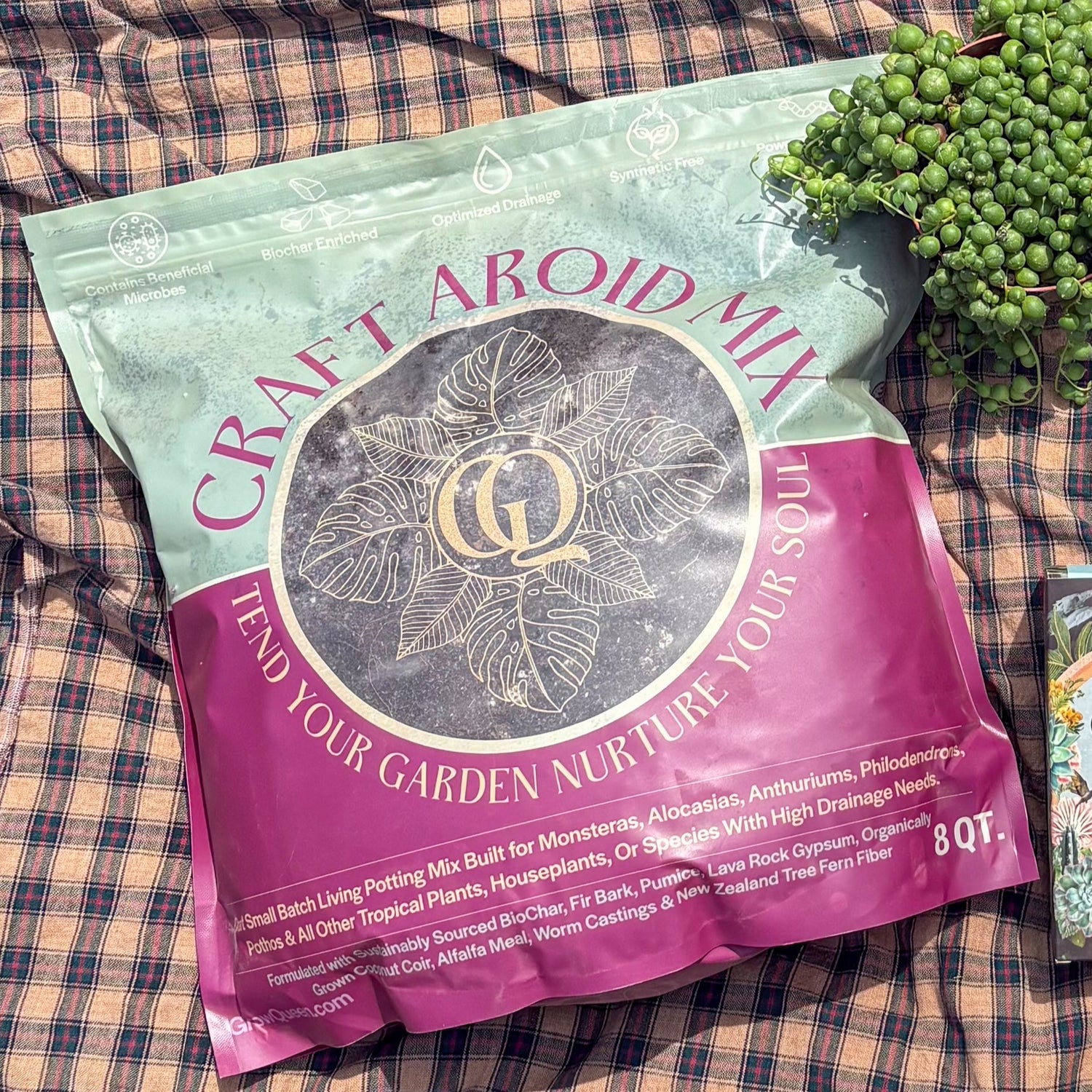
Grow Queen pick: Craft Houseplant Potting Mix. Craft Houseplant Potting Mix holds moisture evenly while staying aerated, which suits a plant that wants steady moisture without soggy roots.
Learn more: Pillar 1, Soils & Growth Mediums →
Pillar 2
☀️ Lighting
What they need: Bright, indirect light away from direct sun.
Give nerve plant a bright spot near a north or east window. Direct sun scorches the leaves and dries the plant out fast. It also does well under indoor grow lights, which makes it a good fit for terrariums and shelves away from windows.
Signs of too little light:
• Yellowing leaves.
• Leggy stems with spaced-out leaves.
• Vein color looking dull.
Signs of too much light:
• Scorched, brown or crispy leaves.
• Faded, washed-out color.
• Wilting even when the soil was recently watered.
Learn more: Pillar 2, Lighting →
Pillar 3
💧 Watering
What they need: Keep the mix evenly moist, never soggy.
Water often enough that the mix stays lightly moist. NC State Extension suggests checking about twice a week. If it dries out, the whole plant can collapse, but it usually stands back up soon after a thorough watering. Do not let that happen often, since repeated wilting stresses the plant. In winter, growth slows and pots dry more slowly, so feel the soil before you water.
Signs of overwatering:
• Yellowing leaves.
• Soft, rotting stems at the soil line.
• Soil that stays wet and smells sour.
Signs of underwatering:
• Sudden, dramatic wilting.
• Crispy brown leaf edges.
• Leaves shriveling and dropping.
Learn more: Pillar 3, Watering →
Pillar 4
🌡️ Environment
What they need: Warmth and high humidity, with no drafts.
The RHS recommends a warm room that stays above about 63°F and never below 60°F. Nerve plant needs moist air, or its leaves turn brown. A bathroom, a kitchen, a terrarium, or a tray of damp pebbles under the pot all help.
Ideal conditions:
• Room temperature above about 63°F
• High humidity, such as a bathroom or terrarium
• Bright, indirect light from a north or east window
• A pebble tray or humidifier in dry rooms
Avoid:
• Cold drafts from doors and windows
• Radiators, heating vents and fireplaces
• Sunny south-facing windowsills
Learn more: Pillar 4, Environment →
Pillar 5
🪴 Plant Nutrients
What they need: A light feeder. Small, occasional doses only.
Fittonia is not a hungry plant. The RHS suggests feeding once every two or three months with a half-strength houseplant fertilizer mixed into your watering. Skip feeding in winter when growth slows.
Benefits of the right feeding:
• Steady new growth
• Brighter, healthier leaves
• Faster recovery after pinching or division
Grow Queen pick: Organic 5-5-5 Liquid Plant Food. Organic 5-5-5 Liquid Plant Food mixes into watering water, so it is easy to give nerve plant the light, diluted feeding it prefers.
Learn more: Pillar 5, Plant Nutrients →
🍂 Common Problems
Why did my nerve plant suddenly collapse?
Dramatic wilting is almost always thirst. Water thoroughly and it should perk up soon after. If the soil is already wet and it is still wilting, check for root rot from overwatering instead.
Why are the leaves turning brown and crispy?
Dry air is the usual cause, along with direct sun or heat from a radiator or vent. Move the plant out of direct sun and away from heat, and raise the humidity with a pebble tray, humidifier or terrarium.
Why are the leaves turning yellow?
Sources point to two causes. NC State Extension links yellowing to overwatering, while the RHS says it usually means too little light. Check the soil first. If it is soggy, let it dry slightly. If the soil is fine, move the plant somewhere brighter.
Why is my nerve plant leggy?
Stretched stems mean the plant wants more light or a trim. Pinch back the stem tips to keep it bushy, and move it a little closer to a bright window without putting it in direct sun.
✂️ Maintenance & Growth Tips
• Pinch stem tips to keep the plant bushy and full.
• Remove dead leaves and stems to keep it tidy and reduce mold.
• Root 2-inch stem-tip cuttings in spring or summer. Keep them humid under a clear cover.
• Divide a clump that has died out in the middle and replant the healthy pieces.
• Check for spider mites and mealybugs. Isolate and rinse affected plants.
⚠️ Pet Safety
The ASPCA lists nerve plant (Fittonia verschaffeltii, now included in Fittonia albivenis) as non-toxic to dogs, cats and horses. Eating any plant can still cause mild stomach upset in pets, so it is best to discourage chewing.
🌿 Bottom Line
Nerve plant needs bright, indirect light, evenly moist soil and humid air. If you can keep those steady, it is a colorful, compact plant that asks for little else.
Water before it wilts, keep it away from sun and heat, and feed it lightly a few times a year. A terrarium or bright bathroom makes it even easier.
Grow Queen Picks for Nerve Plant (Fittonia albivenis)
The soil and food to keep your Nerve Plant (Fittonia albivenis) growing strong.






0 comments