
Grow Queen Plant Care Guide
Tropical Hibiscus (Hibiscus rosa-sinensis)
Tropical hibiscus brings huge, vivid flowers indoors, in reds, pinks, oranges, yellows and blends. Each bloom lasts about a day, but a happy plant keeps making more.

Hibiscus is easy to grow if its needs are met. Bright light, warmth and steady watering are what bring the flowers. This guide walks through Tropical Hibiscus (Hibiscus rosa-sinensis) care using Grow Queen's 5 Pillars of Plant Care.
🌿 Quick Care Snapshot
🌏 Know Your Plant
Tropical hibiscus is in the mallow family, Malvaceae. Kew's Plants of the World Online treats Hibiscus rosa-sinensis as a hybrid that arose in cultivation from hybrids in the South Pacific, so it has no true wild native range. It grows as a shrub mainly in seasonally dry tropical regions and is now planted across the tropics. Indoors, that tropical background means it needs warmth, lots of light and regular water and food while it is growing. It does not tolerate frost or sudden changes in temperature or humidity.
• Family: Malvaceae (mallow family)
• A cultivated hybrid from the South Pacific (per Kew POWO)
• Woody shrub grown for large, one-day flowers
• Not frost hardy. Bring indoors before the first fall frost
✨ Fun Facts
• Each hibiscus flower usually lasts only one day before it closes and drops.
• Flowers can measure 8 to 12 inches across, according to Illinois Extension.
• Kew's Plants of the World Online lists tropical hibiscus as a cultivated hybrid with no wild native range.
Pillar 1
🌱 Soil & Growth Medium
What they need: A rich, well-drained mix.
Hibiscus does best in a rich potting mix that holds moisture but drains well. The University of Minnesota suggests a mix of potting soil, peat and perlite or vermiculite. Make sure the pot has drainage holes, and water until it runs out the bottom to flush salts from the mix.
• Always use a pot with drainage holes.
• Repot in spring when roots fill the pot.
• Empty saucers after watering.
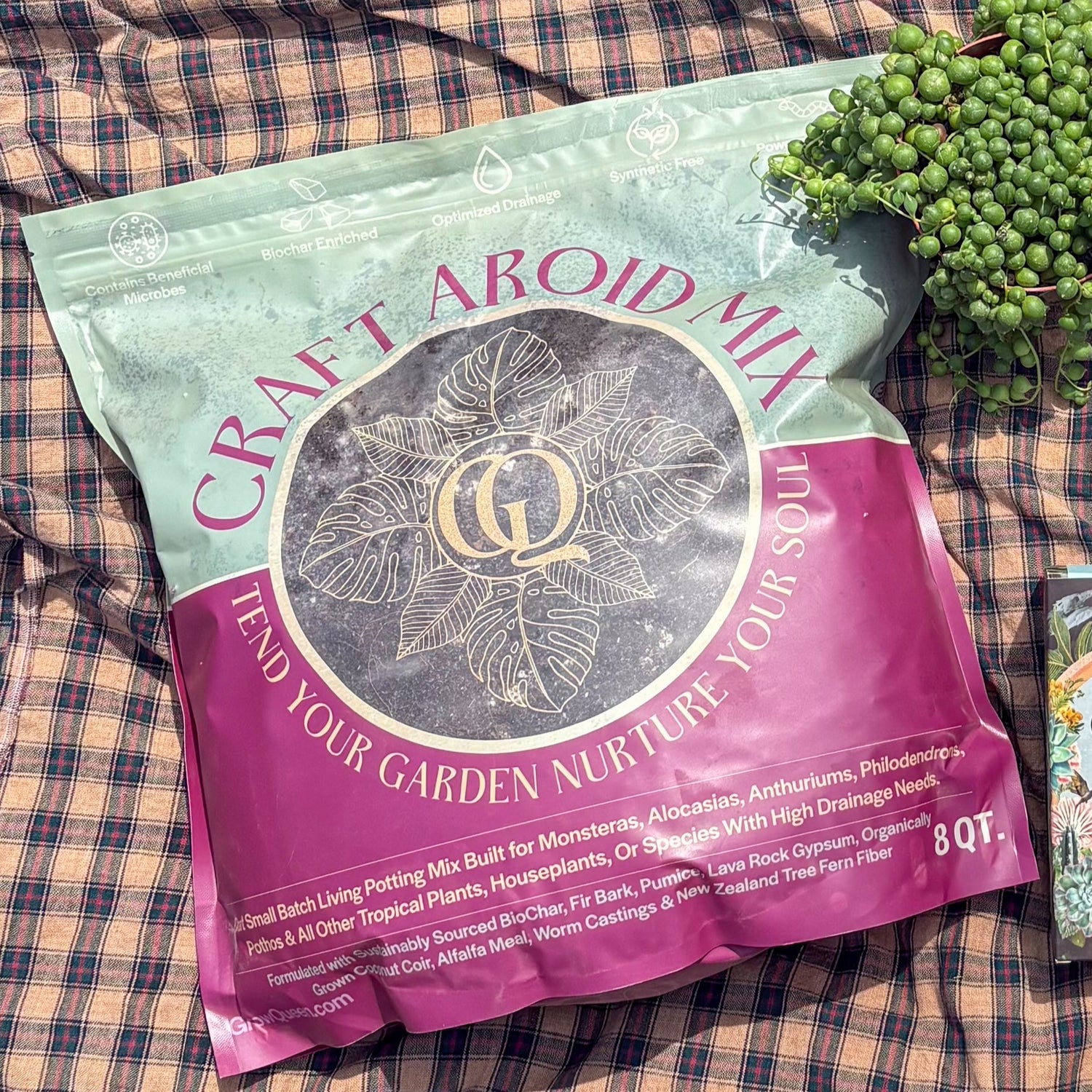
Grow Queen pick: Craft Houseplant Potting Mix. Craft Houseplant Potting Mix holds moisture evenly while staying aerated, which fits a hibiscus that wants a rich, well-drained, relatively moist mix.
Learn more: Pillar 1, Soils & Growth Mediums →
Pillar 2
☀️ Lighting
What they need: Very bright light with several hours of direct sun.
Hibiscus needs very bright light to bloom indoors. A sunny south or west window with at least four to five hours of direct light is best, and the more light it gets, the more it flowers. When moving it outdoors for summer, ease it from shade to full sun over a few weeks to avoid bud and leaf drop.
Signs of too little light:
• Few or no flower buds.
• Buds dropping before they open.
• Yellow leaves and leggy growth.
Signs of too much light:
• Scorched patches after a sudden move into strong sun.
• Leaves wilting in hot afternoons.
• Faded flowers.
Learn more: Pillar 2, Lighting →
Pillar 3
💧 Watering
What they need: Relatively moist, never saturated, never wilting.
Keep the mix relatively moist but not soggy, and never let it dry to the point of wilting. Water from the top until it runs out the bottom, then drain off the excess. In winter, let the mix dry out a little more between waterings. Sudden changes in soil moisture are a common cause of yellow leaves.
Signs of overwatering:
• Yellowing leaves, especially on older varieties.
• Soggy mix that stays wet for days.
• Bud drop.
Signs of underwatering:
• Wilting.
• Bud drop.
• Yellow leaves after the mix dries out.
Learn more: Pillar 3, Watering →
Pillar 4
🌡️ Environment
What they need: Warmth and steady conditions.
Hibiscus needs warm temperatures to form flower buds. The University of Minnesota recommends 65 to 75°F, with daytime temperatures no lower than 55°F. It does not handle sudden changes in temperature or humidity, so keep it away from drafts, radiators and doorways.
Ideal conditions:
• 65 to 75°F for bud development
• Never below 55°F
• A bright south or west window
• Steady temperatures and humidity
Avoid:
• Cold drafts and entryways
• Radiators and heating vents
• Frost. Bring plants in before the first fall frost
Learn more: Pillar 4, Environment →
Pillar 5
🪴 Plant Nutrients
What they need: Regular balanced feeding in spring and summer.
Hibiscus is a heavy feeder. Indoors, the University of Minnesota suggests a balanced fertilizer at half strength about once a month in spring and summer, and less often in winter. Outdoors in summer it can be fed every two to three weeks at half strength. Yellowing leaves can be a sign it needs feeding.
Benefits of the right feeding:
• More flower buds
• Healthy green leaves
• Strong regrowth after pruning
Grow Queen pick: Organic 5-5-5 Liquid Plant Food. Organic 5-5-5 Liquid Plant Food is a balanced liquid that mixes into watering water, an easy way to give this heavy feeder regular, diluted meals.
Learn more: Pillar 5, Plant Nutrients →
🍂 Common Problems
Why are my hibiscus leaves turning yellow?
Abrupt changes in soil moisture, temperature or drafts are the usual causes, along with overwatering. Some yellowing is normal in spring and fall as conditions change, especially when moving the plant in or out. Yellowing can also mean it is time to feed.
Why is my hibiscus dropping its buds?
Bud drop happens when the plant is too cold or too hot, too wet or too dry, in a draft, or in low light. Keep it at 65 to 75°F in a bright window, and water steadily.
Why won't my hibiscus bloom indoors?
Not enough light or warmth. Hibiscus needs several hours of direct sun and temperatures of 65 to 75°F to form buds. Heavy pruning also removes buds, so blooms take longer after a big trim.
What should I do with my hibiscus in winter?
You can keep it growing as a houseplant in your brightest window, or, as Illinois Extension describes, let it go dormant in a cool area and keep it on the dry side. In spring, bring it into warmth, prune it back and water well to restart growth.
✂️ Maintenance & Growth Tips
• Prune in late winter to keep the plant bushy. Hibiscus handles heavy pruning.
• Take 3 to 5 inch cuttings from strong shoots. They root in about three to five weeks.
• Pinch the tips of rooted cuttings to encourage branching.
• Rinse leaves now and then to keep them clean and discourage aphids and spider mites.
• Acclimate gradually when moving the plant indoors or outdoors.
⚠️ Pet Safety
The ASPCA's hibiscus entry lists Hibiscus syriacus (common names Rose of Sharon and Rose of China) as non-toxic to dogs, cats and horses. We did not find a separate ASPCA entry for tropical hibiscus (Hibiscus rosa-sinensis), so use caution and discourage pets from chewing it. Eating any plant can cause mild stomach upset.
🌿 Bottom Line
Tropical hibiscus needs very bright light, warm, steady temperatures, a rich well-drained mix and regular water and food while it is growing.
Avoid sudden changes, prune in late winter, and bring it inside before frost. Give it a sunny window and it will keep producing its big one-day blooms.
Grow Queen Picks for Tropical Hibiscus (Hibiscus rosa-sinensis)
The soil and food to keep your Tropical Hibiscus (Hibiscus rosa-sinensis) growing strong.






0 comments