
Grow Queen Plant Care Guide
Peace Lily (Spathiphyllum)
Peace lilies bring glossy, deep green leaves and white, sail-like blooms to rooms that don't get much sun. They're forgiving, they bloom more than once with good care, and they tell you plainly when they need something.

Here's how to give your peace lily what it needs, one pillar at a time. This guide walks through Peace Lily (Spathiphyllum) care using Grow Queen's 5 Pillars of Plant Care.
🌿 Quick Care Snapshot
🌏 Know Your Plant
Spathiphyllum is a genus of evergreen herbs in the arum family (Araceae). According to Kew's Plants of the World Online, the genus is native from Mexico through tropical America, and also to Malesia and the western Pacific. In the wild, peace lilies grow on the floor of humid tropical forests, usually in wet sites. That tells you most of what you need indoors: filtered light instead of sun, warmth, steady moisture, and air that isn't bone dry. Despite the name, it is not a true lily.
• Family: Araceae, the same family as philodendrons and anthuriums.
• Native range: Mexico to tropical America, Malesia and the western Pacific.
• Indoor size: usually about 3 feet tall and wide; dwarf types stay much smaller.
• Hardy outdoors only in USDA zones 10B to 12.
✨ Fun Facts
• The genus name is Greek for "spathe leaf," after the white spathe, which is a modified leaf, not a petal.
• There are about 60 species of Spathiphyllum.
• The white spathe usually turns pale green after about 10 days and can stay attractive for at least another month.
• Peace lilies are in the arum family, not the true lily family (Liliaceae).
Pillar 1
🌱 Soil & Growth Medium
What they need: A rich, organic potting mix that drains well but stays evenly moist.
UF/IFAS recommends a rich, organic peat- or bark-based bagged potting soil, and NC State suggests a mix high in organic matter. The goal is moisture that lasts a few days without the roots sitting wet. Always use a pot with a drainage hole.
• Peace lilies like being somewhat pot-bound, so don't rush to a much bigger pot.
• Repot when needed, ideally in late winter (February or March).
• Go up only one pot size at a time.
• Divide crowded clumps at repotting to make new plants.
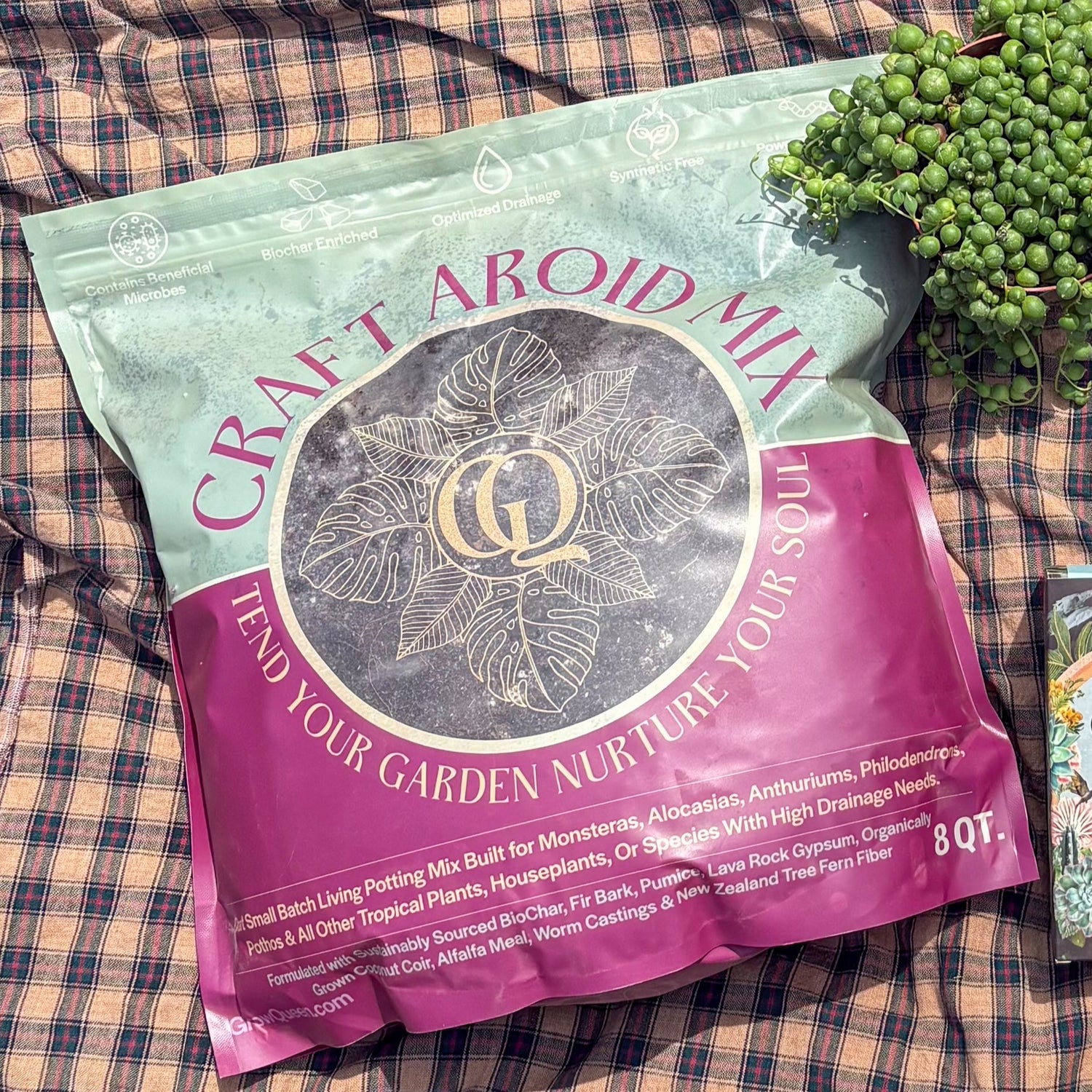
Grow Queen pick: Craft Houseplant Potting Mix. Craft Houseplant Potting Mix holds moisture evenly while staying aerated, which matches the rich, organic, moist-but-not-soggy mix that peace lilies prefer.
Learn more: Pillar 1, Soils & Growth Mediums →
Pillar 2
☀️ Lighting
What they need: Bright, indirect light with no direct sun.
UF/IFAS lists bright, indirect light and no direct sun. Peace lilies tolerate lower light than many houseplants, but a brighter spot out of the sun's direct rays usually means more blooms. Direct sun can scorch the leaves.
Signs of too little light:
• Few or no new blooms
• Slow growth with fewer new leaves
• Stretched, floppy leaf stems leaning toward the window
Signs of too much light:
• Brown, crispy leaf tips or edges
• Pale, washed-out or yellowing leaves
• Scorched, bleached patches on leaves facing the window
Learn more: Pillar 2, Lighting →
Pillar 3
💧 Watering
What they need: Evenly moist soil, never soggy and never standing in water.
Keep the soil moist, but don't let the pot sit in water. NC State notes that letting the surface dry slightly between waterings works well, and that watering from below suits peace lilies. Growth slows a lot in cool temperatures, so water less often in winter and check the soil before each watering.
Signs of overwatering:
• Yellowing lower leaves
• Soil that stays wet and smells sour
• Mushy, dark roots or a collapsing base
Signs of underwatering:
• Whole plant wilts and droops
• Brown, dry leaf tips
• Soil pulling away from the sides of the pot
Learn more: Pillar 3, Watering →
Pillar 4
🌡️ Environment
What they need: Warm, steady temperatures and moderate to high humidity.
NC State gives 68 to 85°F during the day with no more than about a 10 degree drop at night. Temperatures of 40 to 60°F slow growth a lot, and long stretches below 40°F can damage leaves, stems and roots. Low humidity is one cause of brown leaf tips.
Ideal conditions:
• Daytime temperatures of about 68 to 85°F
• Nights no more than about 10°F cooler than days
• Moderate to high humidity, away from heating vents
• A spot with bright, filtered light
Avoid:
• Cold drafts and windows below 60°F
• Direct afternoon sun
• Hot, dry air from heaters or vents
Learn more: Pillar 4, Environment →
Pillar 5
🪴 Plant Nutrients
What they need: Light, diluted feeding. Less is more.
UF/IFAS recommends a low dose of liquid fertilizer about three times a year, and NC State suggests one-quarter of the label strength. Flush the soil with plain water between feedings. Too much fertilizer and salt buildup can burn leaf tips and roots.
Benefits of the right feeding:
• Supports steady new leaf growth
• Helps the plant build energy to rebloom
• Keeps leaves a deep, glossy green
Grow Queen pick: Organic 5-5-5 Liquid Plant Food. Extension guidance calls for low-dose liquid feeding for peace lilies, and Organic 5-5-5 Liquid Plant Food mixes right into your watering can at a diluted strength.
Learn more: Pillar 5, Plant Nutrients →
🍂 Common Problems
Why are the leaf tips turning brown?
NC State lists direct sun, underwatering and low humidity as the usual causes. Too much fertilizer and salt buildup can also burn the tips. Move the plant out of direct sun, keep the soil evenly moist, and flush the pot with plain water now and then.
Why is my peace lily drooping?
A sudden droop usually means the soil has dried out. Check the soil, and if it's dry, water thoroughly and let the excess drain away. If the soil is already wet and the plant still droops, check the roots for rot.
Why are the leaves turning yellow?
Soggy soil or a pot sitting in water is a common cause, so make sure the pot drains freely. A few older leaves yellowing at the base is normal aging. Too much direct sun can also yellow and bleach the leaves.
Why won't my peace lily bloom?
Low light is the most likely reason. Move it to a brighter spot with indirect light, still out of direct sun. Light, regular feeding during the growing season also helps.
✂️ Maintenance & Growth Tips
• Wipe the broad leaves with a damp cloth to remove dust and any pests hiding underneath.
• Check under leaves for mealybugs, the most common indoor pest. Isolate and wipe off any you find.
• Cut faded flower stalks off at the base.
• Divide the clump at repotting to make new plants.
• Repot in late winter when the plant is crowded, going up just one pot size.
⚠️ Pet Safety
The ASPCA lists the peace lily (Spathiphyllum) as toxic to dogs and cats. It contains insoluble calcium oxalates, and signs can include oral irritation, intense burning of the mouth, tongue and lips, excessive drooling, vomiting and difficulty swallowing. Despite its name, it is not a true lily; the ASPCA lists true lilies (Lilium) separately as causing kidney failure in cats. Keep it out of reach and call your vet or the ASPCA Poison Control line at (888) 426-4435 if your pet chews on it.
🌿 Bottom Line
Peace lilies want what a tropical forest floor gives them: filtered light, warmth, steady moisture and a bit of humidity. Get those right and they're among the easiest flowering houseplants to keep.
Plant in a rich, well-draining mix, keep it out of direct sun, water before it dries out completely, and feed lightly. When it droops or browns at the tips, it's telling you exactly what to adjust.
Grow Queen Picks for Peace Lily (Spathiphyllum)
The soil and food to keep your Peace Lily (Spathiphyllum) growing strong.






0 comments