
Grow Queen Plant Care Guide
Callisia (Turtle Vine, Basket Plant)
Callisias are fast, easygoing plants with small, slightly fleshy leaves. Turtle vine and its colorful forms like 'Pink Lady' spill over hanging baskets, while the larger basket plant forms upright rosettes with long runners.

Most Callisia sold as houseplants share the same basic needs: bright, filtered light, a well-drained mix and steady warmth. Here is how to cover each of the 5 Pillars. This guide walks through Callisia (Turtle Vine, Basket Plant) care using Grow Queen's 5 Pillars of Plant Care.
🌿 Quick Care Snapshot
🌏 Know Your Plant
Callisia is a genus in the spiderwort family, Commelinaceae, the same family as Tradescantia. Kew's Plants of the World Online gives the genus a native range across tropical and subtropical America. Turtle vine, Callisia repens, grows from southeast Texas through tropical America, and the basket plant, Callisia fragrans, is native to Mexico. Both grow mainly in seasonally dry tropical habitats, often in shady, rocky spots, which is why they like bright but filtered light and a mix that drains well. Their slightly succulent leaves and stems also mean they handle a missed watering better than constantly wet soil.
• Family: Commelinaceae, the spiderwort family.
• Native to tropical and subtropical America, from Texas and Mexico south.
• Turtle vine trails and roots at its nodes. Basket plant forms large rosettes with runners.
• Popular forms include 'Pink Lady', 'Pink Panther', 'Bianca' and 'Gold'.
✨ Fun Facts
• The genus name Callisia comes from the Greek word kallos, meaning beauty.
• The species name repens is Latin for creeping, a good fit for turtle vine's mat-forming stems.
• Turtle vine's stems root wherever their nodes touch soil, which is why it fills a pot or basket so quickly.
• Turtle vine is listed as invasive in South Africa, China and Cuba, so keep it in pots and do not dump trimmings outdoors in warm climates.
Pillar 1
🌱 Soil & Growth Medium
What they need: A well-drained mix that holds some moisture without staying wet.
NC State Extension recommends a moist, well-drained mix with perlite for drainage, and a slightly acidic pH of about 5.0 to 6.5. The RHS suggests a loam-based mix lightened with grit. Overwatering in heavy soil is the main cause of root rot.
• Use a pot or hanging basket with drainage holes.
• Mix in extra perlite or grit if your mix feels heavy.
• Pot several cuttings together for a fuller look.
• Repot when roots fill the pot, usually in spring.
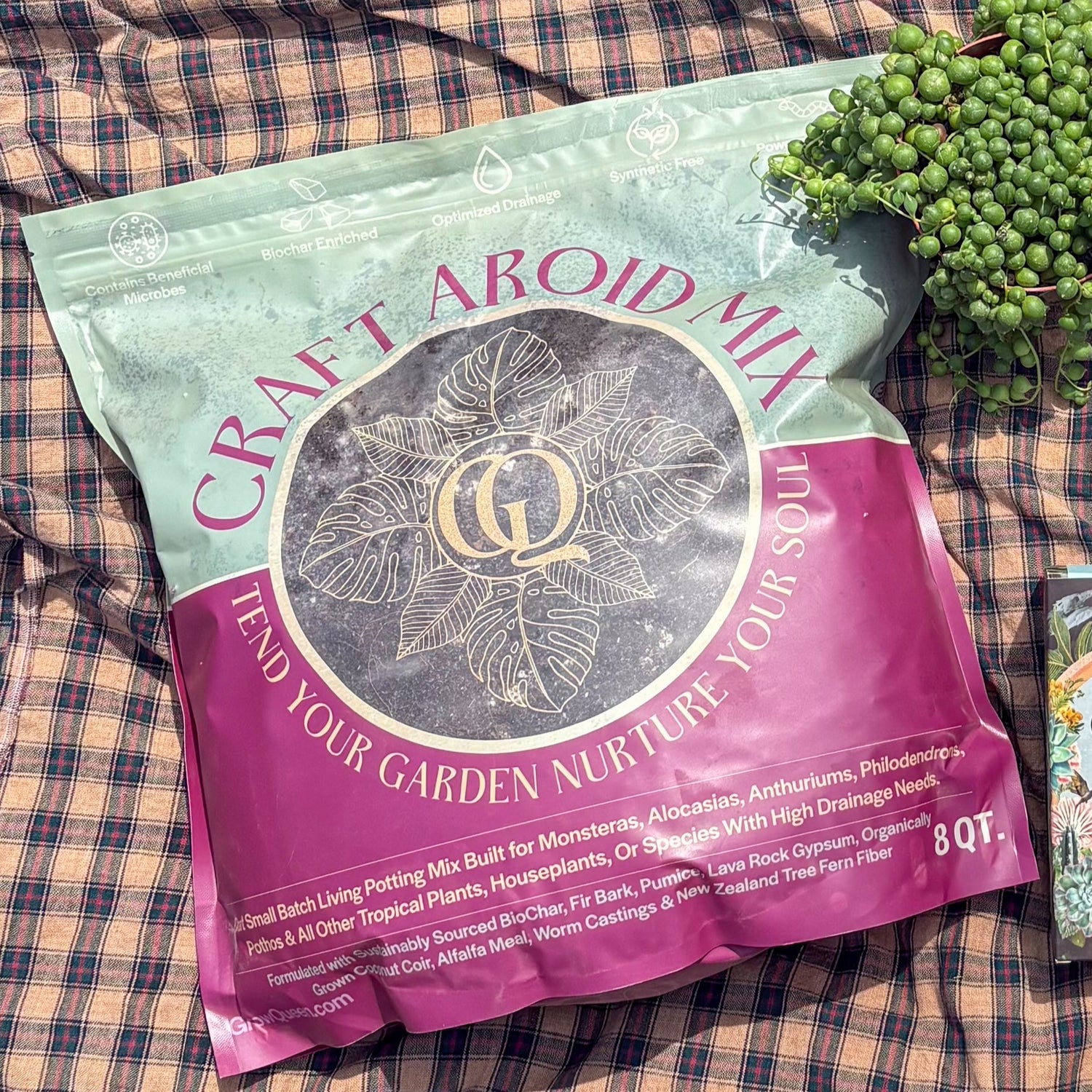
Grow Queen pick: Craft Houseplant Potting Mix. Craft Houseplant Potting Mix holds moisture evenly while staying aerated, which suits Callisia; add a handful of perlite if you want it to drain even faster.
Learn more: Pillar 1, Soils & Growth Mediums →
Pillar 2
☀️ Lighting
What they need: Bright, filtered light.
Give Callisia bright, indirect light, such as an east or west window. Too much shade makes stems long, weak and leggy, and colorful forms like 'Pink Lady' lose their pink tones. Strong direct sun can scorch or discolor the leaves.
Signs of too little light:
• Long, leggy stems with big gaps between leaves.
• Pink and cream variegation fading to plain green.
• Thin, weak growth that flops.
Signs of too much light:
• Scorched or bleached leaf patches.
• Leaf discoloration or reddening.
• Dry, crispy leaf edges.
Learn more: Pillar 2, Lighting →
Pillar 3
💧 Watering
What they need: Regular water in the growing season, with good drainage.
Water freely through spring and summer, letting the top of the mix dry slightly before the next drink. Never leave the pot sitting in water, since overwatering can cause root rot and fungal problems. In fall and winter, when growth slows, water less often.
Signs of overwatering:
• Stems turning soft or black at the soil line.
• Yellowing, mushy leaves.
• Mix that stays wet for days.
Signs of underwatering:
• Leaves shriveling or wrinkling.
• Stems going limp.
• Dry, crispy older leaves.
Learn more: Pillar 3, Watering →
Pillar 4
🌡️ Environment
What they need: Steady warmth and protection from cold.
Callisia prefers 60 to 80°F and is not frost tolerant. The RHS notes it can only live outdoors where winters stay above about 50°F, so most growers keep it inside or bring it in before cool weather. Average home humidity works well.
Ideal conditions:
• Temperature: 60 to 80°F.
• Humidity: average home humidity.
• Hanging baskets or shelves where stems can trail.
• Summer outdoors in a sheltered, partly shaded spot.
Avoid:
• Temperatures below 50°F and frost.
• Harsh afternoon sun.
• Heavy, waterlogged soil.
Learn more: Pillar 4, Environment →
Pillar 5
🪴 Plant Nutrients
What they need: Light, regular feeding while it is growing.
The RHS recommends a liquid fertilizer about once a month during the growing season. Stop feeding in fall and winter when growth slows. Callisia grows fast, so pruning matters more than heavy feeding.
Benefits of the right feeding:
• Full, dense growth.
• Better leaf color.
• Quick recovery after trimming.
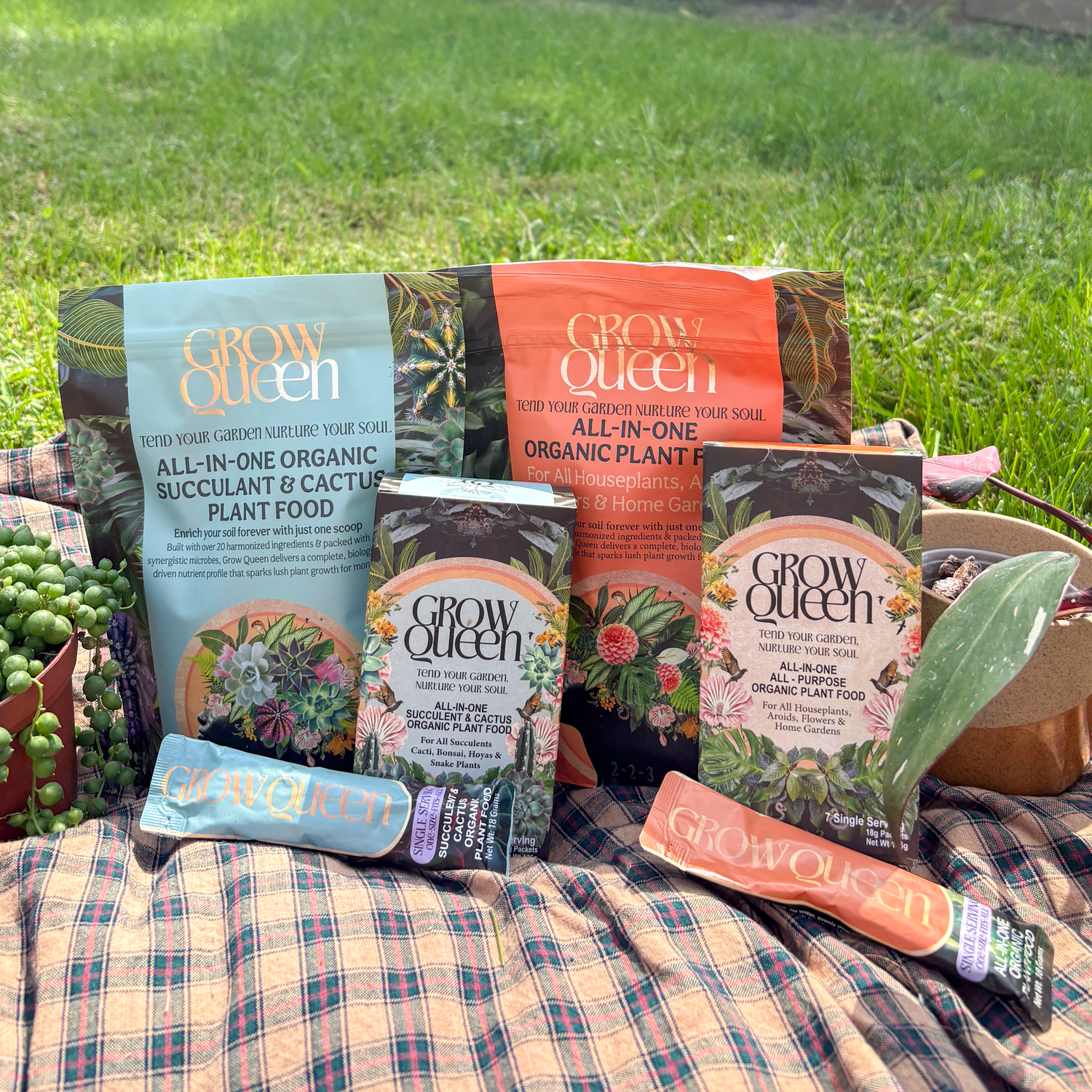
Grow Queen pick: Organic 5-5-5 Liquid Plant Food. Organic 5-5-5 Liquid Plant Food mixes into your watering water, which matches the monthly liquid feeding the RHS recommends for Callisia.
Learn more: Pillar 5, Plant Nutrients →
🍂 Common Problems
Why is my turtle vine getting leggy?
Too much shade makes Callisia stretch. Move it to brighter, filtered light and pinch or trim long stems to keep it bushy. Root the trimmings and add them back to the pot.
Why did my 'Pink Lady' lose its pink color?
Variegated forms need bright, indirect light to keep their pink and cream tones. Move it closer to a bright window, out of harsh direct sun.
Why are the stems rotting at the base?
This usually means the mix stayed too wet. Let it dry a bit between waterings, make sure the pot drains, and restart the plant from healthy cuttings if the base is mushy.
What are the tiny webs or sticky spots on my plant?
NC State lists spider mites, aphids and mealybugs as pests to watch. Isolate the plant, rinse or wipe the foliage, and ask your local extension office for help with ongoing problems.
✂️ Maintenance & Growth Tips
• Pinch or trim stems regularly to keep the plant full.
• Propagate by rooting stem cuttings in moist mix. Stems root easily at the nodes.
• Pot several cuttings together for a dense hanging basket.
• Wear gloves when pruning if your skin is sensitive. The sap can irritate.
• Check leaf undersides for pests every few weeks.
⚠️ Pet Safety
We could not find Callisia in the ASPCA Animal Poison Control toxic and non-toxic plant list, so we cannot call it pet safe. NC State Extension lists turtle vine (Callisia repens) as toxic to pets and children if eaten and notes the sap can irritate skin. Keep it out of reach of pets and call your vet if one chews on it.
🌿 Bottom Line
Callisia is an easy, fast grower when you give it bright, filtered light, a well-drained mix and steady warmth. Water freely in summer, less in winter, and never let it sit wet.
Feed lightly each month in the growing season and trim often to keep it full. Every trimming is a new plant waiting to root.
Grow Queen Picks for Callisia (Turtle Vine, Basket Plant)
The soil and food to keep your Callisia (Turtle Vine, Basket Plant) growing strong.





0 comments