
Grow Queen Plant Care Guide
Jewel Orchid (Ludisia discolor)
Jewel orchid is the orchid you grow for its leaves. Its dark, velvety foliage is lined with shimmering red or gold veins, and in winter it sends up spikes of small white flowers.

Unlike most orchids sold as houseplants, Ludisia grows in soil, not bark. That makes its care closer to an African violet than a moth orchid. Here is how to cover the five pillars. This guide walks through Jewel Orchid (Ludisia discolor) care using Grow Queen's 5 Pillars of Plant Care.
🌿 Quick Care Snapshot
🌏 Know Your Plant
Jewel orchid (Ludisia discolor) is native from southern China to Sumatra and the Philippines, according to Kew's Plants of the World Online. It is a member of the orchid family (Orchidaceae), but unlike the moth orchids that cling to tree branches, it is a terrestrial, creeping plant that grows from fleshy rhizomes on the forest floor in a wet tropical climate. Indoors, that means it wants a soil-based mix that holds moisture, shade from direct sun, and warm, humid air. The American Orchid Society calls it the easiest of the jewel orchids to grow as a houseplant.
• Native from southern China to Sumatra and the Philippines
• Terrestrial orchid: grows in soil, not on trees
• Grown mostly for its velvety, veined leaves
• Creeping, brittle stems up to about a foot long
✨ Fun Facts
• You may see it sold under its old name, Haemaria discolor. Botanists now treat Haemaria as a synonym of Ludisia.
• Each leaf rosette sends up a spike of white flowers in winter. The blooms open one after another, which stretches out the show.
• The small white flowers have a twisted yellow column at the center.
• Leaves range from dark green to purplish brown, with gold to red veins and red undersides.
Pillar 1
🌱 Soil & Growth Medium
What they need: A rich, terrestrial mix that holds moisture and drains well.
The American Orchid Society recommends a mix similar to what you would use for African violets or other terrestrial houseplants. NC State Extension notes that a fine fir bark mix also works, as long as it stays moist and drains freely. Plants left in wet, airless soil can rot quickly.
• Use a shallow, wide pot. The creeping stems spread sideways more than down.
• Repot after flowering when the plant outgrows its pot.
• Always use a pot with drainage holes.
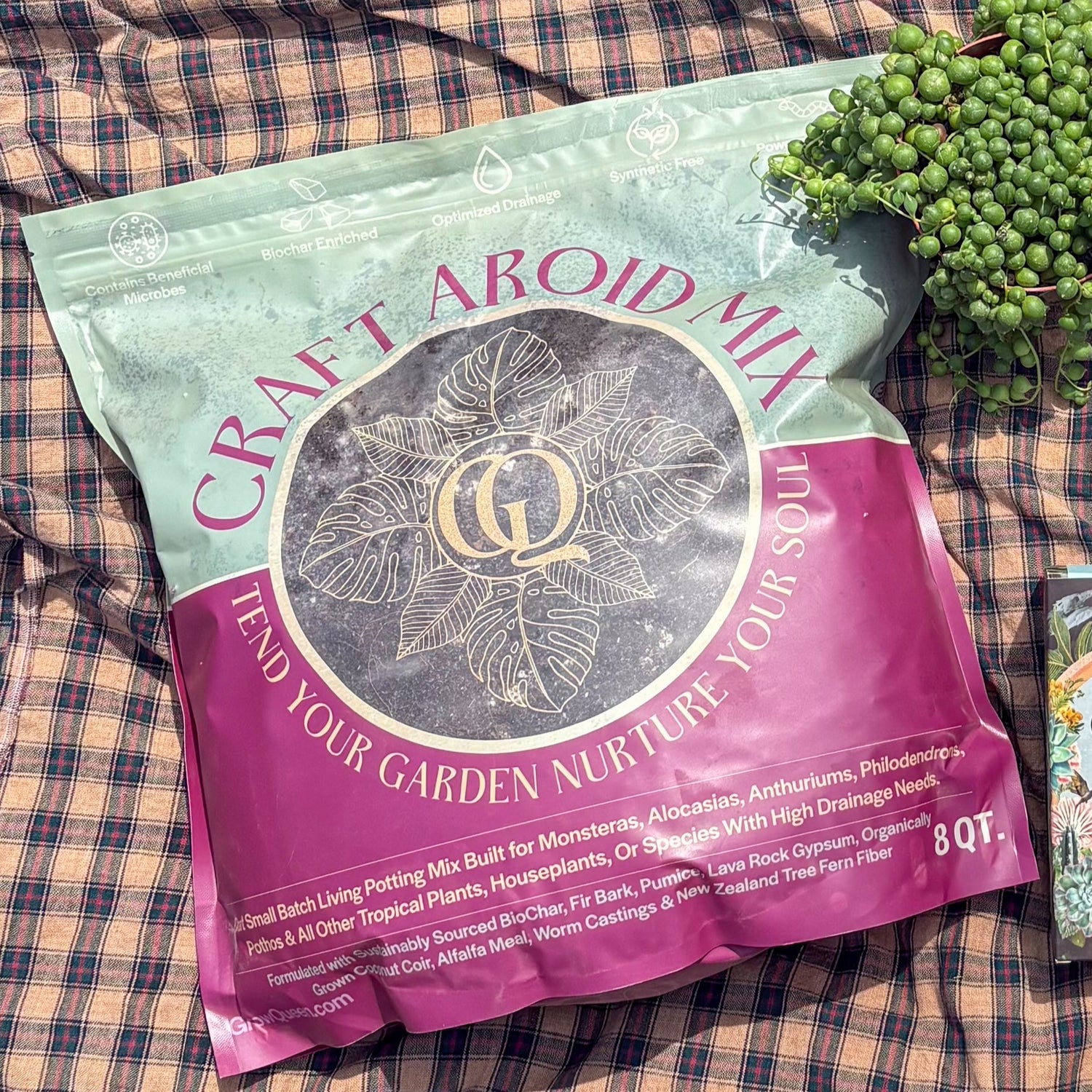
Grow Queen pick: Craft Houseplant Potting Mix. Craft Houseplant Potting Mix holds moisture evenly while staying aerated, which suits a terrestrial orchid that wants African-violet-style soil rather than bark.
Learn more: Pillar 1, Soils & Growth Mediums →
Pillar 2
☀️ Lighting
What they need: Medium, indirect light.
Ludisia is a forest-floor plant, so it prefers less light than most flowering houseplants. A spot near an east or north window, or several feet back from a brighter one, works well. Keep it out of direct sun.
Signs of too little light:
• Long, stretched stems with wide gaps between leaves
• Plant leans hard toward the window
• No flower spikes in winter
Signs of too much light:
• Leaves look bleached or faded
• Dry, scorched patches on the leaves
• Leaf color turns reddish or washed out
Learn more: Pillar 2, Lighting →
Pillar 3
💧 Watering
What they need: Even moisture all year, never soggy.
Keep the mix evenly moist year round, and use room-temperature water. Water when the top of the mix just begins to dry, and let extra water drain away. Growth slows in the darkest part of winter, so the mix will dry more slowly and you will water less often.
Signs of overwatering:
• Stems turn soft and brown at the soil line
• Leaves yellow and collapse
• Mix smells sour or stays wet for days
Signs of underwatering:
• Leaves droop and lose their firmness
• Leaf edges turn brown and crisp
• Stems shrivel
Learn more: Pillar 3, Watering →
Pillar 4
🌡️ Environment
What they need: Warm, humid and well ventilated.
Jewel orchid likes the warm, humid conditions of its native forests. Provide good air circulation so damp leaves dry off and fungal problems are less likely.
Ideal conditions:
• Warm room temperatures, roughly 65 to 80°F
• Moderate to high humidity, such as a pebble tray or humidifier
• Gentle air movement
• Stable conditions without sudden swings
Avoid:
• Cold drafts and chilly windowsills in winter
• Heater vents that dry the air
• Stagnant, damp corners with no air flow
Learn more: Pillar 4, Environment →
Pillar 5
🪴 Plant Nutrients
What they need: Light, regular feeding while the plant is growing.
NC State Extension recommends weekly feeding during the growing season with an orchid fertilizer. Keep it dilute, and cut back in winter when growth slows. Avoid strong doses, which can build up salts in the mix.
Benefits of the right feeding:
• Supports new leaf rosettes
• Helps the plant build up for winter flowering
• Keeps leaves deep in color
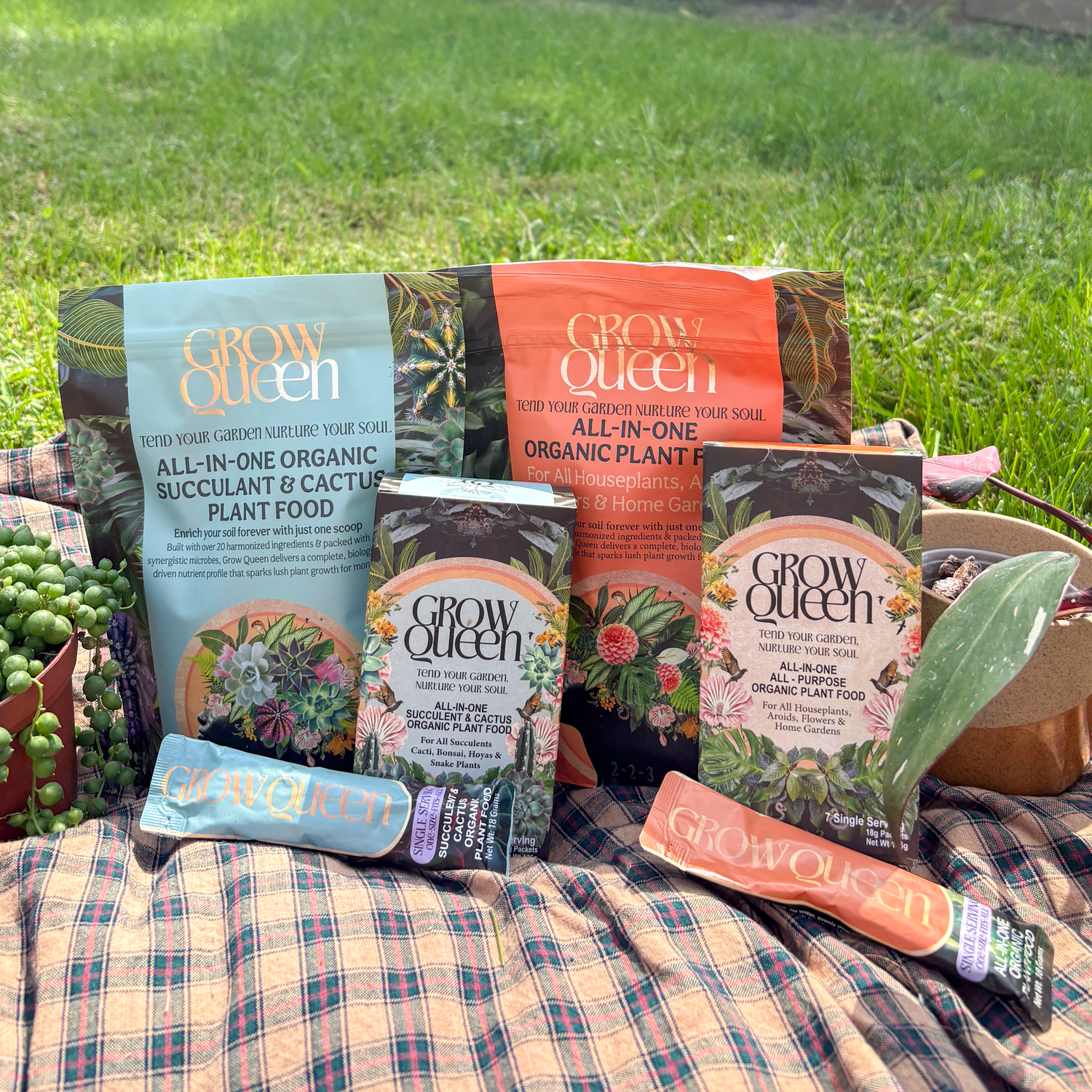
Grow Queen pick: Organic 5-5-5 Liquid Plant Food. Organic 5-5-5 Liquid Plant Food can be diluted into watering water, which fits the frequent, weak feeding recommended for orchids.
Learn more: Pillar 5, Plant Nutrients →
🍂 Common Problems
Why are the stems rotting at the base?
Wet, poorly drained soil is the usual cause. Let the top of the mix dry slightly between waterings, make sure the pot drains, and root healthy stem tips as backup cuttings.
Why did a stem snap off?
Ludisia stems are naturally brittle. Handle the plant gently, and pot the broken piece in moist terrestrial mix. Stems with leaves root readily.
Why is my plant so leggy?
Older stems naturally creep and stretch, and low light makes it worse. Move it to brighter indirect light, then take cuttings to start a fuller pot.
What are the white cottony spots on the stems?
Those are likely mealybugs, which NC State lists along with thrips as pests to watch for. Isolate the plant, wipe them off and rinse the leaves, and check again weekly. Your local extension office can help with identification.
✂️ Maintenance & Growth Tips
• After flowering, cut off the spent flower stem.
• Root leafy stem pieces in moist terrestrial mix to make new plants.
• Repot in spring or after flowering when the plant fills its pot.
• Wipe dust gently from the leaves with a soft, damp cloth.
• Check stems and leaf bases for mealybugs and thrips.
⚠️ Pet Safety
The ASPCA lists jewel orchid, under its older name Haemaria discolor, as non-toxic to dogs, cats and horses. Any plant can cause mild stomach upset if eaten, so it is still best kept out of reach of curious pets.
🌿 Bottom Line
Jewel orchid is one of the easiest orchids to keep at home because it grows like an ordinary houseplant. Give it a moisture-holding soil mix, medium light and warm, humid air.
Keep it evenly moist but never soggy, feed it lightly while it grows, and enjoy the velvet leaves all year and the white flower spikes each winter.
Grow Queen Picks for Jewel Orchid (Ludisia discolor)
The soil and food to keep your Jewel Orchid (Ludisia discolor) growing strong.





0 comments