
Grow Queen Plant Care Guide
Agave (Century Plant)
Agaves are bold, sculptural succulents with thick, pointed leaves that grow in a tight rosette. They ask for very little water and reward a sunny window with years of striking form.

Indoors, agave care comes down to three things: as much sun as you can give, a gritty mix that drains fast, and a light hand with the watering can. Here is how to cover each of the 5 Pillars. This guide walks through Agave (Century Plant) care using Grow Queen's 5 Pillars of Plant Care.
🌿 Quick Care Snapshot
🌏 Know Your Plant
Agave is a genus of about 200 to 250 succulent species in the asparagus family, Asparagaceae. Kew's Plants of the World Online gives the genus a native range from the central and eastern United States through Mexico and Central America to Venezuela and the Caribbean, and NC State Extension notes that most come from the deserts of Mexico and the US Southwest. In the wild they grow in full sun in sharply drained, sandy or rocky soil and store water in their fleshy leaves. Indoors, that means bright sun, a gritty mix, and long dry spells between waterings, especially in winter.
• Family: Asparagaceae.
• Native to the Americas, mostly the deserts of Mexico and the US Southwest.
• Stores water in thick leaves, so it handles drought far better than wet soil.
• Many have sharp teeth on the leaf edges and a hard spine at the tip.
✨ Fun Facts
• The name century plant comes from an old belief that agaves took 100 years to flower. Most take somewhere from 5 to 60 years, depending on the species.
• Most agaves flower only once. After the tall flower stalk sets seed, the main rosette dies, often leaving offsets behind.
• Agaves have long been grown for their fibers, including sisal, and to make drinks such as tequila.
• Flowering is rare indoors, so a houseplant agave is grown for its leaves and shape.
Pillar 1
🌱 Soil & Growth Medium
What they need: A gritty, very free-draining mix that never stays wet.
Agaves need sharply drained soil. The RHS recommends a peat-free cactus mix, or a good peat-free mix with added grit, for containers. Standard potting soil holds too much water for most agaves, and wet roots lead to rot. Extension guidance for succulents is simple: if you squeeze a moist handful of the mix, it should fall apart when you let go.
• Always use a pot with drainage holes.
• Repot only when the rosette crowds the pot, usually every few years.
• Wear thick gloves and eye protection when handling. The leaf tips are sharp.
• Do not bury the base of the rosette.
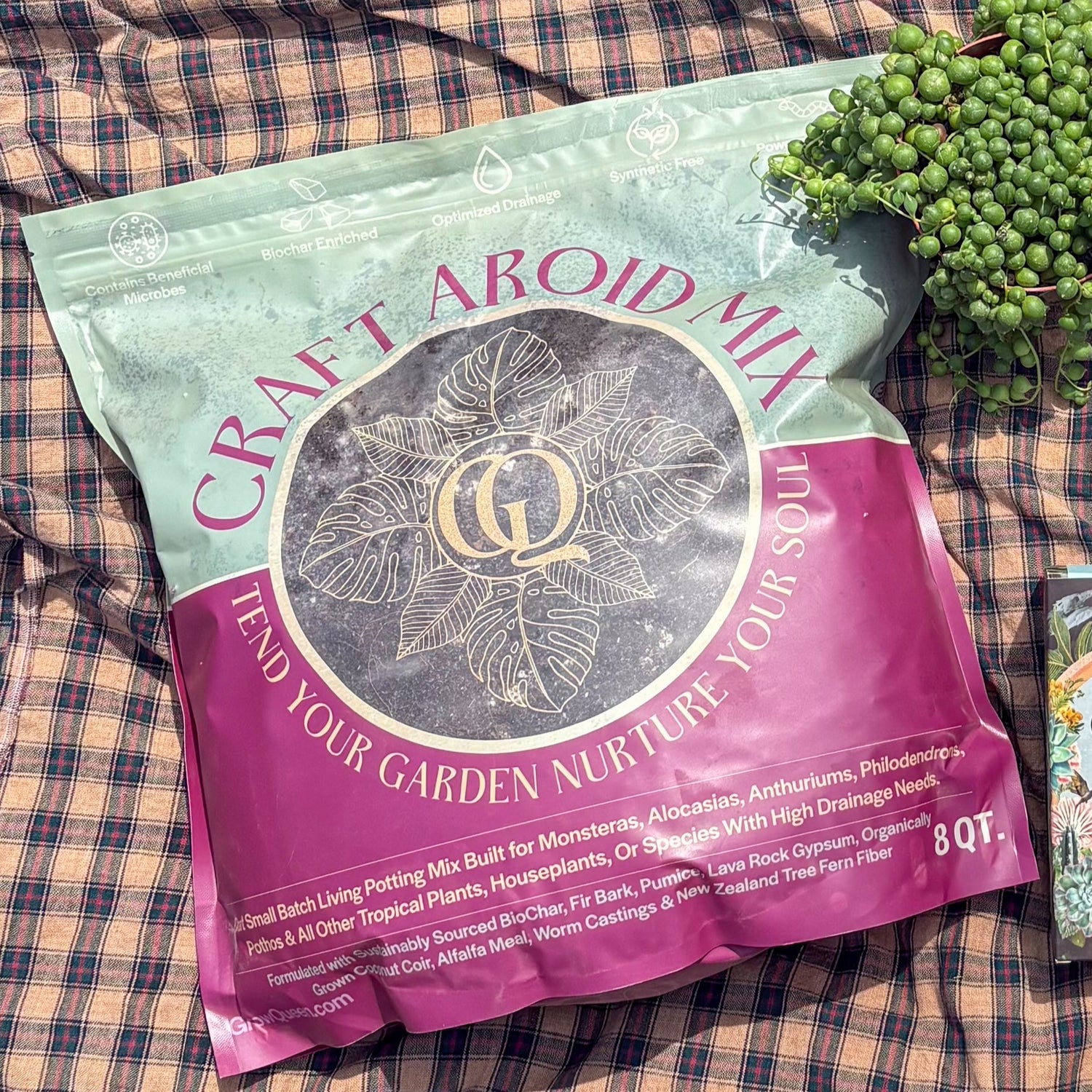
Grow Queen pick: Craft Desert Mix. Craft Desert Mix is chunky and gritty, made with pumice, lava rock, fir bark and biochar, which gives agave roots the fast drainage they need.
Learn more: Pillar 1, Soils & Growth Mediums →
Pillar 2
☀️ Lighting
What they need: Full sun, as much as you can give indoors.
Agaves need full sun and will not grow in shade. Indoors, put yours in your sunniest south or west window. If the light is weak, grow lights placed 6 to 12 inches above the plant and run for 14 to 16 hours a day can make up the difference.
Signs of too little light:
• Leaves stretch, thin out or lean toward the window.
• Rosette loosens and loses its tight shape.
• Pale or faded leaf color.
Signs of too much light:
• Bleached or tan patches after a sudden move into strong sun.
• Reddish or yellow stress color on leaves.
• Scorched spots on leaves touching hot glass.
Learn more: Pillar 2, Lighting →
Pillar 3
💧 Watering
What they need: Deep, infrequent watering with full drying in between.
Water thoroughly until it runs out the drainage holes, empty the saucer, then let the mix dry out completely before watering again. In the low-light winter months, give only enough water to keep the leaves from shriveling. As light increases in spring, the plant will need water more often. Overwatering is the most common way to kill an agave.
Signs of overwatering:
• Soft, mushy or translucent leaves near the base.
• Rotting or dark spots at the crown.
• Mix stays wet for days after watering.
Signs of underwatering:
• Leaves look thin, wrinkled or deflated.
• Lower leaves dry out and shrivel.
• Leaf tips brown and curl.
Learn more: Pillar 3, Watering →
Pillar 4
🌡️ Environment
What they need: Warm, dry and bright, with protection from frost.
Agaves are comfortable in normal home temperatures and dry indoor air, since most succulents handle humidity as low as 10 to 30 percent. They cannot take frost, so bring outdoor pots inside before freezing weather. Many agaves enjoy summer outdoors if you move them into full sun gradually.
Ideal conditions:
• Temperature: normal room temperatures, with cooler winter nights welcome.
• Humidity: low is fine. Typical dry indoor air works.
• Sunny, airy spot with good air movement.
• Summer outdoors after a gradual move into full sun.
Avoid:
• Frost and freezing temperatures.
• Dim corners and north windows.
• Damp, humid spots like bathrooms.
Learn more: Pillar 4, Environment →
Pillar 5
🪴 Plant Nutrients
What they need: Very little food, and only during active growth.
Succulents have low nutrient needs, and the RHS notes that agaves dislike overly fertile soil. Feed only a few times in late spring and summer while the plant is growing, and skip feeding in fall and winter. Too much fertilizer can lead to soft, weak growth.
Benefits of the right feeding:
• Steady, compact growth during the warm months.
• Good leaf color.
• Healthy offsets for propagation.
Grow Queen pick: Organic Succulent & Cactus Plant Food. Organic Succulent & Cactus Plant Food is made for cacti and succulents and is applied to the soil, which fits an agave's light, occasional feeding.
Learn more: Pillar 5, Plant Nutrients →
🍂 Common Problems
Why is my agave soft and mushy at the base?
This is usually root or crown rot from wet soil. Stop watering, remove the plant, cut away any soft, dark tissue, and repot into a dry, gritty mix. Water again only when the new mix has dried out.
Why are the lower leaves drying up?
It is normal for the oldest outer leaves to dry and wither slowly over time, and you can trim them off. If many leaves shrivel at once, the plant may need a deep drink.
Why is my agave stretching and leaning?
It needs more light. Move it to the sunniest window you have or add a grow light. Stretched growth will not shrink back, but new growth will be compact.
What are the white fuzzy spots between the leaves?
These are often mealybugs, which NC State lists as a common agave pest along with scale and mites. Isolate the plant, inspect it closely, and wipe pests off. For ongoing problems, ask your local extension office.
✂️ Maintenance & Growth Tips
• Trim off dead lower leaves at the base with clean, sharp pruners.
• Separate offsets (pups) from the parent and pot them on their own.
• Let any cut surfaces dry before replanting.
• Dust leaves gently with a soft brush.
• Wear gloves when handling. Some agaves have sap that can irritate skin.
⚠️ Pet Safety
We could not find agave (century plant) in the ASPCA Animal Poison Control toxic and non-toxic plant list. NC State Extension notes that the sap of Agave americana contains calcium oxalate crystals and can cause skin irritation, and the sharp spines are a physical hazard. Keep agaves out of reach of pets and call your vet if one chews on it.
🌿 Bottom Line
Treat your agave like the desert plant it is. Give it the sunniest spot you have, a gritty mix, and a pot that drains fast.
Water deeply, then wait until the mix is fully dry, and hold back even more in winter. Feed lightly in summer, and handle it with gloves.
Grow Queen Picks for Agave (Century Plant)
The soil and food to keep your Agave (Century Plant) growing strong.






0 comments