
Grow Queen Plant Care Guide
Pothos (Epipremnum aureum)
Pothos is the trailing vine that forgives a lot. It grows in bright rooms and copes with dimmer ones, roots easily from cuttings, and comes in greens, golds, creams and near-whites.

Pothos is easy, but it is not care-free. Get the soil, light and watering rhythm right and it will keep putting out long, full vines for years. This guide walks through Pothos (Epipremnum aureum) care using Grow Queen's 5 Pillars of Plant Care.
🌿 Quick Care Snapshot
🌏 Know Your Plant
Golden pothos (Epipremnum aureum) is in the arum family, Araceae, the same family as philodendron and monstera. Kew's Plants of the World Online lists its native range as just one place: Mo'orea in the Society Islands of the South Pacific, where it grows as a climber in the wet tropics. It has since naturalized across many tropical regions. In the wild it climbs tree trunks with aerial roots and its leaves get much larger. Indoors that means it wants warmth, steady moisture without soggy roots, and bright but filtered light, like the dappled light under a forest canopy.
• Family: Araceae (arum family)
• Native to Mo'orea, Society Islands (per Kew POWO)
• Vining climber with aerial roots
• Common cultivars include 'Marble Queen', 'Neon', 'Jade' and 'Pearls and Jade'
✨ Fun Facts
• Kew lists pothos as native to a single island, Mo'orea in French Polynesia, yet it is now naturalized across much of the tropics.
• In warm climates the trailing and climbing vines can reach 40 feet long.
• Given something to climb and enough light, pothos can start producing much larger, mature leaves. In the wild, leaves can reach up to 3 feet long with holes along the middle.
• Pothos was once sold as Scindapsus aureus, and was later treated as a form of Epipremnum pinnatum before botanists recognized it as its own species.
Pillar 1
🌱 Soil & Growth Medium
What they need: An airy, well-draining mix that holds some moisture but never stays soggy.
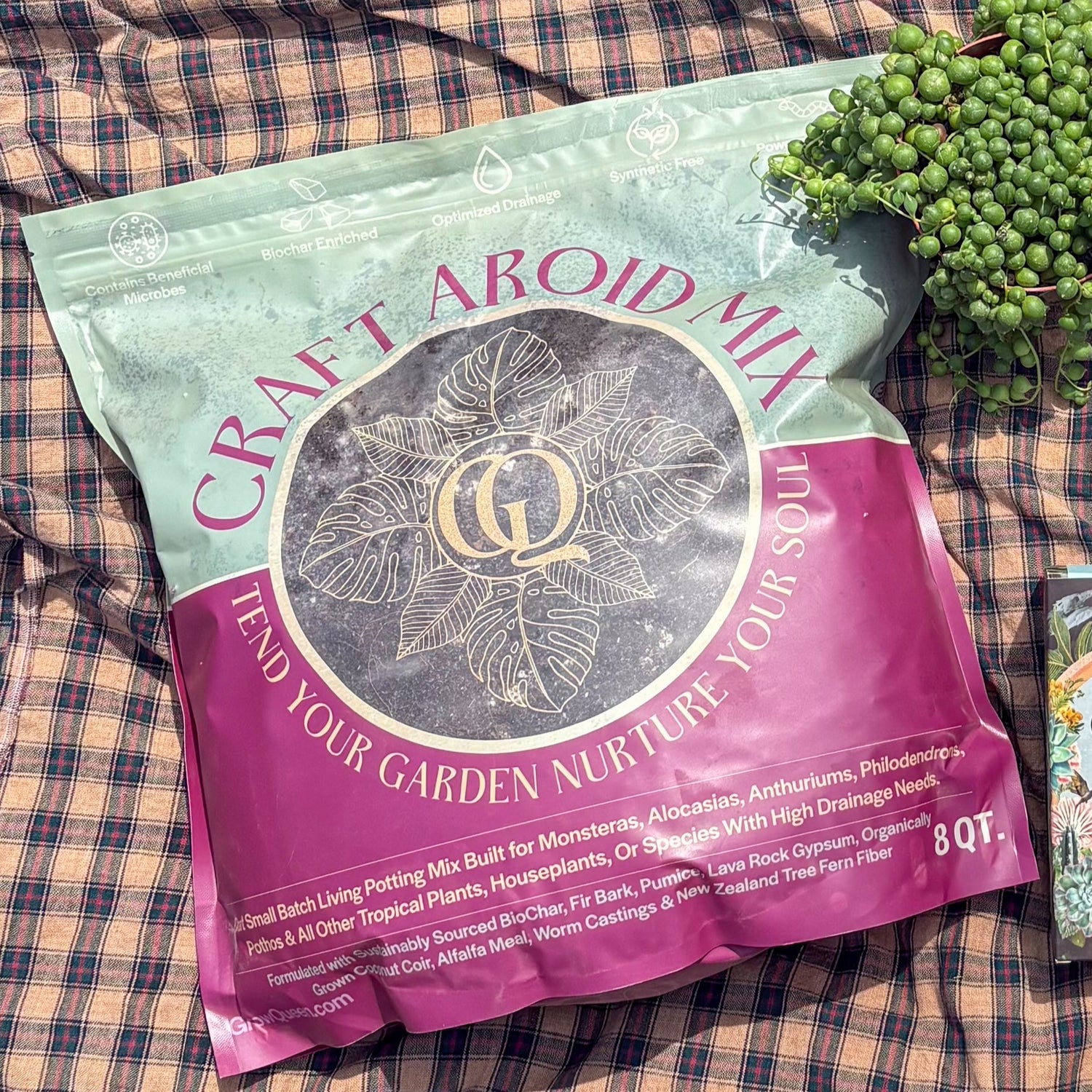
Pothos roots need both water and air. A dense, heavy mix stays wet too long, and root rot from overwatering or poorly draining soil is the most common problem with this plant. Use a light, airy houseplant mix in a pot with drainage holes. If you like a chunkier mix for climbing plants on a moss pole, an aroid-style blend works too.
• Always use a pot with drainage holes.
• Repot when roots poke out of the drainage holes or the pot is crowded, usually every year or two.
• Move up only one pot size at a time so the extra mix does not stay wet.
Grow Queen pick: Craft Houseplant Potting Mix. Craft Houseplant Potting Mix holds moisture evenly while staying aerated, which suits pothos roots that like a drink but hate sitting wet.
Learn more: Pillar 1, Soils & Growth Mediums →
Pillar 2
☀️ Lighting
What they need: Bright, indirect light. Tolerates lower light.
Pothos grows best near a bright window where the sun is filtered, not hitting the leaves directly. It will survive for long stretches in low light, which is part of why it is so popular, but growth slows and variegated types lose some of their color. Strong direct sun can scorch the leaves.
Signs of too little light:
• Variegated leaves turn mostly green.
• Long bare stems with leaves spaced far apart.
• Slow or no new growth.
Signs of too much light:
• Pale, bleached or yellowing leaves.
• Dry, scorched patches or crispy edges.
• Leaves curling or drooping in the afternoon.
Learn more: Pillar 2, Lighting →
Pillar 3
💧 Watering
What they need: Let the mix dry out between waterings, then soak it.
Check the mix with your finger. When it is dry well below the surface, water slowly until it runs out the drainage holes so every root gets a drink, then empty the saucer. Pothos handles a little dryness much better than constant wet soil. In winter, growth slows and the pot dries more slowly, so check before you water instead of going by the calendar.
Signs of overwatering:
• Yellow leaves, often starting low on the vine.
• Blackening along the leaf edges.
• Mushy stems or a sour smell from the soil.
Signs of underwatering:
• Limp, drooping leaves that perk up after watering.
• Dry, curled or crispy leaf edges.
• Mix pulling away from the sides of the pot.
Learn more: Pillar 3, Watering →
Pillar 4
🌡️ Environment
What they need: Warm rooms, steady temperatures and moderate to high humidity.
Pothos likes about 60 to 70°F at night and 70 to 85°F during the day. It prefers 50 to 70% humidity but tolerates the 30 to 60% found in most homes. Hot or cold air from vents and drafty windows can dry out and damage the leaves.
Ideal conditions:
• 60 to 70°F at night, 70 to 85°F by day
• Humidity of 50 to 70%, though average home humidity is fine
• A spot with bright, filtered light and no drafts
• A humidifier or pebble tray if your air is very dry
Avoid:
• Air conditioning vents in summer
• Heating vents and cold windowsills in winter
• Sitting in a saucer of standing water
Learn more: Pillar 4, Environment →
Pillar 5
🪴 Plant Nutrients
What they need: Light feeding during spring and summer.
Feed pothos during the growing season in spring and summer, and stop in winter when growth slows. Pale or yellowing leaves can be a sign of low fertility, but rule out overwatering first. Follow the label rate and do not try to fix a struggling plant with extra food.
Benefits of the right feeding:
• Steady, full growth on long vines
• Richer leaf color
• Better recovery after pruning or repotting
Grow Queen pick: Organic Time Release Plant Food. Organic Time Release Plant Food is mixed into or top-dressed on the soil and feeds for 1 to 6 months, an easy fit for a low-fuss grower like pothos.
Learn more: Pillar 5, Plant Nutrients →
🍂 Common Problems
Why are my pothos leaves turning yellow?
Overwatering is the usual cause, so check whether the mix is staying wet and whether the pot drains. If watering is on track, low fertility can also yellow leaves, and a light feeding in spring or summer helps. A few older leaves yellowing and dropping over time is normal.
Why is my pothos losing its variegation?
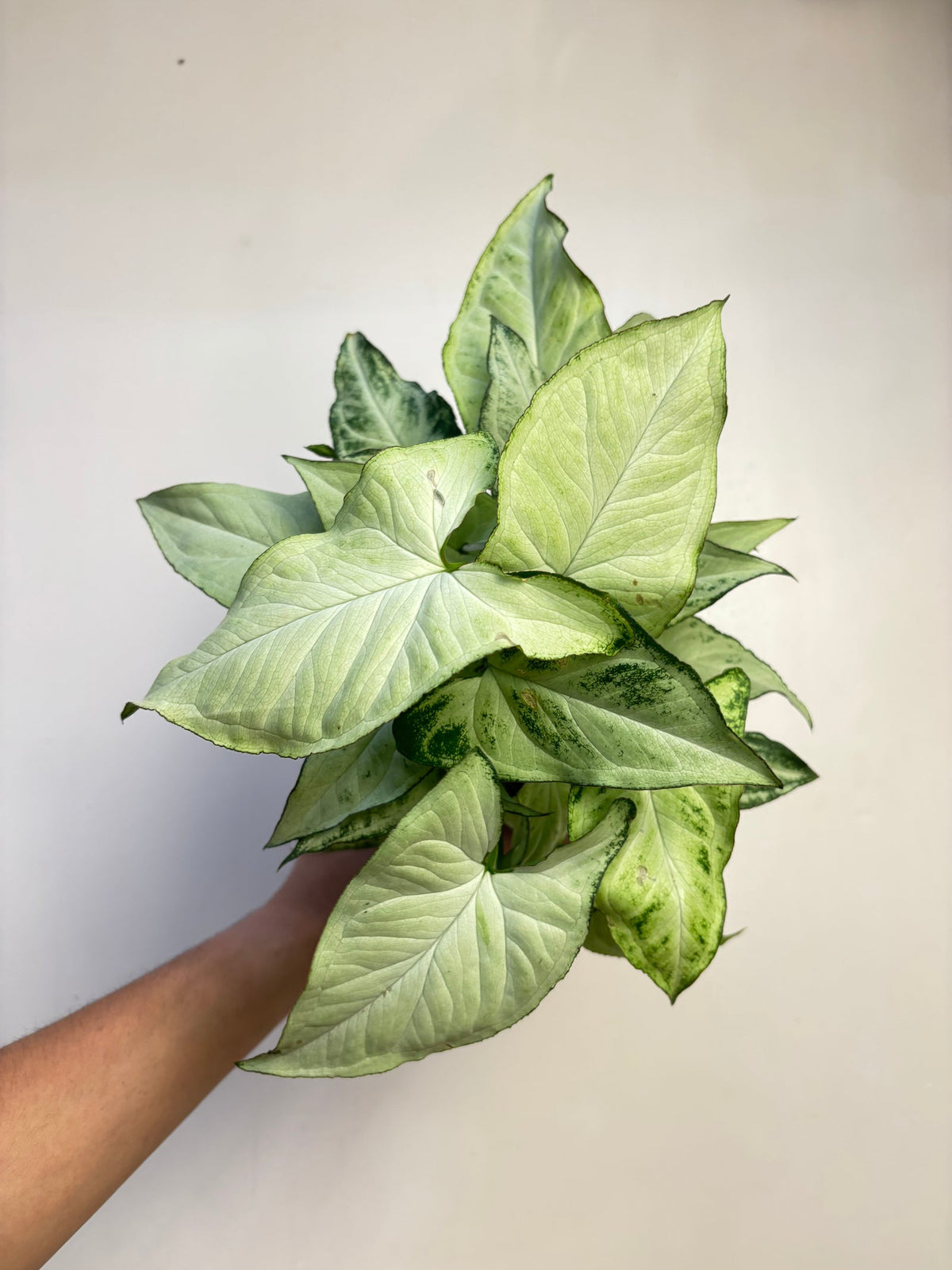
Low light causes variegated pothos to turn greener. Move it closer to a bright window with filtered light. Cultivars like 'Marble Queen', 'Pearls and Jade' and 'Snow Queen' need more light than plain green types to keep their color.
Why are the leaf tips brown and crispy?
Low humidity or intense light can cause leaf scorch and tip dieback. Move the plant out of direct sun and away from heating or cooling vents, and consider a humidifier.
Why are my vines long and bare?
Over time, older leaves yellow and fall, which leaves most of the foliage at the ends of the stems. Low light makes this worse. Prune stems back to keep the plant bushy and root the cuttings to fill in the pot.
✂️ Maintenance & Growth Tips
• Prune long or bare stems to keep the plant full. Cut just above a leaf.
• Root cuttings in water or soil. Each cutting needs at least one node.
• Wipe dust off the leaves with a soft damp cloth now and then.
• Add a moss pole if you want it to climb and grow bigger leaves.
• Check under leaves for mealybugs and spider mites. Isolate and rinse any plant that has them.
⚠️ Pet Safety
The ASPCA lists golden pothos (Epipremnum aureum) as toxic to dogs and cats. It contains insoluble calcium oxalates, which can cause oral irritation, intense burning of the mouth, tongue and lips, drooling, vomiting and difficulty swallowing. Keep it out of reach of pets, and call your vet or ASPCA Animal Poison Control at (888) 426-4435 if you think your pet ate some.
🌿 Bottom Line
Pothos does best with bright, indirect light, an airy mix that drains well, and a water-then-dry rhythm. Most problems come back to too much water or too little light.
Give it light feeding in the warm months, prune it to keep it full, and keep it away from pets. In return you get one of the easiest, most rewarding vines you can grow indoors.
Grow Queen Picks for Pothos (Epipremnum aureum)
The soil and food to keep your Pothos (Epipremnum aureum) growing strong.






0 comments