
Grow Queen Plant Care Guide
African Violet (Saintpaulia)
African violets pack velvety leaves and clusters of purple, pink, blue or white flowers into a plant small enough for a windowsill. With steady light and careful watering, they can bloom several times a year.

African violets are easy once you know their few firm rules: soft light, room-temperature water kept off the leaves, and a light, airy mix. Here is how to cover each of the 5 Pillars. This guide walks through African Violet (Saintpaulia) care using Grow Queen's 5 Pillars of Plant Care.
🌿 Quick Care Snapshot
🌏 Know Your Plant
African violets are now classified by botanists as Streptocarpus ionanthus (formerly Saintpaulia ionantha), in the gesneriad family, Gesneriaceae. Kew's Plants of the World Online lists them as native to Kenya and Tanzania, where they grow as lithophytes, clinging to rocks in seasonally dry tropical habitat. Wild plants live in small pockets of shallow, quick-draining soil, which is why potted violets want a light, airy mix and suffer fast when roots sit wet. Their fine roots, hairy leaves and low-growing crown also explain the classic advice to water the soil, not the plant.
• Family: Gesneriaceae (gesneriads), the same family as gloxinia.
• Native to Kenya and Tanzania in East Africa.
• Fine roots that rot quickly if the mix stays wet.
• Thousands of cultivars, from micro-miniatures to large standards.
✨ Fun Facts
• The species name ionantha comes from Greek and means having the flower of a violet. They are not true violets.
• Botanists moved African violets into the genus Streptocarpus, so their accepted name is now Streptocarpus ionanthus.
• Growers sort African violets into five size classes: micro-miniature, miniature, semi-miniature, standard and large.
• African violets need 8 to 10 hours of darkness each day, as well as plenty of light, to flower well.
Pillar 1
🌱 Soil & Growth Medium
What they need: A light, fast-draining mix that holds moisture without staying soggy.
African violets have fine roots and need a well-drained, soilless mix with a pH around 6.2 to 6.5. Extension growers often lighten commercial violet mixes with extra perlite so water passes through quickly. Plant with the crown sitting just above the surface, never buried, and always use a pot with drainage holes.
• Choose a shallow pot with drainage holes. Violets never like to sit in water.
• Repot in fresh mix about once a year.
• Keep the crown at or just above the soil line to avoid crown rot.
• Self-watering or wick pots can work if the mix stays moist, not wet.
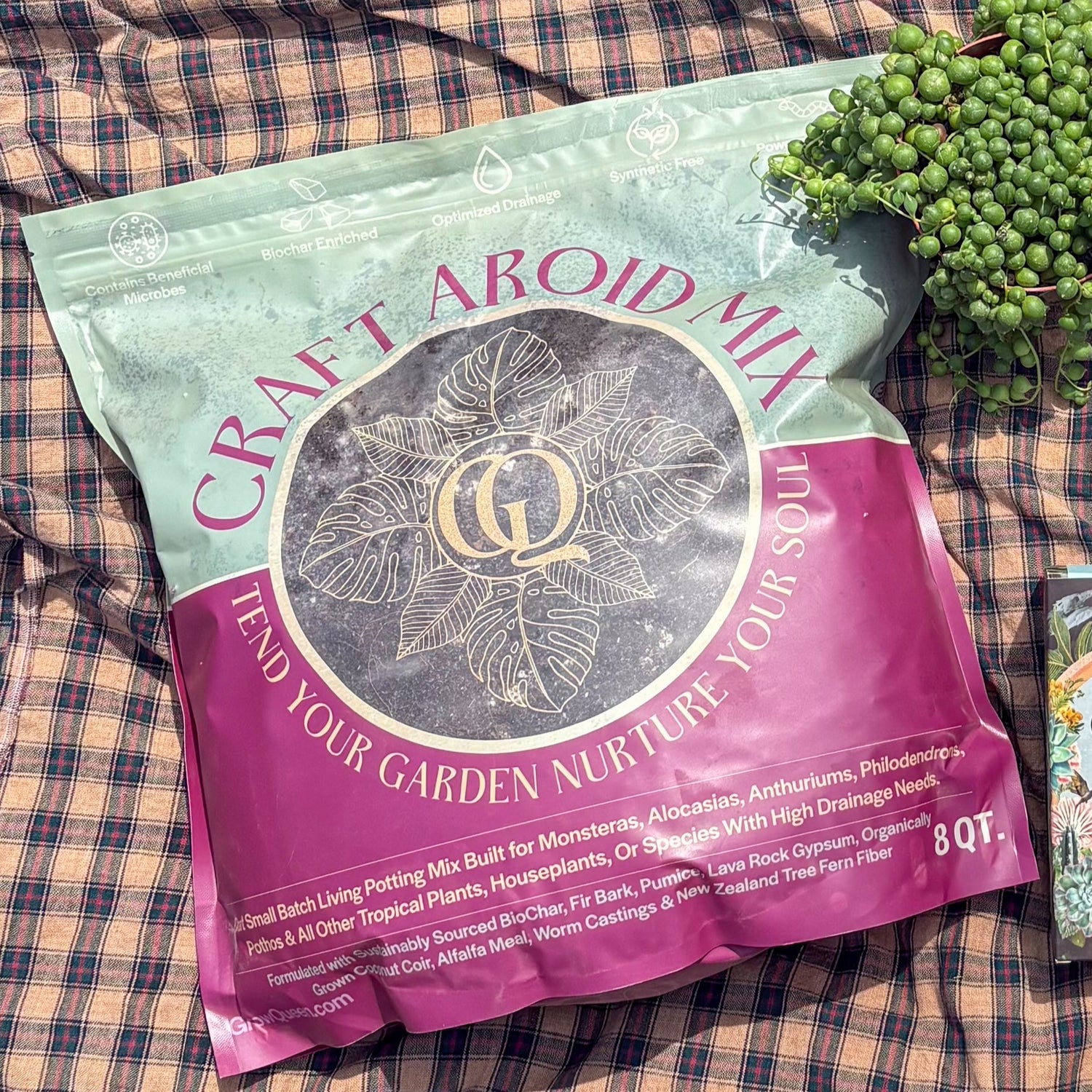
Grow Queen pick: Craft Houseplant Potting Mix. Craft Houseplant Potting Mix holds moisture evenly while staying aerated, which suits the fine roots of African violets; you can add a little extra perlite for an even lighter blend.
Learn more: Pillar 1, Soils & Growth Mediums →
Pillar 2
☀️ Lighting
What they need: Bright, cool, indirect light for 14 to 16 hours a day to flower.
A north, northeast or northwest window works well. Plants need 14 to 16 hours of light and 8 to 10 hours of darkness each day to keep blooming, so LED or fluorescent grow lights are a great help in winter. Keep them out of hot, direct afternoon sun.
Signs of too little light:
• Few or no flowers.
• Long, narrow leaves on stretched stems.
• Leaves reaching toward the window.
Signs of too much light:
• Pale, bleached-looking leaves.
• Tight, bunched center growth.
• Scorched or crispy patches on leaves.
Learn more: Pillar 2, Lighting →
Pillar 3
💧 Watering
What they need: Evenly moist mix, room-temperature water, and dry leaves.
Keep the mix moist but never soggy, and let the surface dry slightly before watering again. Water from the bottom by setting the pot in an inch of room-temperature water until the surface feels moist, or water the soil carefully from the top with a narrow spout. Avoid softened water and cold water, both of which violets dislike. In winter, when growth slows, check before you water since the mix will dry more slowly.
Signs of overwatering:
• Plant wilts even though the mix is wet.
• Mushy, brown roots or a soft crown.
• Lower leaves turning yellow and limp.
Signs of underwatering:
• Leaves droop and feel soft but the mix is dry.
• Flower buds dry up before opening.
• Leaf edges turn brown.
Learn more: Pillar 3, Watering →
Pillar 4
🌡️ Environment
What they need: Steady warmth and moderate humidity, like a comfortable home.
If you are comfortable, your African violet usually is too. Keep it between 60 and 80°F, ideally around 70°F, and avoid nights below 60°F, which can stunt growth for a long time. Humidity of 40 to 60 percent helps, and a pebble tray or grouping plants can raise it.
Ideal conditions:
• Temperature: 60 to 80°F, ideally about 70°F.
• Humidity: 40 to 60 percent.
• Steady conditions with no big temperature swings.
• A pebble tray, with the pot sitting above the water line.
Avoid:
• Cold windowpanes and drafts in winter.
• Water left sitting on the leaves.
• Dry air from heating vents.
Learn more: Pillar 4, Environment →
Pillar 5
🪴 Plant Nutrients
What they need: Gentle, frequent feeding to fuel repeat blooming.
African violets need a fertile mix to keep reblooming. Extension guidance is to use a mild fertilizer at about one-quarter strength with each watering, and only on moist soil, never on a bone-dry plant. Flush the pot with plain water about once a month to wash out built-up salts.
Benefits of the right feeding:
• Steady new leaves from the center of the rosette.
• More frequent flowering through the year.
• Healthy leaf color instead of pale growth.
Grow Queen pick: Organic 5-5-5 Liquid Plant Food. Organic 5-5-5 Liquid Plant Food mixes right into your watering water, so it fits the frequent, dilute feeding African violets need to keep blooming.
Learn more: Pillar 5, Plant Nutrients →
🍂 Common Problems
Why won't my African violet bloom?
The most common cause is not enough light, often with temperatures that are too cool. Move it to a brighter spot or add a grow light for 14 to 16 hours a day, keep it near 70°F, and feed lightly and regularly.
Why are there pale spots or rings on the leaves?
Water left on the leaves causes these spots. Water from the bottom, or carefully water only the soil, and use room-temperature water.
Why is my plant limp even though the soil is wet?
This usually means overwatering, poor drainage and root rot. Repot into fresh, well-drained mix in a pot with drainage holes, and never let it sit in water. If the roots are mushy and brown, the plant may not recover, but healthy leaves can be rooted as cuttings.
Why is the center tight and the leaves rusty?
Tight centers and rusty-colored leaves can mean too much fertilizer. Flush the pot with plain water and cut back to feeding every other watering.
✂️ Maintenance & Growth Tips
• Remove spent flowers and yellowed leaves with tweezers or small snips.
• Brush dust off fuzzy leaves with a soft, dry paintbrush instead of wiping or rinsing.
• Propagate by rooting a healthy leaf with its stem in moist mix.
• Repot in fresh mix about once a year, keeping the crown at the soil line.
• Inspect regularly for mealybugs and mites, and isolate any plant that looks affected.
⚠️ Pet Safety
The ASPCA lists African violet (Saintpaulia) as non-toxic to dogs, cats and horses. Eating any plant can still cause mild stomach upset, so it is best to keep plants out of chewing range. If you are worried, call your vet or the ASPCA Animal Poison Control Center.
🌿 Bottom Line
African violets reward a few simple habits. Give them bright, indirect light for long days, keep the mix evenly moist with room-temperature water, and keep water off the leaves.
Feed lightly and often, flush the pot now and then, and repot once a year in a light, airy mix. Do that, and your violet can flower again and again.
Grow Queen Picks for African Violet (Saintpaulia)
The soil and food to keep your African Violet (Saintpaulia) growing strong.






0 comments