
Grow Queen · INSIDE THE BAG
Craft Desert Mix: The Science of a Mineral Soil

Ever repotted a cactus into fresh soil, watered it well, and watched it turn soft at the base a few weeks later? It is one of the most common ways desert plants are lost indoors, and it usually has nothing to do with how much you love them. It comes down to what they are planted in. Craft Desert Mix is our answer, and we are so excited to share it: the third soil in the Craft family, and our first mineral mix. This is the breakdown of why cacti and succulents need a different kind of soil, how a mineral mix works, and what we put inside the bag.
Mineral Mix
A potting mix built mostly from rock-based grit like pumice and lava rock instead of moisture-holding organic matter.
Air-Filled Pore Space
The gaps between particles that drain after watering and fill with the oxygen roots need to breathe.
Water-Holding Capacity
How much water a mix keeps after it drains, which is exactly what desert plants need less of.
Root Rot
The decay of roots that sit wet too long, the most common way cacti and succulents fail indoors.
Sources: University of Delaware Cooperative Extension; University of Arkansas, Department of Horticulture; New York Botanical Garden Plant Information Service.
Meet the Third Craft Mix
Every Craft mix is built around how a plant grows in the wild. Our first two were made for tropical plants. Craft Desert Mix is made for plants that come from fast-draining, rocky ground.
The Craft Family
Craft Houseplant Potting Mix: holds moisture evenly for ferns, pothos, peace lilies, and most everyday houseplants.
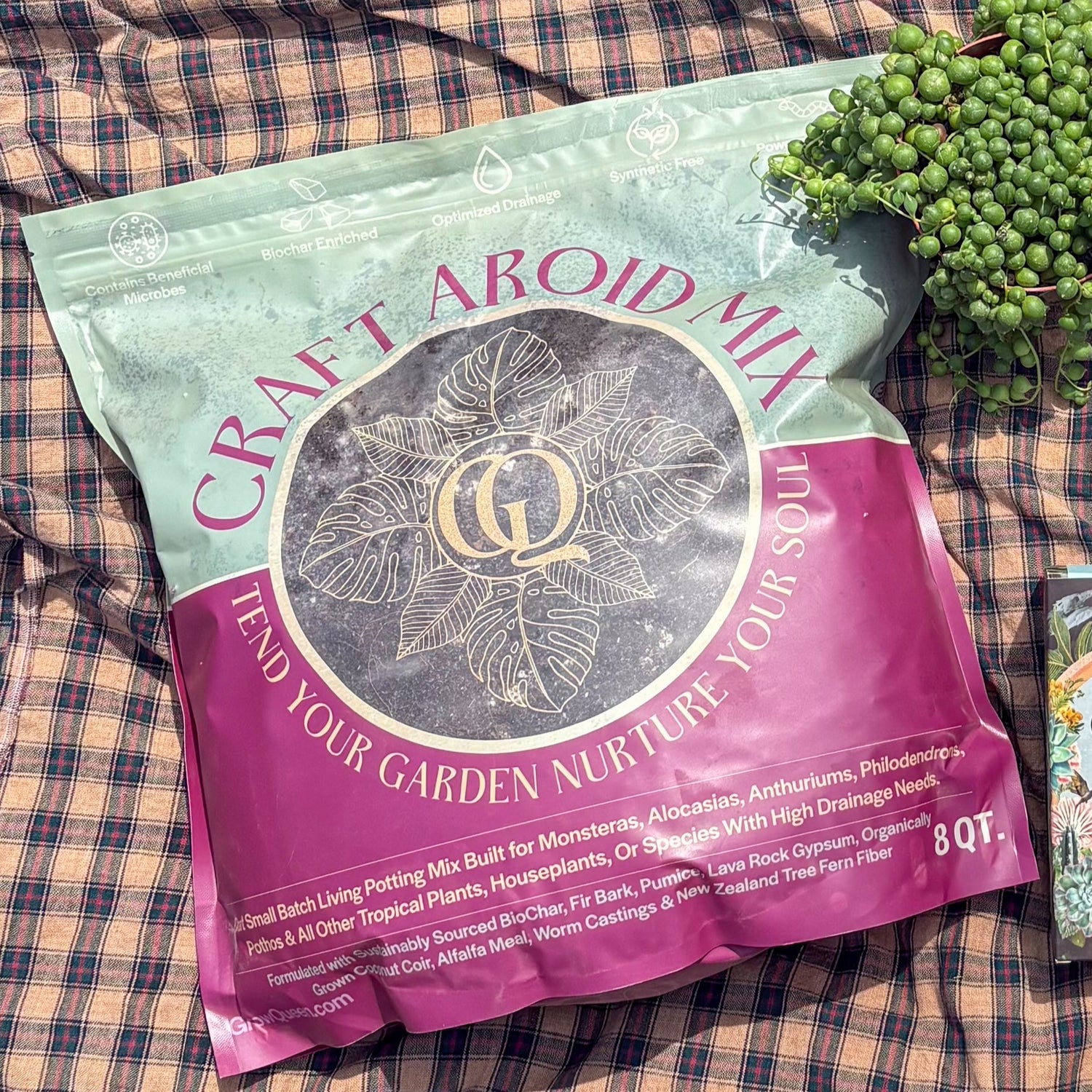
Craft Aroid Potting Mix: chunky and airy for monstera, philodendron, anthurium, and other aroids.
Craft Desert Mix: gritty and mineral-forward for cacti, succulents, and other plants that want to dry out between waterings.
Why Desert Plants Need a Different Soil
Cacti and succulents evolved in places where rain comes fast and drains away just as fast. According to the New York Botanical Garden, cacti grow wide, shallow roots to catch water quickly, and like other succulents they need their soil to dry out between waterings or those roots will rot.
Most bagged potting soil is built for the opposite. NYBG notes that many commercial mixes rely too heavily on peat, which holds moisture longer than desert plants want, and that a proper cactus soil should drain in less than a minute after watering. University of Delaware Cooperative Extension puts it simply: the best indoor cactus and succulent soil is fast-draining, airy, and mostly mineral, because excess moisture is the main cause of root rot indoors.
Indoors, the problem gets worse. A windowsill has less light, airflow, and heat than open desert, so a pot dries more slowly and the mix has to do more of the work.
How a Mineral Mix Works
The secret is particle size. Large, rigid particles leave large gaps between them. After you water, those gaps drain and fill with air, giving roots both a drink and room to breathe. Fine particles pack tightly and hold water in tiny pores long after the pot stops dripping.
The University of Arkansas describes pumice as a lightweight volcanic mineral whose particles are very porous: they hold a small amount of water inside, but their size provides drainage and air-filled pore space. Pumice is also close to neutral, so it has little effect on the pH of the mix.
What we left out, and why
Peat: peat holds a lot of water, and according to the University of Arkansas it needs a wetting agent to absorb water well. Once it dries out, it can be hard to rewet. We use triple-washed coconut coir instead, which absorbs water readily.
Fine sand: it sounds like desert soil, but in a pot it backfires. The University of Arkansas notes that sand tends to fill in the large pores that would otherwise drain and fill with air, so adding it usually reduces air space. Delaware Extension also lists fine sand and play sand as ingredients to avoid.
Perlite: we use long-lasting pumice and lava rock for drainage, so there is nothing to add and nothing to pick out.
Inside the Bag
Pumice and lava rock: porous mineral grit that keeps the mix open and airy.
Fir bark: chunky structure that helps water drain through.
Biochar: a porous, carbon-rich material that adds structure and helps the mix hold onto nutrients.
Triple-washed coconut coir: holds a little moisture without staying soggy.
Gypsum: a natural mineral source of calcium and sulfur.
Alfalfa meal and small-batch worm castings: just enough organic matter to give roots a gentle start.

Made For Your Desert Plants
Craft Desert Mix is made for cacti, succulents, and other drought-tolerant, high-drainage plants, including:
 Cactus |
 Echeveria |
 Strings of Things |
 Agave |
 Aeonium |
 Aloe Vera |
Also great for aloe, haworthia, echeveria, jade, snake plants, and more.
How to Use Craft Desert Mix
Pick the pot. Choose a pot with a drainage hole, just one size larger than the root ball. NYBG notes that an oversized pot holds more moisture than the plant can use.
Fill straight from the bag. No perlite, sand, or grit needed. It is ready to use as is.
Soak, then dry. Water thoroughly, then let the mix dry out completely before watering again.
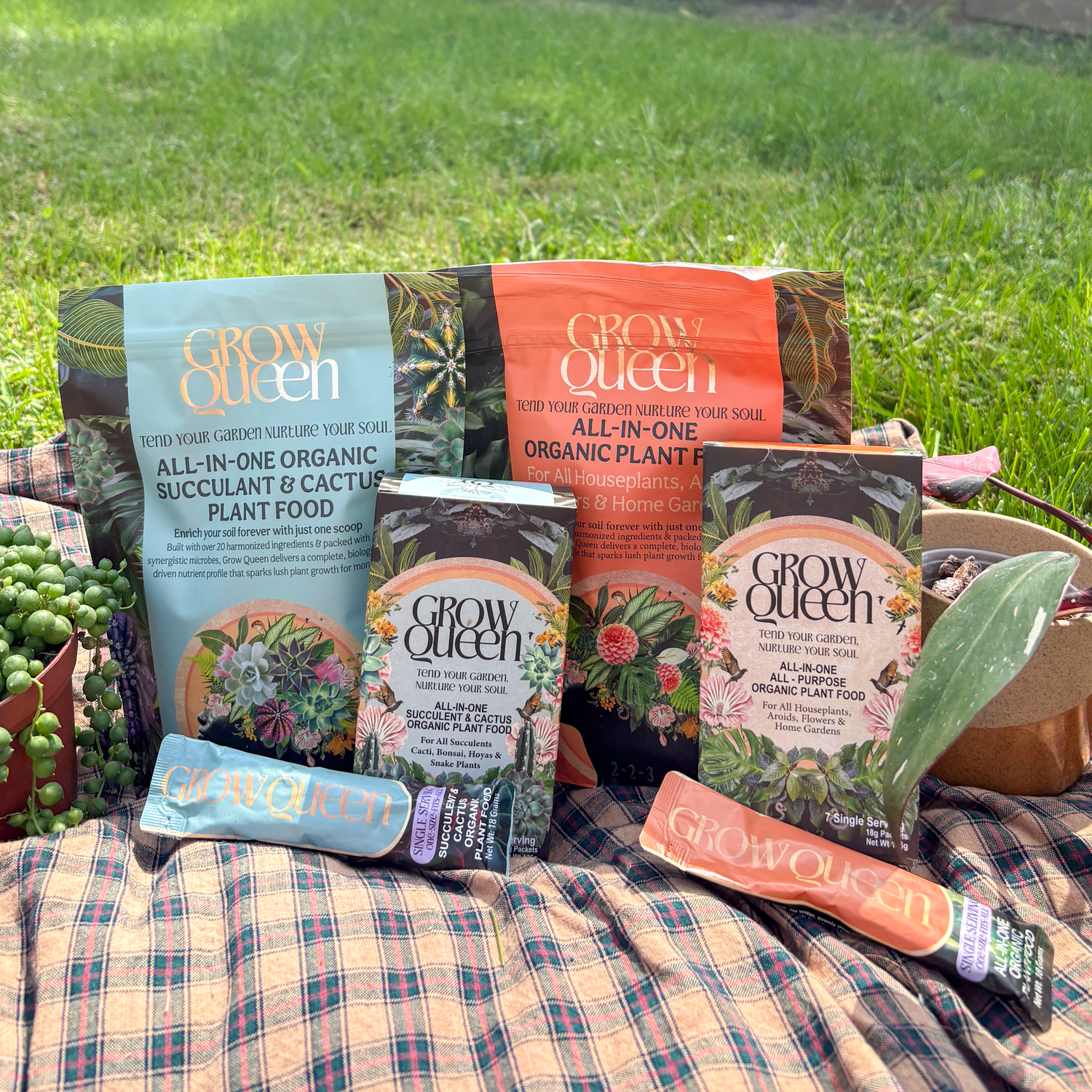
Feed once settled. Once your plant is settled in, feed with our Organic Succulent & Cactus Plant Food.
Which Size Should I Get?
2 Qt: fills 1 to 2 six-inch pots or 3 to 5 four-inch pots. Great for repotting a few small plants.
4 Qt: fills 1 to 2 eight-inch, 2 to 3 six-inch, or 8 to 10 four-inch pots.
8 Qt: fills 2 to 4 eight-inch, 4 to 6 six-inch, or 16 to 20 four-inch pots. Best for bigger collections.

Tips for Thriving Desert Plants Indoors
Water by the soil, not the calendar: wait until the mix is completely dry, then water deeply until it runs out the drainage hole.
Give them your brightest spot: less light means slower drying, so a sunny window helps the whole system work.
Size up slowly: NYBG recommends checking roots in early spring and moving up just one pot size when they fill the space.
Protect your hands: NYBG suggests wrapping a folded length of newspaper around a cactus to handle it when repotting.
Craft Desert Mix is available for pre-order now and ships by November 9. Click here to view the official product listing.
Tend your garden, nurture your soul.
References
Evans, M. R. Greenhouse Management Online: Common Substrate Components. University of Arkansas, Department of Horticulture.
University of Delaware Cooperative Extension. Best Soil for Cactus and Succulent Plants. Ask Extension, 2026.
New York Botanical Garden Plant Information Service. What Kind of Potting Mix Should I Use for My Cactus? LuEsther T. Mertz Library, 2025.
Penn State Extension. Biochar: Opportunities and Limitations for Soil Health and Water Quality.
Sawyer, J. E., and D. W. Barker. Gypsum: An Old Product with a New Use. Iowa State University Extension.
Pre-Order Now · Ships by November 9
Craft Desert Mix. Our third soil, and our first mineral mix. Available in 2, 4, and 8 Qt.
Shop Craft Desert Mix →[OPTIONAL: discount code line]



0 comments