
Grow Queen · Pillars of plant care
4: ENVIRONMENT
Ambient vs. Controlled:
Your Home Isn't a Greenhouse
Every single plant parent goes through the stage of wondering why a plant dies after bringing them home from the nursery. We're here to help you understand the science behind the growing conditions nurseries thrive under, so you don't have to ask the question anymore.
Every plant care tag mentions light, water, and humidity like fixed numbers you just have to hit. But a greenhouse and a living room are not the same kind of space, and understanding that difference explains a lot about why the exact same houseplant can thrive on one windowsill and sulk on another. This is why Grow Queen follows the 5 pillars of plant care: soil, lighting, water, environment, and nutrients. Understanding how these pillars apply to the plants natural habitat will help tremendously in your plant care journey.
Pillar 4 is Environment, which pulls 1,2, and 3 all together to see how they play off each other.
What a "Controlled Environment" Actually Means for Greenhouses
In commercial greenhouses, vertical farms, and research grow chambers, air temperature, light intensity and spectrum, humidity, and even carbon dioxide concentration are actively regulated and held within tight, known bands. That control is the entire point: it lets a grower produce the same crop, at the same rate, with the same quality, in January as in July. Studies comparing lab and field growth even find that plants raised in these controlled setups grow faster and develop differently than the same species grown outdoors, because so many of the normal stressors have been engineered out.
What "Ambient" Means inside your Home
Your home is an ambient environment, which just means the conditions are not heavily controlled and actually shaped by the weather outside, your HVAC system, the season, and even which room a plant sits in. Temperature drifts several degrees between day and night. Humidity can swing from 50% in summer to under 20% once winter heating kicks on. Opening and closing the windows and doors shifts moisture, air, and temperature levels every single time. Light changes every hour as the sun's angle shifts. None of that is a mistake or a failure on your part, it is simply what an uncontrolled, walled-in space does.
The Key Measurement: Vapor Pressure Deficit
Highschool science lesson time; The number that ties temperature and humidity together and what professionals use to monitor growing conditions is called Vapor Pressure Deficit or VPD. This number calculates the difference between how much moisture is in the air and how much the air could technically hold if it were fully saturated.
VPD directly controls plant stoma; the pores that open and close to breathe, transpire, and pull nutrients up from the roots.
When VPD runs high, with hot, dry air, the stomatas will seal themselves to conserve water. Thus also shutting down nutrient transport and growth. When VPD runs low, with cooler, damp air, transpiration slows down, water and nutrients move sluggishly, and the excess moisture around the leaf becomes an open invitation for fungal problems.
A controlled greenhouse holds VPD in a narrow, ideal range all day. An ambient living room does not, and that swing is a big part of why houseplants stall, drop leaves, or get finicky even when watering and lighting seems to be sufficient.
EXAMPLE VPD GRAPH:

Why This Matters More for What's in the Soil Than Where the Pot Sits
Most advice about ambient vs. controlled conditions stops at placement, move it away from the vent, add a humidifier, rotate it toward the window. That helps, but it does not solve the underlying problem: roots are living in a system that is constantly adjusting to conditions above the soil line, and that system needs to be resilient, not just perfectly timed.
This is exactly where living soil earns its keep. A synthetic feeding schedule assumes a fairly stable environment and delivers nutrients on a fixed clock regardless of what the plant can actually use that week. Living soil, biochar holding onto minerals and moisture, humates buffering pH swings, and an active microbe population breaking down and re-releasing nutrients as roots ask for them, behaves more like a buffer than a schedule. When ambient conditions dip or spike, that biology is what keeps nutrients available instead of locked up or wasted, without you having to re-time every feeding around the weather.
The Quick Comparison
Temperature
Controlled: held within a set range around the clock.
Ambient: drifts with weather, HVAC cycles, and time of day.
Humidity / VPD
Controlled: tuned to the ideal range for the specific crop.
Ambient: shifts by season, often dropping sharply with winter heating.
Light
Controlled: consistent intensity and spectrum, same hours daily.
Ambient: changes with sun angle, weather, and window placement.
Growth rate
Controlled: faster and more uniform.
Ambient: slower, more seasonal, more variable plant to plant.
The Bigger Picture
You do not need to turn your living room into a grow chamber to keep plants healthy, but you do need to understand that not all houseplants sold at the store, can or will survive in your house by design.
To achieve the airflow and nutrient balance VPD craves for long term resilience, you need soil that can absorb the normal ups and downs of a real home instead of tools that only work under greenhouse-perfect conditions. That is the whole idea behind Grow Queen creating a living soil system instead of just feeding on a schedule, with cheap fillers.
Grow with intention. Grow Green. Grow Queen.

Real Minerals, Living Soil
Biochar, humates, and a living microbe blend built to buffer your plants through everyday ambient swings.
Shop Grow Queen Plant Food →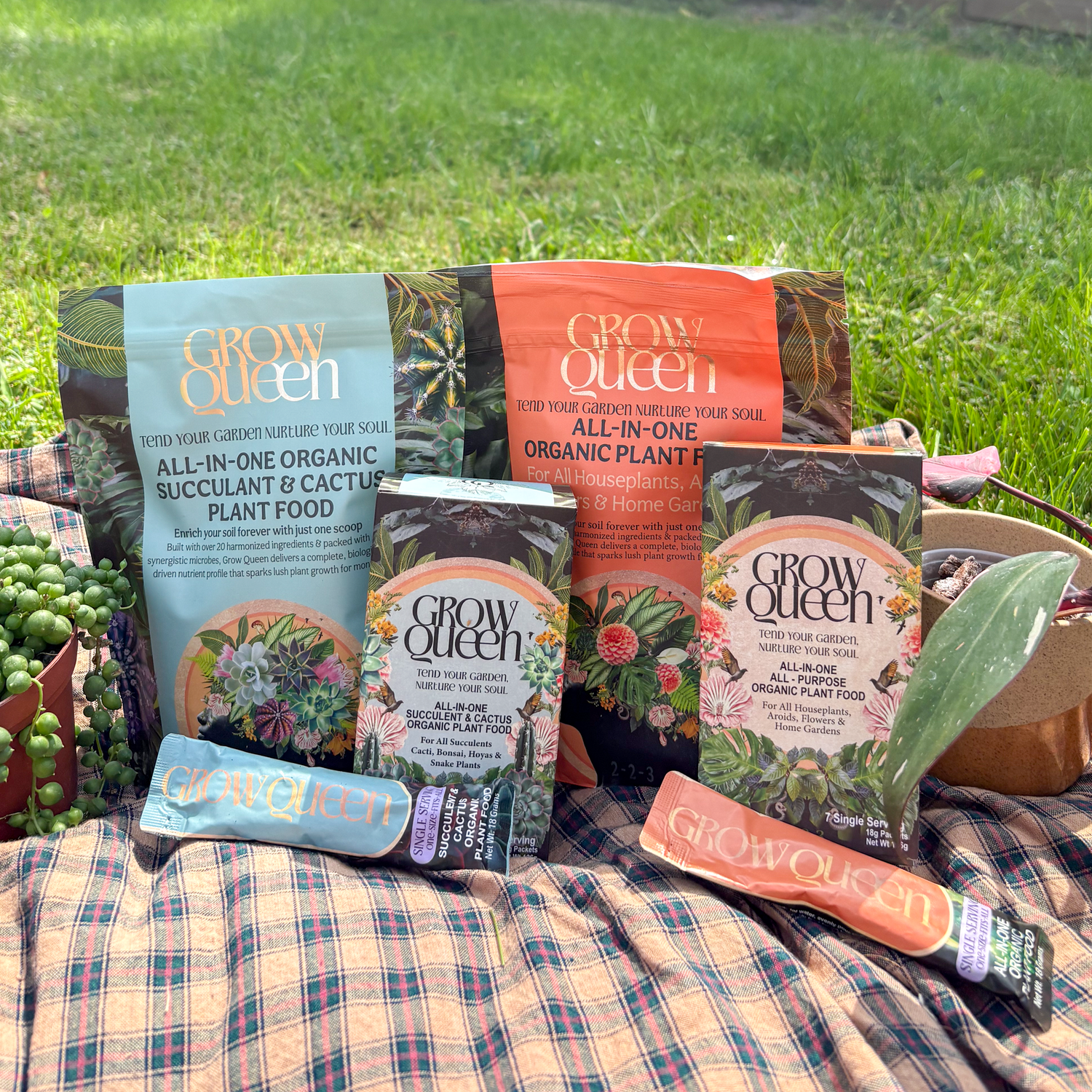
0 comments