Caladium Care Guide
Caladiums are grown for their thin, heart-shaped leaves covered in striking combinations of green, white, pink, and red. They may look delicate, but with consistent warmth, moisture, and humidity, they can produce full, colorful growth throughout the season.
 Pictured: Caladium White Queen
Light
Place your caladium in bright, indirect light. Some varieties tolerate gentle morning sun, but intense afternoon sunlight can scorch or fade the leaves. Too little light may lead to weaker growth and less vibrant coloring.
Water
Keep the soil evenly moist while the plant is actively growing, but never waterlogged. Water when the top inch of soil begins to feel dry. Caladiums have thin leaves and may wilt quickly when thirsty, especially in warm conditions.
Always use a pot with drainage. Constantly saturated soil can cause the tuber and roots to rot.
Soil
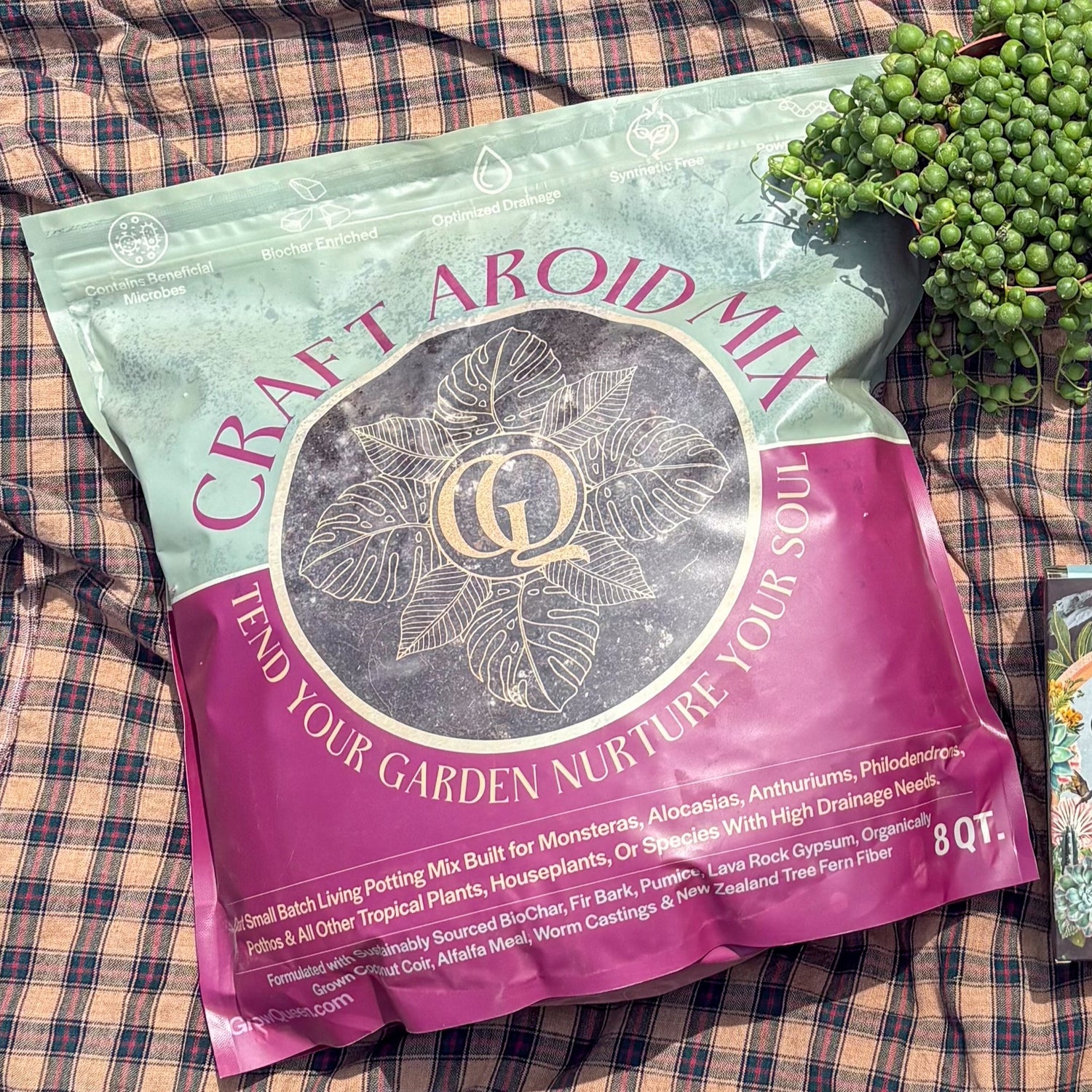
Use a loose, well-draining potting mix that holds some moisture without becoming dense or soggy. A balanced houseplant mix amended with bark, pumice, or another aeration component works well.
Temperature and Humidity
The trick is, Caladiums are tropical plants that thrive in warm, humid environments.
- Ideal temperature: 70–85°F
- Keep away from cold drafts and air-conditioning vents
- Avoid temperatures below 60°F
- Moderate to high humidity encourages healthier leaves
Brown, crispy edges may indicate dry air, inconsistent watering, excessive light, or mineral buildup.
Pictured: Caladium Heart of Jesus
Feeding
Feed during active growth in spring and summer. A gentle, balanced plant food supports stronger leaves, healthy roots, and continued growth. Avoid heavy or frequent applications, since excess fertilizer can damage the roots and cause leaf-edge burn.
Dormancy
Caladiums naturally enter dormancy, usually when temperatures cool and daylight decreases. Yellowing and collapsing leaves do not necessarily mean the plant is dying. The tuber may simply be storing energy and preparing to rest.
When dormancy begins:
- Reduce watering as the foliage declines.
- Remove leaves after they have completely yellowed.
- Keep the tuber in its pot or carefully remove it from the soil.
- Store it somewhere dry and warm, ideally above 60°F.
- Resume watering when new growth appears or replant the tuber in spring.
Avoid keeping a dormant tuber wet, as it may rot before it can grow again.
Repotting
Repot caladiums at the beginning of their growing season. Choose a container only slightly larger than the root system and position the tuber with its growing points facing upward. Avoid oversized pots, which hold excess moisture around the tuber.
Common Problems
Drooping leaves: The plant may be thirsty, cold, overheated, or adjusting to a new environment.
Yellow leaves: Check for overwatering, poor drainage, cold temperatures, or the beginning of natural dormancy.
Brown edges: Often caused by low humidity, inconsistent moisture, excessive fertilizer, or too much direct sun.
Faded color: Move the plant to brighter indirect light, but avoid suddenly placing it in harsh sun.
Soft tuber or collapsing stems: This may indicate rot. Remove the plant from the soil and inspect the tuber. Healthy tissue should feel firm.
 Pictured: Caladium Seafoam Pink
Pest Watch![]()
Inspect the undersides of the leaves and the points where stems meet the plant. Caladiums may attract spider mites, thrips, aphids, and mealybugs. Catching pests early makes them much easier to manage.
Important Note
Caladiums contain irritating calcium oxalate crystals and should not be eaten. Keep them away from children and pets that may chew the leaves.
Grow Queen Tip
Caladium care is all about respecting the plant’s natural rhythm. Give it warmth, filtered light, breathable soil, and steady moisture while it is growing. When the leaves begin to fade for the season, let it rest. Dormancy is not failure—it is how the plant prepares for its next round of growth.