
Why Soil Biology Is the Missing Link in Most Plant Care
When people struggle with houseplants, they often focus on what’s visible: yellow leaves, slow growth, pests, or drooping stems. But the real story almost always starts below the surface.
Soil is not a passive medium. It’s not just something that holds roots in place. Soil is a living system — and when that system is depleted, even “easy” plants begin to struggle.
Living soil is the difference between a plant that survives… and one that actually thrives.
Living Soil Is an Ecosystem
Living soil is soil that contains active biological life. This includes beneficial bacteria, fungi, microorganisms, organic matter, air pockets, and minerals working together as a system.
In nature, plants never grow in sterile conditions. Roots are constantly interacting with microbes that break down organic matter, exchange nutrients, regulate moisture, and protect against disease.
When we bring plants indoors and confine them to pots, we shrink their entire ecosystem into a small container. That makes soil health more important, not less.
Dead soil can still hold a plant upright — but it cannot support long-term vitality.
How Plants Actually Absorb Nutrients
One of the biggest misunderstandings in plant care is the idea that plants “drink” fertilizer directly.
They don’t.
Roots can only absorb nutrients once they’ve been transformed into plant-available forms. This transformation is done almost entirely by soil biology.
Microbes act as the middlemen:
-
They break down organic inputs
-
Convert minerals into usable forms
-
Transport nutrients to root hairs
-
Regulate how much is released at once
Without microbes, nutrients either sit unused, wash out of the pot, or accumulate as salts that damage roots. This is why plants can be fertilized regularly and still show signs of deficiency.
Living soil doesn’t dump nutrients all at once. It feeds plants slowly, intelligently, and in rhythm with growth.
Why Fungi Matter More Than You Think
Fungi — especially mycorrhizal fungi — form symbiotic relationships with roots that extend far beyond what roots can access alone.
These fungal networks:
-
Increase nutrient absorption
-
Improve drought tolerance
-
Strengthen root systems
-
Protect against pathogens
Plants feed fungi sugars produced through photosynthesis. In return, fungi expand the plant’s reach into the soil.
This relationship is ancient. It’s one of the reasons plants thrive in forests, jungles, and wild landscapes without synthetic inputs.
When soil is sterile or constantly disrupted, this partnership can’t exist.
Nutrient Cycling vs. Forcing Growth
Synthetic fertilizers are designed for speed. They deliver nutrients instantly — but they bypass soil biology entirely.
This can lead to:
-
Rapid but weak growth
-
Salt buildup
-
Root stress
-
Dependency on constant feeding
-
Declining soil health over time
Organic inputs work differently. They feed the soil first, which then feeds the plant.
This creates:
-
Steady, balanced growth
-
Stronger root systems
-
Better stress recovery
-
Longer-lasting soil structure
Living soil prioritizes resilience over quick results.
Why Living Soil Is Essential for Houseplants
Houseplants don’t have the luxury of expanding their root systems endlessly or accessing new nutrient zones. Once soil becomes compacted, depleted, or hydrophobic, the plant has nowhere else to go.
Living soil helps by:
-
Improving oxygen flow to roots
-
Preventing waterlogging
-
Supporting beneficial microbes
-
Reducing pest susceptibility
-
Extending the life of potting mixes
When soil is alive, plants don’t need to be constantly “rescued.” They regulate themselves more effectively.
Feeding Soil Is Preventative Care
Plants slowly consume the nutrients stored in soil. If those nutrients aren’t replenished, plants begin to pull from their own reserves — which shows up as stalled growth, yellowing leaves, and weakened immunity.
Organic plant food doesn’t replace soil. It recharges it.
By feeding microbes and restoring nutrient balance, you:
-
Reduce the need for frequent repotting
-
Support long-term root health
-
Create a more stable growing environment
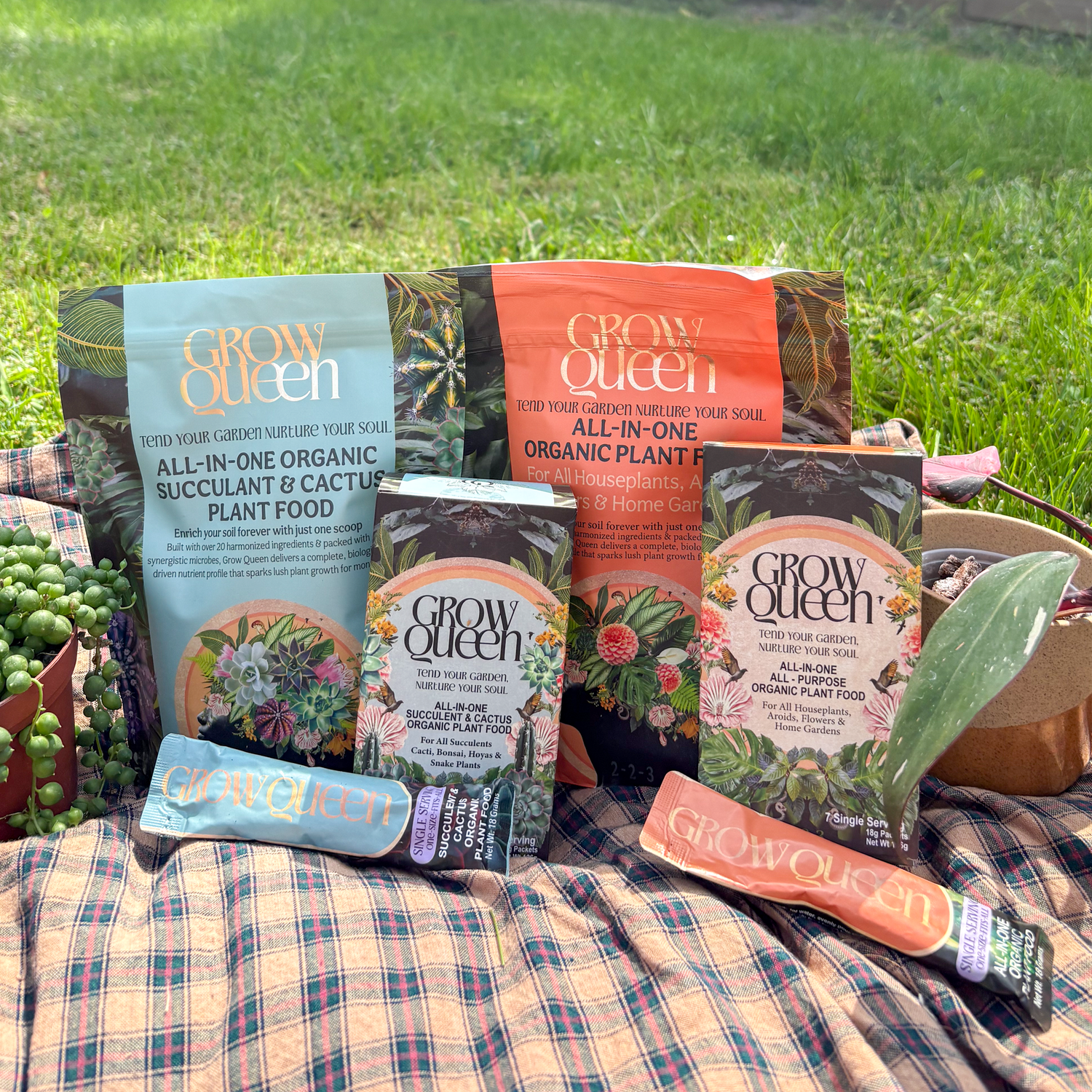
This is why Grow Queen focuses on system health rather than quick fixes.
What Living Soil Feels Like
Healthy soil has texture, smell, and structure.
Living soil:
-
Drains evenly, not instantly
-
Retains moisture without becoming soggy
-
Smells earthy, not sour
-
Supports firm, white roots
-
Resists compaction
If water runs straight through, soil pulls from pot edges, or roots appear brown and brittle, the soil has likely lost its biological activity.
Refreshing soil isn’t failure — it’s maintenance.
Living Soil Is a Long-Term Relationship
Living soil teaches patience and consistency. It rewards gentle, thoughtful care over urgency.
When soil is healthy:
-
Growth becomes predictable
-
Stress responses decrease
-
Plants recover faster
-
Care becomes easier, not harder
Living soil doesn’t rush plants. It supports them where they are.
And when the foundation is strong, everything above it can grow with confidence.
0 comments