
Begonia's are a personal favorite of ours ar Grow Queen, and much of the plant community. One of the most diverse plant species, their colorful patterns and textures range from dramatic, metallic foliage to soft trailing blooms and bold upright canes. Some are grown entirely for their foliage range: spiraled, textured, and almost unreal in color. Some stay compact and easy, while others stretch upward or cascade out of hanging baskets. There’s a begonia for nearly every growing style.
But here’s where most people go wrong: they treat them all the same.
In reality, begonias fall into distinct categories, and each one has slightly different needs. Once you understand those differences, they go from “finicky” to incredibly rewarding and fast-growing plants.
We're going to discuss the major begonia subspecies that houseplant collectors can't seem to get enough of, and exactly how to succeed. Going from easiest to hardest.
❇️ Where Begonia's Originated
To understand a begonia, first we must discuss some of the most lush and biologically active environments on Earth, primarily spanning Central and South America, Southeast Asia, and parts of Sub-Saharan Africa. Across these regions, begonias have evolved in warm, humid ecosystems where light is filtered through dense forest canopies and organic matter is constantly cycling through decay and renewal.
In the wild, most begonias grow along the forest floor as understory plants, thriving in loose, aerated layers of leaf litter and decomposing material rather than dense, compact soil. Others have adapted to even more specialized niches—anchoring themselves to mossy rock faces near waterfalls, clinging to tree trunks as epiphytes, or spreading horizontally through creeping rhizomes that allow them to colonize shaded ground. Some species even form tubers to survive seasonal dry periods, going dormant until moisture returns.
Despite their diversity, nearly all begonias share the same core environmental preferences: consistent moisture without stagnation, high humidity, and excellent root-zone airflow. This is the key to understanding their behavior. Begonias are not true “wet soil” plants, but rather plants that evolved in moist environments with fast-draining, oxygen-rich root systems. In nature, their roots are never suffocated, only surrounded by life.
🌱 Wax Begonias (Fibrous Begonias) LEVEL : EASY

Best for: Beginners, outdoor beds, low-maintenance growers
Wax begonias are typically your classic bedding plants found in hanging baskets at garden centers. They’re compact, durable, and consistently bloom in shades of red, pink, and white.
Care:
- Bright indirect light to partial sun
- Water when top soil dries slightly
- Average humidity
- Well-draining soil
Pro Tip: These tolerate more sun and less humidity than other begonias, making them one of the easiest.
🌿 Cane Begonias (Angel Wing Begonias) LEVEL : MEDIUM
Best for: Indoor statement plants, tropical lovers
Angel wing begonias (like Begonia maculata) are known for their upright growth and wing-shaped leaves, often dotted with silver spots. They can be tricky, but with the right conditions, they can be more forgiving than other varieties.
Care:
- Bright indirect light (can handle gentle morning sun)
- Let top 1–2 inches of soil dry between watering
- Never let it dry out completely
- Moderate to high humidity (Use humidifier if necessary)
- Chunky, well-aerated soil
Pro Tip:
These behave similarly to aroids. If you grow monstera or philodendron successfully, you can grow cane begonias!
🍃 Rex Begonias (Rhizomatous Begonias) LEVEL: HARD

Best for: Indoor collectors, foliage lovers
Rex begonias are grown almost entirely for their foliage with swirls of silver, purple, red, and green with velvety or textured finishes.
Care:
- Bright indirect light only
- Light, consistent moisture (never soggy)
- High humidity (50%+)
- Ultra well-draining, airy soil
Pro Tip:
Rex begonias fail most often from dense soil and overwatering, not neglect. They need oxygen at the root zone more than constant moisture. Use a terrarium, enclosed cabinet or direct humidity to have the best success.
Overwatering is the #1 cause of failure.
❇️ What Begonias Actually Need to Thrive
Across all subspecies, the core care principles stay the same.
Begonias are not plants that tolerate heavy, waterlogged soil. Their roots need access to oxygen just as much as they need water. When the medium is too dense, it holds moisture in a way that suffocates the root system, which is why overwatering is such a common issue. In reality, it’s often not the amount of water, it’s the lack of airflow.
Light follows a similar pattern. Most begonias evolved under canopy conditions, meaning they perform best in bright, indirect light. Too much direct sun leads to scorching, while too little light dulls their color and slows growth.
Watering becomes much simpler when everything else is dialed in. Instead of constantly trying to “keep the soil moist,” the goal is balance. Allowing the top layer to dry slightly while maintaining internal moisture and airflow and never letting it fully dry out. This rhythm supports healthy roots rather than stressing them.
Humidity can help, especially for foliage-heavy types like rex begonias, but it’s only beneficial when paired with airflow. Still, stagnant environments tend to create more problems than they solve.
🌱 Why the Right Soil and Fertilizer Make All the Difference for Begonias
At the root level, begonias are highly sensitive to oxygen availability. Their roots are fine, reactive, and quick to decline in dense, waterlogged conditions. This is why standard potting soils, especially peat-heavy mixes, tend to cause issues over time. They hold too much water, collapse structurally, and create an environment where roots can’t breathe.
A properly structured houseplant mix solves that.
Craft Houseplant Mix
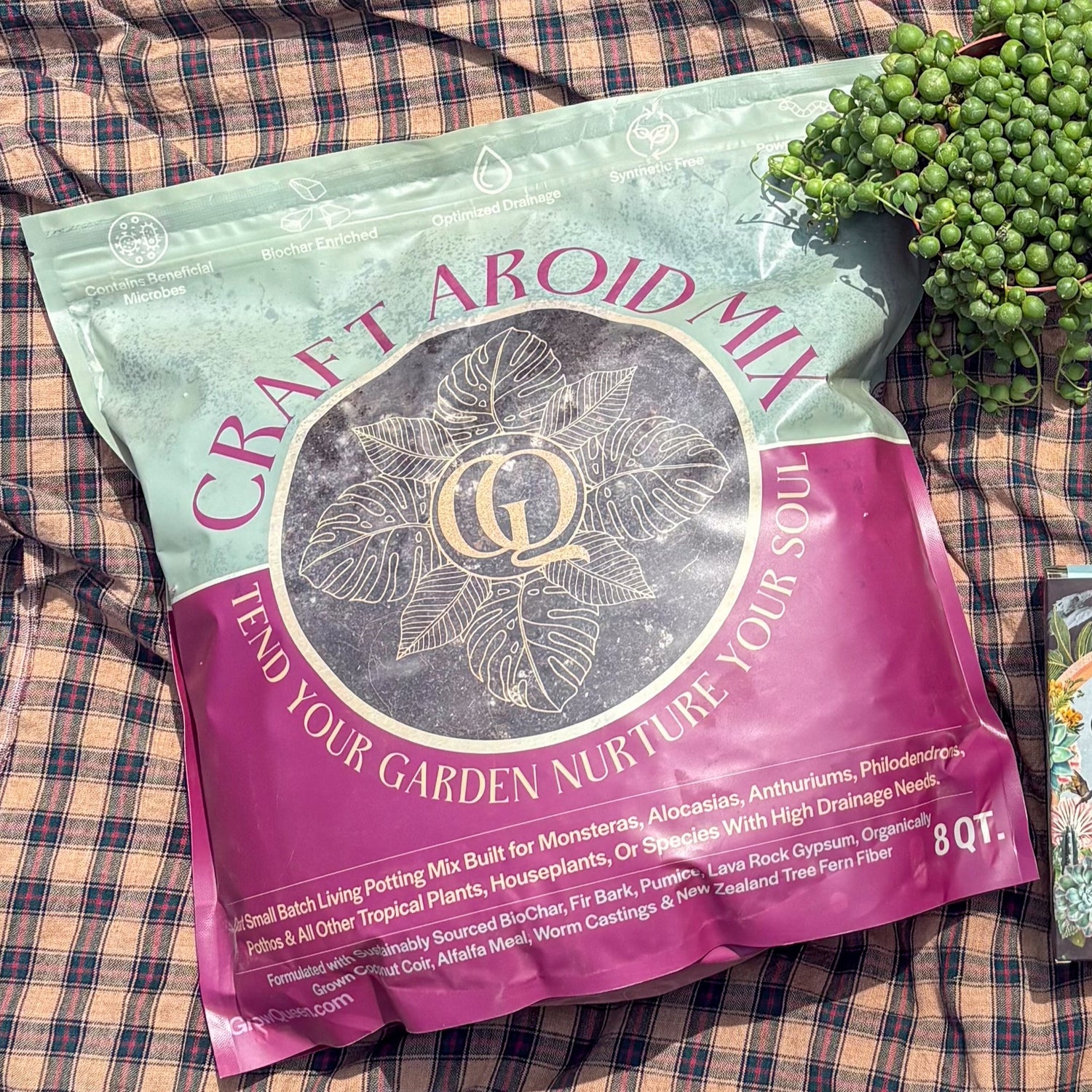
Grow Queen’s houseplant mix is designed to balance airflow, drainage, and moisture retention, which is exactly what begonias need to stabilize and thrive.
Instead of compacting over time, the mix maintains structure. That means water can move through the medium while still leaving behind enough moisture for uptake, without suffocating the roots. For begonias (especially rex and rhizomatous types) this is the difference between constant stress and consistent growth.
It also creates a more forgiving watering window. Rather than walking a tightrope between too dry and too wet, the plant has access to both oxygen and hydration at the same time. That balance supports stronger root development, which directly translates to healthier foliage, better color expression, and improved resilience.
For cane begonias that structure supports faster growth and reduces the risk of rot as the plant matures. For trailing and more delicate types, it prevents the stagnation that often leads to decline.
Organic Fertilizers and Plant Food
Begonias aren’t heavy feeders, but they are sensitive to imbalance.
Synthetic or overly aggressive fertilizers can overwhelm their root systems, especially in indoor environments where conditions are more controlled. What begonias respond to best is a steady, balanced nutrient supply that supports both the plant and the biology in the soil.
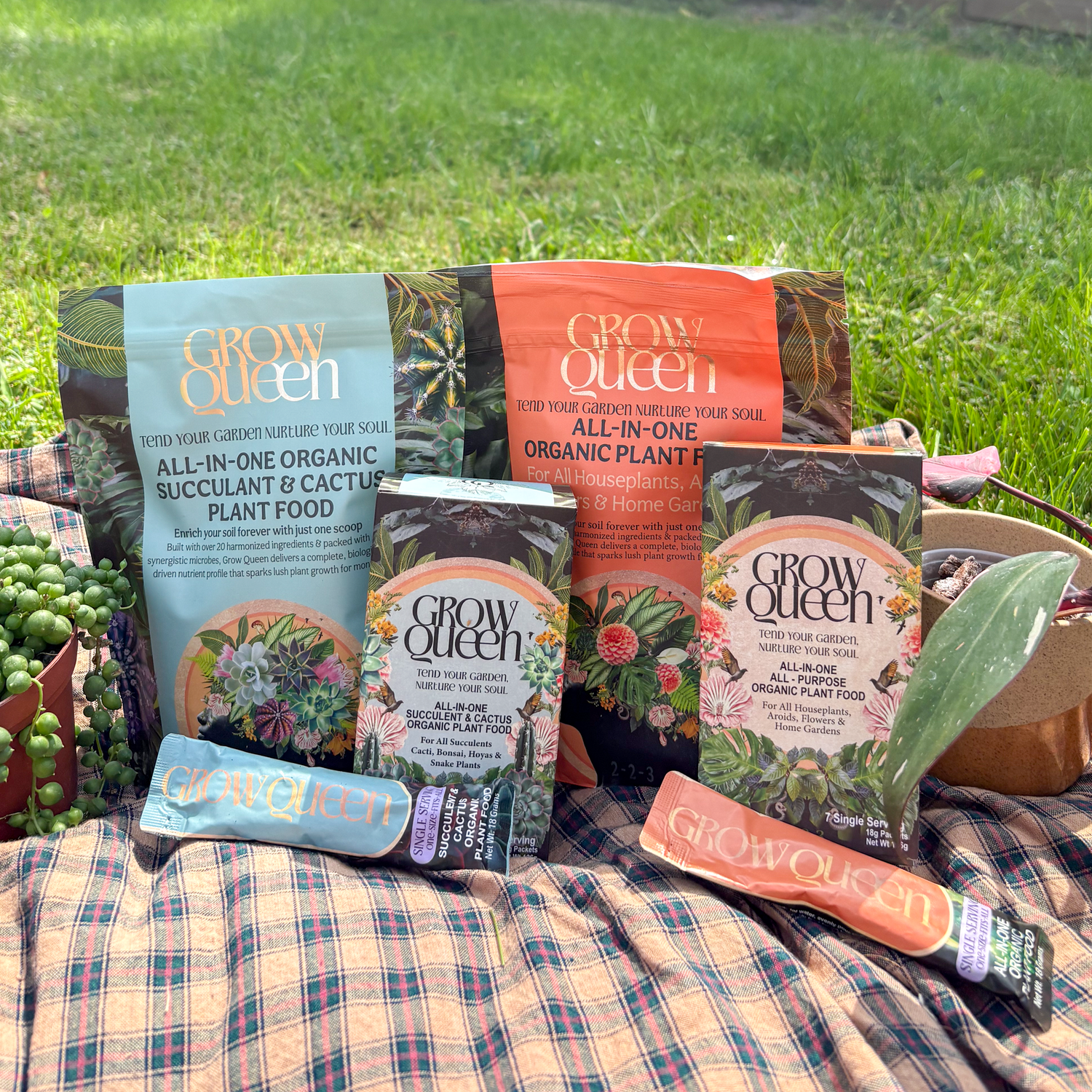
The all-in-one plant food we created provides complete, balanced nutrition over time, feeding gradually rather than in spikes. This supports consistent growth without risking burn or stress, which is critical for begonias that react quickly to environmental changes.
At the same time, the inclusion of beneficial microbes helps create a living soil environment. Instead of nutrients existing in isolation, they’re processed and made more available to the plant in a natural, stable way. This improves uptake efficiency and supports long-term root health.
🌱 Our Approach: Why It Works
What makes the biggest difference isn’t just soil or fertilizer on their own, it’s how they work together.
A structured, biologically active soil creates the environment.
Balanced, complete nutrition supports the plant within that environment.
When both are aligned, begonias don’t just survive, they stabilize, root deeply, and express their full potential. Leaves become more vibrant, growth becomes more consistent, and the plant becomes far more resilient to stress.
🌿 How to Actually Succeed With Begonias
If you want begonias that:
- grow faster
- produce stronger roots
- show better color
- and resist stress
…it comes down to building the right environment not just following care tips. Humidity helps but airflow matters more. Stagnant air and water create fungal problems. So provide your begonia with a living soil that can balance it's beauty. The biggest upgrade most growers can make is switching from generic potting soil to a biologically active, well-structured medium that supports both roots and microbial life.
That’s where begonias stop being “difficult” and start thriving.

💚 Final Thoughts
Begonias aren’t complicated... they’re specific. They reward attention to detail.
Once you understand the difference and give them the right soil, light, and watering rhythm, you unlock one of the most visually diverse and rewarding plant groups available. From bold angel wings to intricate rex foliage, begonias offer something no other genus quite can.
And when grown right, they don’t just survive they stand out.
0 comments